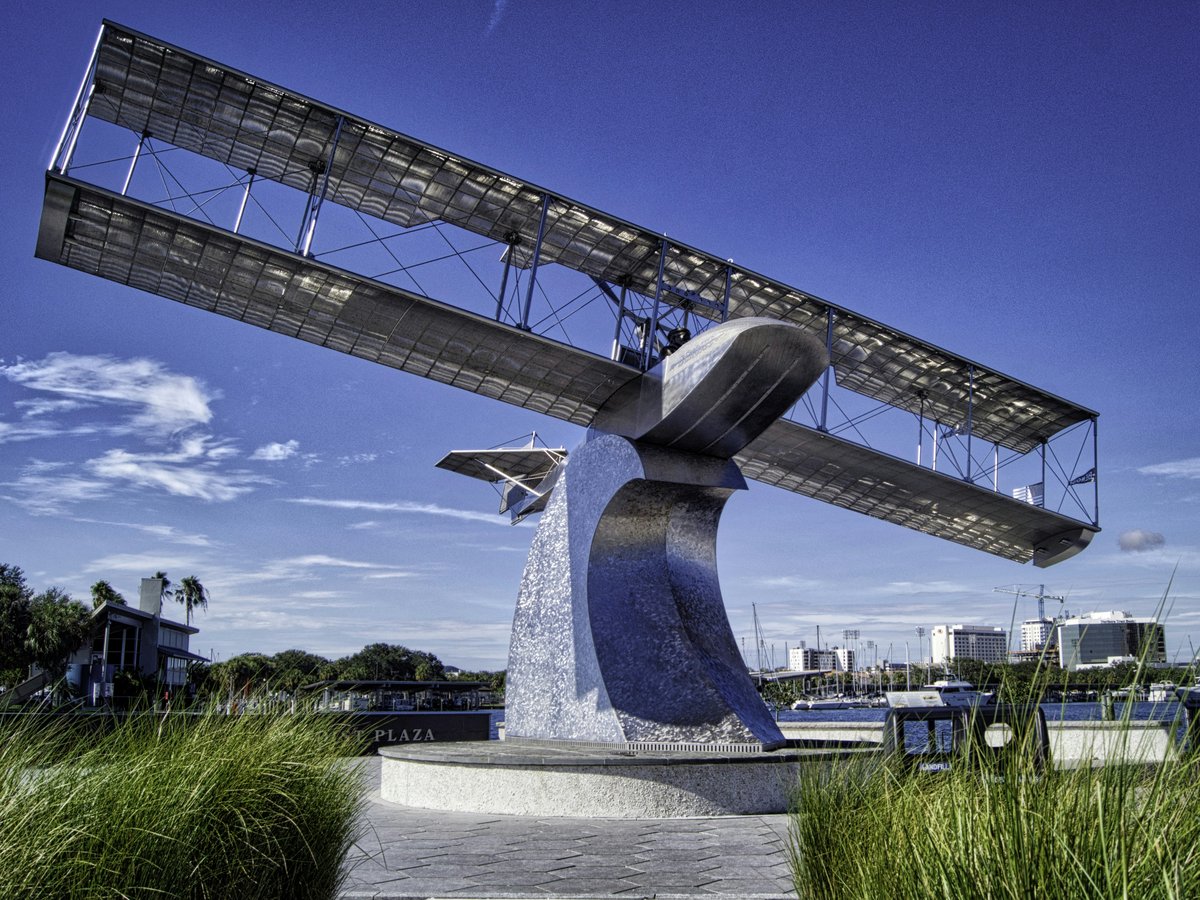
St. Petersburg stretches across a peninsula between Tampa Bay to the west and Boca Ciega Bay to the east, with most of the action concentrated in the southeastern quadrant near the downtown waterfront. The street grid is numbered and mostly logical. Avenues run east-west, streets run north-south, and Central Avenue splits the city into north and south halves. Downtown hugs the bay along Beach Drive and 1st through about 5th Avenues, then the numbered streets tick westward through the Edge District, Grand Central, and Kenwood. North of Central, the Old Northeast fans out toward Coffee Pot Bayou with its 1920s Mediterranean-revival homes. South of downtown, the Old Southeast runs quieter along Lassing Park and the bayfront. You can cover most of central St. Pete on foot or by bike in 20 minutes, which tends to surprise first-time visitors expecting a sprawling Florida layout. The whole core currently feels like a mid-sized city that punched well above its weight on public art, food, and walkability over the past 10 years.
Neighborhoods
-
Downtown
The waterfront blocks along Beach Drive between 1st and 5th Avenues NE have the density of a real small city, not a beach town. The Dali Museum sits at the south end near Mahaffey Theater, and the St. Pete Pier juts 3,000 feet into Tampa Bay at the north end. Between those two anchors you'll find the Museum of Fine Arts on the bayfront, the Chihuly Collection on Central, and something like 30 murals within a 6-block walk. The architecture is a mix of 1920s Mediterranean (the Vinoy hotel, built 1925, still dominates the skyline at the north end) and newer glass-and-steel condo towers that went up after 2010. On weekend evenings, Beach Drive between 2nd and 4th Avenues gets genuinely loud with restaurant overflow and live music leaking from open-air patios. The smell of salt air mixes with whatever the Birchwood's rooftop bar is grilling. It is warm, crowded, and a little sticky 8 months out of the year.
- Best for
- First-time visitors who want walkable restaurants, museums, and waterfront within a few blocks. Couples and solo travelers who want to leave the car parked for 3 days.
- Key streets
- Beach Drive NE between 1st and 5th Avenues for the restaurant row and bay views. Central Avenue from 1st to 6th Street for galleries and shops. 2nd Avenue NE leads to the Pier District. Bayshore Drive SE curves past the Dali Museum and Albert Whitted Airport, where small planes land close enough to read the tail numbers.
-
Old Northeast
North of downtown past 5th Avenue NE, the streets turn residential fast. The Old Northeast is a historic district full of 1920s bungalows, Mediterranean revivals, and craftsman homes shaded by mature live oaks and banyans. Coffee Pot Boulevard winds along Coffee Pot Bayou, and early mornings you'll see herons standing in the shallows and people walking dogs past houses that sold for $800,000 to $1.5 million as of late 2025. The pace here is noticeably slower than downtown, maybe a 12-minute walk south. North Shore Park stretches along the bayfront with a heated pool, a small beach, and the Vinoy Park area where food truck rallies happen monthly. The neighborhood has a few commercial nodes on 4th Street N, but mostly it is quiet residential streets where the loudest sound is a lawnmower or a mockingbird.
- Best for
- Families and travelers who want a quiet base within biking distance of downtown. People who prefer a rental cottage or Airbnb over a hotel.
- Key streets
- Coffee Pot Boulevard NE along the bayou is the signature walk or bike ride. 4th Street N has grocery stores, restaurants, and the daily-use commercial strip. North Shore Drive NE runs along the waterfront park. Locust Street NE and the blocks around Snell Isle Bridge have some of the neighborhood's largest historic homes.
-
The Edge District
Roughly between 9th and 16th Streets along Central Avenue, the Edge District is where downtown's polish gives way to something rougher and more interesting. This stretch has the biggest concentration of independent galleries in the city, anchored by the Morean Arts Center and clustered around the 600 Block. The buildings are older, a lot of 1940s and 1950s one-story commercial structures converted into art studios, tattoo shops, vintage stores, and small restaurants. It smells like coffee grounds near Bandit Coffee or Black Crow and like oil paint near the open studio doors. Foot traffic thins out compared to Beach Drive, and the crowd skews younger. A few empty storefronts still turn over, and you might notice the neighborhood shifting block by block. The Saturday and Sunday foot traffic from the arts walk (second Saturday of each month) fills the sidewalks, but on a Tuesday afternoon it can feel a little sleepy.
- Best for
- Art-focused travelers, younger visitors, and anyone who finds Beach Drive a bit too curated. People who want to gallery-hop and eat at places with 30 seats or fewer.
- Key streets
- Central Avenue between 9th and 16th Streets is the main corridor. The 600 Block (around 6th Street and Central) still draws gallery foot traffic, though some of those businesses sit closer to the downtown edge. Dr. MLK Jr. Street N crosses through and connects north toward the Warehouse Arts District on the upper floors of a few converted industrial buildings.
-
Grand Central District
West of the Edge District along Central Avenue from roughly 16th to 31st Street, Grand Central was the city's main commercial drag before downtown revived in the 2000s. It still has a funkier, less polished feel. Rainbow crosswalks at Central and 22nd Street mark the center of the LGBTQ+ district that formed here over the past 15 years. The restaurants tend toward the affordable end, with a mix of Thai, Cuban, and Southern food alongside newer brunch spots. The buildings are low-rise, mostly 1- and 2-story, with hand-painted murals and small vintage shops. It is walkable but spread thinner than downtown, so you might want a bike. The noise level is low except on weekend nights around the bars between 20th and 24th Streets. Grand Central has less foot traffic than Beach Drive, which is part of the appeal.
- Best for
- Budget-conscious travelers and visitors who prefer local restaurants to destination dining. LGBTQ+ travelers will find a welcoming, visible community here. Longer-stay visitors looking for a less touristy base.
- Key streets
- Central Avenue between 20th and 28th Streets for the densest cluster of restaurants and shops. 22nd Street S connects south toward Gulfport. Park Street N has a few hidden antique stores.
-
Kenwood
A residential neighborhood sitting west of Grand Central, Kenwood is a designated historic district full of early 1900s craftsman bungalows on small lots with screened porches and mature trees. Walking through feels like stepping back 20 or 30 years from the rest of St. Pete. The streets are quieter, the houses are smaller, and the lots are tight enough that you can hear your neighbor's radio through open windows. Kenwood has no commercial strip of its own, but it borders Grand Central to the east and 34th Street's strip-mall corridor to the west. The neighborhood association runs an annual home tour and bungalow fest in March. Home prices here range from about $350,000 to $700,000 as of early 2026, making it one of the more affordable historic neighborhoods in central St. Pete. You will smell jasmine and gardenia walking these blocks in spring.
- Best for
- Travelers who want an authentic residential feel and don't mind biking or driving 10 minutes to restaurants. Good for architecture enthusiasts and people renting a cottage or bungalow.
- Key streets
- The blocks between 25th and 31st Streets, roughly from 1st to 5th Avenues S, form the historic core. Burlington Avenue N has a particularly well-preserved row. 34th Street on the western boundary is the commercial artery for groceries and errands, though it is not much to look at.
-
Old Southeast
South of downtown across 5th Avenue S, the Old Southeast rolls toward Lassing Park and the bayfront. This is a residential neighborhood of 1920s homes, some Mediterranean, some vernacular Florida frame houses, on slightly larger lots than Kenwood. The waterfront along Lassing Park offers unobstructed views across Tampa Bay, and the seawall walk is one of the better sunset spots in the city. The area is quieter than the Old Northeast, partly because there is less commercial activity nearby. You are still within a 15-minute walk of the Dali Museum and downtown, but the foot traffic drops to nearly zero south of about 9th Avenue. The streets feel wide, the canopy is thick, and the afternoon light filters through Spanish moss on the oaks.
- Best for
- Visitors who want waterfront access and quiet without giving up proximity to downtown. Runners and walkers who want the bayfront path without crowds.
- Key streets
- Bayshore Drive SE follows the waterfront and connects to Lassing Park at about 18th Avenue SE. 3rd Street S runs north-south through the neighborhood's commercial edge near downtown. Pinellas Point Drive heads south toward the wider peninsula.
-
Historic Uptown
North of the Old Northeast along 22nd Avenue N and the blocks surrounding Crescent Lake, Historic Uptown is a residential district that feels farther from downtown than it is. Crescent Lake itself is a 14-acre freshwater lake with a jogging path, a playground, and a bandshell. The neighborhood around it is middle-class residential, with a mix of 1940s and 1950s block houses and some newer infill. The commercial action clusters along Dr. MLK Jr. Street N and 4th Street N. This area rarely shows up in travel guides, which is part of its appeal. It is genuinely local. The restaurants here cater to residents, not tourists, and you will likely be the only out-of-towner at breakfast. The noise is neighborhood noise: kids, sprinklers, the occasional siren on 4th Street.
- Best for
- Repeat visitors who have done the downtown circuit and want to see how residents live. Budget travelers willing to stay 15 minutes from the waterfront in exchange for lower hotel rates.
- Key streets
- 22nd Avenue N crosses through the neighborhood and connects major north-south streets. Crescent Lake Park sits between 18th and 22nd Avenues N. 4th Street N is the nearest commercial corridor. Dr. MLK Jr. Street N has several long-standing local restaurants.
-
Warehouse Arts District
A loose cluster of converted warehouses and light-industrial buildings roughly between 10th and 16th Streets N, north of Central Avenue and east of I-275. The Warehouse Arts District started as cheap studio space for artists priced out of downtown in the mid-2000s. It still has working studios, several with open doors on weekday afternoons. The buildings are concrete-block and corrugated metal, functional rather than pretty. The smell is a mix of welding flux and turpentine depending on which studios are active. Foot traffic is thin outside of monthly art walks (second Saturday). This is not a neighborhood where you stroll after dinner. But during art walk nights, the loading docks open up, studios pour cheap wine, and you can buy directly from painters, sculptors, and ceramicists at studio prices. The area is still in transition and likely will be for a while.
- Best for
- Art buyers, studio visitors, and people who like seeing where things get made rather than where they get displayed. Not a place to stay, but worth a 2-hour visit during art walk.
- Key streets
- The blocks around 11th and 12th Streets N between 2nd and 5th Avenues N hold the densest cluster of studios. Central Avenue marks the southern edge. I-275 runs along the western side, and you can hear the highway hum from most of the studios.
FAQ
Where should I stay if I want to walk everywhere?
Downtown between Beach Drive and 5th Street along Central Avenue puts you within walking distance of the Dali Museum, the Pier, the Saturday Morning Market, and 50-plus restaurants. Most of the hotels cluster here, including the Vinoy at the north end (rooms currently start around $300 per night) and several newer boutique options on Central. The Old Northeast is bikeable to everything downtown in under 15 minutes and tends to have more affordable vacation rentals.
Is St. Petersburg safe for walking at night?
Downtown and Beach Drive feel safe and stay active until midnight or later on weekends. The Old Northeast is quiet residential and well-lit along the main streets. Grand Central's bar strip is fine on weekend nights with normal urban awareness. Areas north of about 30th Avenue N and west of 16th Street tend to be less walkable after dark, and the Warehouse Arts District is deserted outside of event nights. Use the same judgment you would in any mid-sized American city.
How do I get between neighborhoods without a car?
The Sunrunner bus rapid transit line connects downtown St. Pete to St. Pete Beach along 1st Avenue S and Central Avenue, with stops roughly every half mile. It runs until about 11 p.m. on weekends. Within the core neighborhoods, a bike is the fastest option. Coast Bike Share has stations throughout downtown, the Edge District, and parts of Grand Central. Rides start at $1.50 for 30 minutes. Rideshare trips between downtown and Grand Central typically cost $8 to $12.
When is the best time of year to visit St. Petersburg?
October through April is the dry season, with daytime temperatures between 70 and 85 degrees and low humidity by Florida standards. March tends to be the busiest month because of spring break and snowbird season, and hotel rates reflect that. The Saturday Morning Market runs October through May. Summer brings afternoon thunderstorms almost daily by 3 p.m., but mornings are usually clear, and hotel rates drop 30 to 40 percent from June through September.
What is the food scene like outside of downtown?
Grand Central has some of the city's best affordable restaurants. Nitally's Thai-Mex on Central near 24th Street does a green curry burrito that sounds improbable but has been drawing regulars for years. The 22nd Street S corridor toward Gulfport has several Cuban and Caribbean spots. 4th Street N in the Uptown area has long-standing diners and family restaurants that serve breakfast for under $10. Downtown gets the press, but locals eat west of 16th Street more often than visitors realize.
Is St. Pete Beach part of St. Petersburg?
No, St. Pete Beach is a separate incorporated city on a barrier island west of St. Petersburg proper, connected by the Corey Causeway and Pinellas Bayway. It has its own hotels, restaurants, and government. The Gulf beaches are about a 20-minute drive or 40-minute Sunrunner ride from downtown St. Petersburg. Pass-a-Grille, at the southern tip of the barrier island, is also a separate community. When locals say St. Pete, they mean the mainland city, not the beaches.
Last verified by automated review (v1.7.2) on . What is automated review?