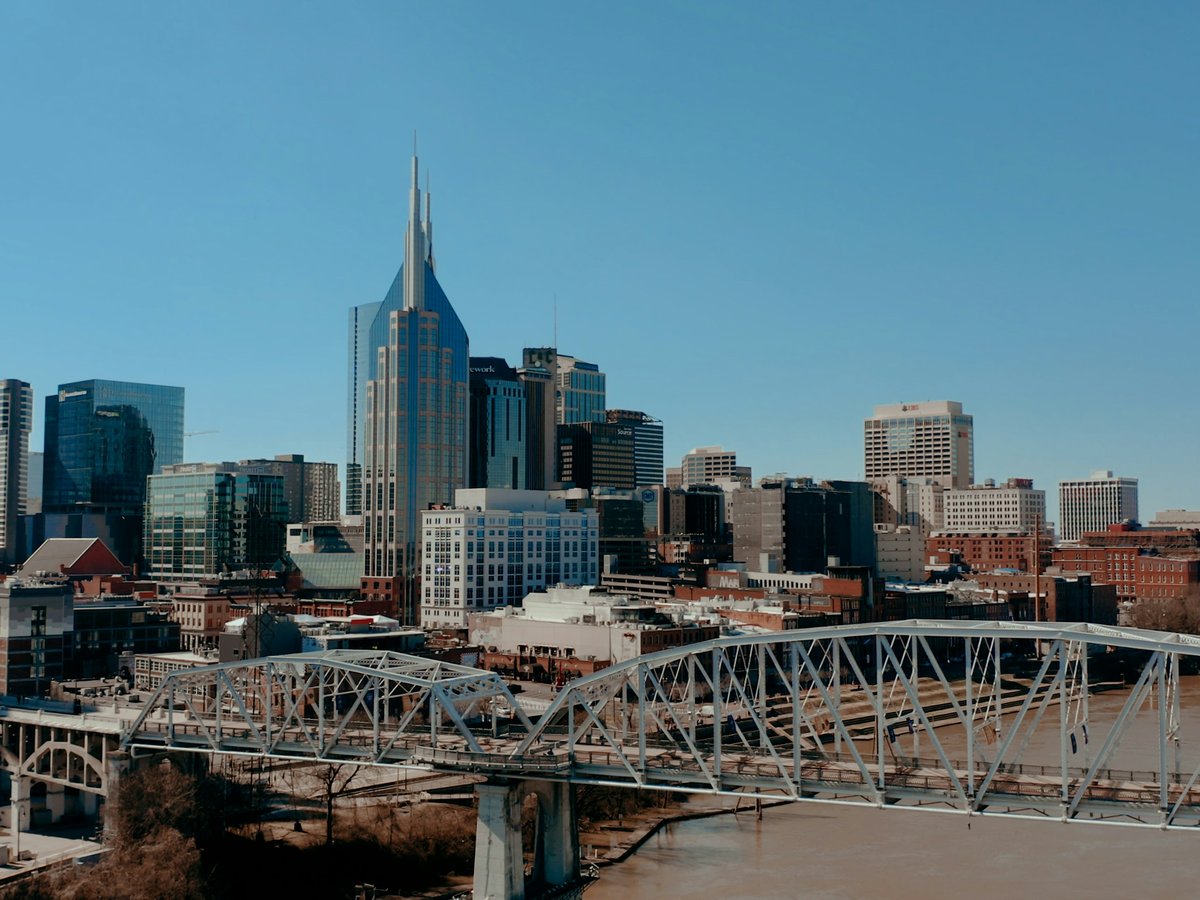
Nashville With Kids: What Works
Nashville's family-friendly score of 8.2 holds up if you know which marquee attraction to skip and which overlooked park to treat as your afternoon anchor. Here is the itinerary shape that actually survives small children.
Published · Updated
1 Nashville's 8.2 Family Score Is Real, but Lower Broadway Is the Asterisk
The stroller wheels catch on the brick sidewalk along 2nd Avenue, and your toddler is already pointing at the neon signs. Nashville's family-friendly score of 8.2 puts it ahead of most American cities for traveling with kids, but that number hides a split personality. The family-friendly Nashville and the bachelorette-party Nashville occupy the same 10 blocks of Lower Broadway, and they do not coexist well after mid-morning.
The venues that earn the 8.2 sit in a ring around downtown. Nashville Zoo at Grassmere is 6 miles southeast. Adventure Science Center perches on a hill about a mile south of Broadway. Centennial Park and its full-scale Parthenon replica sit 2 miles west in the Midtown neighborhood. Cumberland Park, the free riverfront playground on the east bank of the Cumberland River, is a 5-minute walk across the John Seigenthaler Pedestrian Bridge. None of these require you to navigate the honky-tonk strip.
The trap is thinking Broadway itself is the Nashville experience for all ages. It is not. Before 10 AM on a weekday, you can walk the strip in relative quiet, point out the Ryman Auditorium from the outside, and grab biscuits on 5th Avenue without incident. By noon on a Saturday, the live music from Tootsie's Orchid Lounge and Robert's Western World bleeds across the sidewalk at a volume that will rattle a 3-year-old. The smell of spilled beer and hot pavement hangs thick in the air. This is an adult entertainment district that happens to be outdoors.
To be fair, Nashville earns the 8.2 honestly. The zoo, the science center, and the parks are each strong on their own terms. Southern food culture means most Nashville restaurants genuinely welcome children, not as an afterthought. The music itself is a family asset when you pick the right venue at the right hour. The Grand Ole Opry, 10 miles east at the Opryland campus, runs matinee shows on weekends that seat 4,400 in air-conditioned comfort and work well for kids over 5.
Nashville's 8.2 family-friendly score assumes you will route around Lower Broadway with small children in tow.
2 Lower Broadway After 11 AM Is a Meltdown Factory for Anyone Under 7
You hear it before you see it. Three doors from the corner of Broadway and 4th Avenue, the bass from a cover band rattles the sidewalk underfoot. The walkway narrows to single file. A pedal tavern rolls past with 15 people pedaling and hollering in the midday heat. Your 4-year-old grabs your leg. This is Lower Broadway between 11 AM and midnight, and it was not designed for children.
The 4-block stretch from 2nd Avenue to 5th Avenue packs roughly 30 bars and honky tonks into what amounts to an open-air nightclub. Tootsie's Orchid Lounge, open since 1960, and Robert's Western World at 416 Broadway are legitimately interesting cultural landmarks. They are also loud, crowded, and built around selling alcohol. The big names along Broadway charge no cover, which means foot traffic is constant and unpredictable.
Nashville families who live here avoid this stretch entirely on weekends. Worth noting, the side streets and nearby neighborhoods are calmer by a wide margin. The Gulch, SoBro, and the blocks near the Frist Art Museum at 919 Broadway all function as normal city streets. The Frist, housed in a 1934 Art Deco former post office, runs a dedicated children's gallery called Martin ArtQuest with 30 interactive stations. It tends to be quieter on weekday mornings.
If your kids are over 6 and you want them to touch Nashville's music history, the Ryman Auditorium at 116 5th Avenue North is a single block off Broadway. Built in 1892 with a capacity of 2,362, the Ryman runs daytime self-guided tours that let you walk the stage where Johnny Cash and Patsy Cline played. The volume inside the empty hall is zero.
The alternative for live music with children is the Grand Ole Opry at the Opryland campus, which runs family-friendly Saturday matinee shows. The Opry House seats 4,400 and has assigned seating, real bathrooms, and the air conditioning that Broadway's open-door bars cannot offer.
Nashville families who live here avoid Lower Broadway entirely on weekends.
3 Nashville Zoo at Grassmere Wins the Under-7 Day, and the Jungle Gym Is Why
The kangaroo enclosure at Nashville Zoo at Grassmere is walk-through. You step onto a soft mulch path, and a grey kangaroo is sitting 3 feet to your left, chewing grass with mechanical indifference. Your toddler freezes. Then giggles. This moment, about 15 minutes into the visit, is when the day shifts from logistics to actual fun.
Nashville Zoo at Grassmere sits on 188 acres about 6 miles southeast of downtown, off Nolensville Pike. The layout follows a single main loop, which matters enormously when you are pushing a stroller. There are no confusing forks or dead-end paths that force backtracking with a tired 3-year-old. The Jungle Gym, a 66,000-square-foot playground near the zoo's main entrance, is one of the largest community-built play structures in the United States. Rope bridges, slides, climbing towers, a sand area. Many Nashville parents will tell you the Jungle Gym alone is worth the trip to Nashville Zoo at Grassmere.
The animals that hold a young child's attention longest tend to be the ones they can get close to. The Kangaroo Kickabout walk-through exhibit works because proximity changes everything for a 2-year-old who has only seen kangaroos in picture books. Lorikeet Landing lets kids hold nectar cups while parakeets land on their arms, the feathers warm and surprisingly light. Both exhibits sit along the main loop, no detour required.
Mind you, Nashville Zoo at Grassmere gets hot. Nashville summers push into the low 90s by July, and shade coverage on the main loop is partial. If you are visiting between June and September, arrive when the gates open at Nashville Zoo at Grassmere and plan to leave by noon. The splash pad near the Jungle Gym helps, but it is not a substitute for air conditioning when humidity hits 80%.
The runner-up for the under-7 crowd is Cumberland Park on the east bank of the Cumberland River. Cumberland Park is free, has its own splash pad from May through September, and climbing structures sized for small children. Nashville Zoo at Grassmere is the better half-day commitment. Cumberland Park is the better 90-minute pressure valve.
Many Nashville parents will tell you the Jungle Gym alone is worth the trip.
4 Adventure Science Center Rescues Any Rainy Nashville Afternoon
The 75-foot climbing tower inside Adventure Science Center rises through the center of the building like a transparent spine. Kids scale it floor by floor, each level a different physics puzzle. You can watch them from the ground floor, which means you can sit down and feel the cool air conditioning for 20 minutes while they burn energy overhead. That fact alone puts Adventure Science Center near the top of any Nashville family plan.
Adventure Science Center sits at 800 Fort Negley Boulevard, about a mile south of Broadway on a hill overlooking the city. Fort Negley, a Civil War fortification built in 1862, is adjacent and free to explore on its own. Adventure Science Center spreads across 44,000 square feet of exhibit space with permanent collections in physics, biology, and earth science. The Sudekum Planetarium, on the lower level, runs shows lasting about 30 minutes and tends to be one of the quieter, cooler rooms in the building.
For kids under 5, the dedicated early-childhood area on the first floor of Adventure Science Center has water tables, building blocks, and low-stimulus sensory stations that give overwhelmed toddlers a break from the buzzing energy of the main halls. For kids 6 to 12, the BodyQuest exhibit and the Space Chase gallery hold attention for 45 minutes to an hour each. The mix of active climbing and calmer exploration at Adventure Science Center means mixed-age sibling groups can split up and reconverge without anyone melting down.
That said, Adventure Science Center gets crowded on rainy Saturdays. If your children are 8 or older and you want a quieter indoor afternoon, the Frist Art Museum at 919 Broadway is a strong second choice. The Martin ArtQuest gallery on the Frist's lower level has 30 hands-on art stations, and the rotating exhibitions upstairs appeal to kids past the push-every-button phase. The Frist building itself, a 1934 Art Deco former post office with wide halls and high ceilings, feels spacious even on busy days.
5 Centennial Park's Full-Scale Parthenon Is the 45-Minute Family Win Nobody Plans For
The 42-foot statue of Athena is the first thing you see when you walk through the Parthenon's front doors in Centennial Park. It is gilded, enormous, and holds a 6-foot figure of Nike in its right hand. Cool stone air fills the hall. Your child will tilt their head back and stare. Adults do the same.
Nashville's Parthenon sits in Centennial Park, about 2 miles west of downtown in Midtown at 2500 West End Avenue. The building is a full-scale replica of the original Parthenon in Athens, Greece, built in 1897 for the Tennessee Centennial Exposition. The permanent concrete version was finished in 1931. The Athena Parthenos statue inside, sculpted by Alan LeQuire and unveiled in 1990, stands as the tallest indoor sculpture in the Western Hemisphere at 42 feet.
The Parthenon works as both an art museum and a Nashville oddity that visiting families tend to overlook in favor of Nashville Zoo at Grassmere or Adventure Science Center. The ground floor houses 63 paintings from the Cowan Collection, mostly 19th-century American landscapes. The upper gallery is the main hall with Athena. For families, the value is the combination of a short visit (most spend 30 to 45 minutes inside) and Centennial Park spreading out around it.
Centennial Park covers over 130 acres, with a walking loop around Lake Watauga, open green fields, and a playground near the park's south end. The grounds are flat, stroller-friendly, and shaded by mature trees. On a spring weekday in Centennial Park, you might notice how quiet it is compared to anything within 5 blocks of Broadway. The playground has equipment for ages 2 through 10 and sits close to parking off 25th Avenue North.
This stop pairs naturally with lunch in Midtown. The Parthenon and Centennial Park together fill about 2 hours, which leaves time for a meal along 19th Avenue South or a walk through the Vanderbilt University campus, which borders Centennial Park's south edge and adds another half mile of shaded paths.
The Parthenon visit is short enough to pair with lunch in Midtown and still leave half the afternoon free.
6 Cumberland Park's Free Splash Pad Is the Afternoon Reset Every Family Itinerary Needs
The water shoots up from the ground in unpredictable jets, and a dozen kids are running through it barefoot, shrieking at each surprise burst. The concrete is warm underfoot, the mist catches the light. Cumberland Park's splash pad, on the east bank of the Cumberland River, is free and requires zero advance planning. This is the Nashville family stop you did not put on the itinerary but will likely use twice.
Cumberland Park opened in 2012 as part of Nashville's East Bank riverfront development, near Nissan Stadium. The park sits at 592 South 1st Street, directly across the John Seigenthaler Pedestrian Bridge from downtown Nashville. The splash pad runs from May through September, 10 AM to 6 PM. The climbing structures built into the hillside have rope nets and stone steps scaled for ages 2 through 12. The whole of Cumberland Park covers about 6.5 acres.
The reason Cumberland Park matters to a Nashville family trip is structural, not scenic. Every itinerary with young children needs a release valve. The morning activity, whether Nashville Zoo at Grassmere, Adventure Science Center, or the Parthenon at Centennial Park, takes energy and sustained attention. By 1 PM, a 3-year-old is running on fumes. The temptation is to push through to one more attraction. Don't. Head to Cumberland Park instead. The splash pad resets the emotional clock. The climbing hill burns energy without requiring focus. There is no line, no admission desk, no gift-shop gauntlet at the exit.
Mind you, Cumberland Park has limited shade. The splash pad area is fully exposed, so bring sunscreen and hats between June and September. There is no food service inside the park, but the Shelby Avenue corridor, a 5-minute walk south, has several restaurants.
The alternative free outdoor spot is Bicentennial Capitol Mall State Park, about a mile north of Broadway at 600 James Robertson Parkway. The mall's 200-foot granite map of Tennessee and its 95-bell carillon are mildly interesting to older children, but Bicentennial Capitol Mall lacks the water-play element that makes Cumberland Park the clear winner for families with kids under 8.
7 The Nashville Family Itinerary That Works Follows One Rule: Big Venue Before Noon, Free Park After
The parking lot at Nashville Zoo at Grassmere is half empty at 9 AM on a Tuesday morning. By 11:30 AM, it is full, and the stroller traffic on the main loop has tripled. The same pattern holds at Adventure Science Center, where the early-childhood area is calm at opening and loud by mid-afternoon. Nashville's family venues follow a predictable daily arc, and the families who have the best days are the ones who front-load the structured activity and let the afternoon go unscripted.
The itinerary shape that survives children under 6 in Nashville follows one principle. Morning, arrive at your ticketed venue when doors open. Nashville Zoo at Grassmere, Adventure Science Center, or the Parthenon in Centennial Park each needs 2 to 3 hours. Leave before the lunch rush. Midday, eat somewhere with space and tolerance for noise. Nashville's Southern food culture works in your favor here. Monell's at the Manor at 1235 6th Avenue North serves family-style plates at communal tables where a loud toddler is unremarkable. Arnold's Country Kitchen at 605 8th Avenue South has served the meat-and-three since 1982, and the line moves faster if you arrive before 1 PM.
Afternoon, head to Cumberland Park for the splash pad, or to Centennial Park if you spent the morning at Nashville Zoo at Grassmere or Adventure Science Center. The point of the afternoon is zero stakes. No tickets, no schedule, no sunk-cost pressure to stay through the meltdown. Free parks in Nashville absorb tantrums without financial guilt.
Evening is where Nashville differs from most family cities. Lower Broadway is not workable with small children after 5 PM. The Opryland area, 10 miles east of downtown, has the Grand Ole Opry on weekend evenings and restaurants near the Gaylord Opryland Resort at 2800 Opryland Drive. The resort's indoor gardens cover 9 acres under glass atriums and are free to walk through, with the thick smell of tropical plants and the sound of an indoor river, which delivers the spectacle that Broadway's neon promises but cannot safely provide to a family with a stroller.
The families who have the best days front-load the structured activity and let the afternoon go unscripted.
Last verified by automated review (v1.7.0_onboard-nashville-flagship-2026-06-10) on . What is automated review?