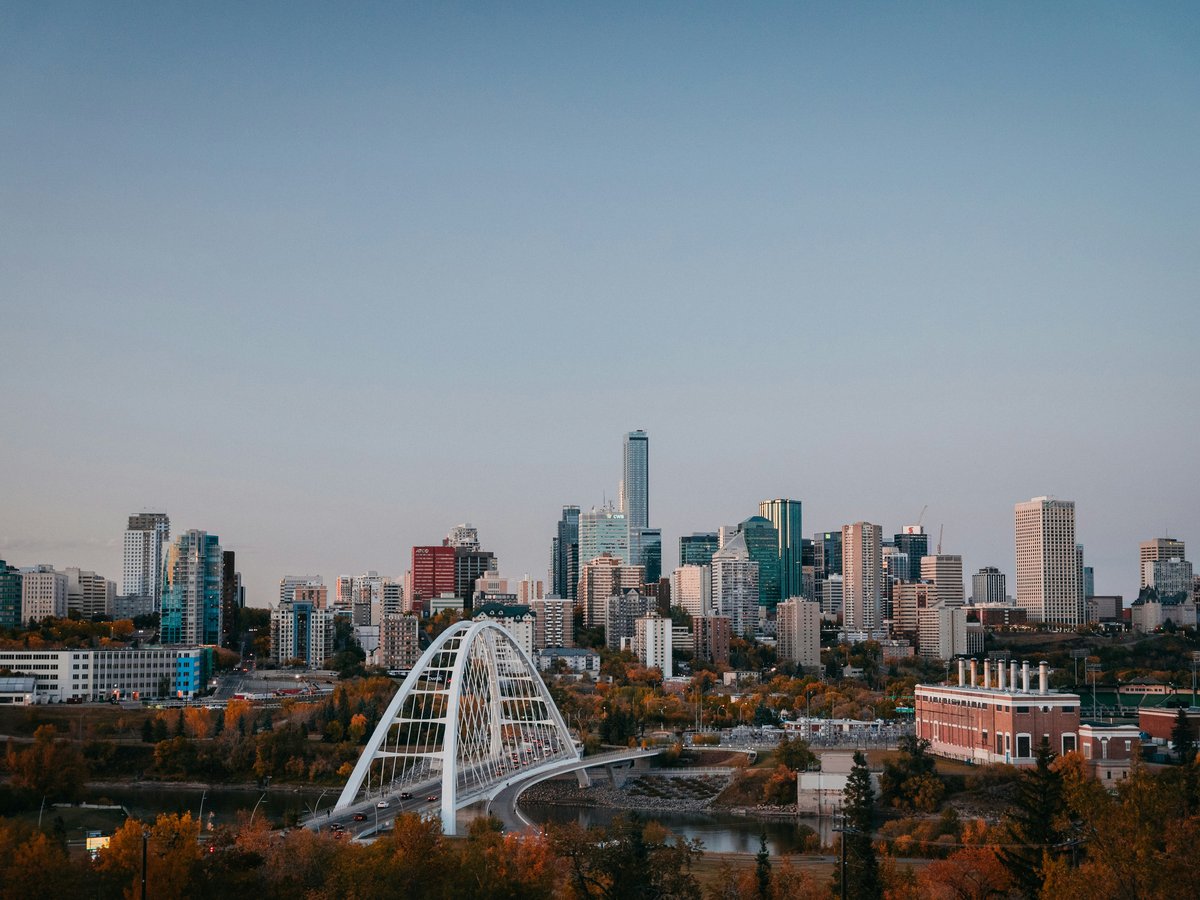
Edmonton sits on the North Saskatchewan River at roughly 53.5°N latitude, and the river carved a valley through the city that now holds one of North America's largest urban park networks. Over 160 kilometres of maintained trails run through the River Valley, connecting ravines, bluffs, and riverside flats from the southwest suburbs to the Hermitage Park area in the northeast. Summer days stretch past 17 hours of light around the solstice, which means you can finish a full workday and still get a 3-hour paddle in before dark. The flip side is winter. Temperatures drop below minus 30°C in January and February, and the river freezes solid enough for people to walk across it. That said, Edmontonians tend to lean into the cold rather than hide from it. Cross-country ski tracks get groomed in Gold Bar Park by December, and fat-tire bikes appear on the frozen river trails shortly after. The city's outdoor character is defined by that contrast. You get fierce prairie cold and then these long, bright summers where everyone seems to be outside at once. Elk Island National Park sits 35 kilometres east. Wabamun Lake is about an hour west. Jasper National Park is roughly 3.5 hours down Highway 16. Edmonton works as both an outdoor destination and a staging ground for the northern Rockies.
Outdoor activities
-
Mountain Biking in the River Valley
The Edmonton River Valley trail system includes over 160 kilometres of paved and unpaved paths. For mountain biking specifically, Terwillegar Park on the south bank has a network of singletrack that winds through aspen forest and along steep ravine edges. The trails are mostly intermediate, with some rooty descents that get slick after rain. Goldstick Park and Riverside/Dawson Park on the north side also have rougher singletrack sections. Mind you, the clay soil in the river valley turns to something like wet cement after a heavy rain, so check conditions before heading out. Bike Edmonton and local shops like United Cycle on Whyte Avenue rent mountain bikes if you're visiting.
- Difficulty
- Easy to Intermediate (varies by trail section)
- Duration
- 1-4 hours depending on route
- Best season
- May through October, trails are best when dry
-
Cross-Country Skiing at Gold Bar Park
Gold Bar Park, on the south bank of the North Saskatchewan near 50th Street, gets groomed ski trails once conditions allow, typically by late November or December. The park's flat river-bottom terrain is well suited to classic technique, and there's enough distance to get a solid workout without ever leaving the groomed loop. The Edmonton Nordic Ski Club grooms trails here and at several other River Valley sites including Goldstick Park and Riverside Golf Course. Trail fees are voluntary donations. Temperatures on the river flats can sit 5 to 10 degrees colder than the surrounding city due to cold air pooling, so dress warmer than you think you need to.
- Difficulty
- Easy to Moderate
- Duration
- 1-3 hours
- Best season
- December through March, snow-dependent
-
Fat Biking on Frozen River Trails
Once the North Saskatchewan freezes solid, typically by late December, fat-tire biking on the frozen river and along the valley trails becomes one of Edmonton's more distinctive winter activities. Some sections of the River Valley trail system get packed down by foot traffic and become rideable. The river itself is used informally but conditions vary, and the City of Edmonton does not officially maintain river ice trails. Bike shops like Revolution Cycle and United Cycle rent fat bikes by the day. Expect to spend around $50 to $75 CAD for a daily rental. The experience is genuinely strange. You're pedalling through a frozen riverbed with 50-metre bluffs on either side, and downtown towers peeking over the tree line.
- Difficulty
- Moderate (balance on ice and snow requires practice)
- Duration
- 1-3 hours
- Best season
- January through March
-
Bison Viewing and Wildlife Photography at Elk Island National Park
Elk Island National Park is 35 kilometres east of Edmonton along Highway 16. It protects a pocket of aspen parkland and is home to both plains bison and wood bison herds, along with elk, moose, and over 250 bird species. The Bison Loop Road on the park's north side is where most people spot plains bison, sometimes right beside the road. A Parks Canada day pass costs $8.50 CAD per adult as of 2024. Early morning and late evening are the best times for sightings. The park is busier on summer weekends, but even then it's nothing like Banff. To be fair, the bison tend to cooperate. They graze in open meadows near the road and don't seem bothered by cars stopping at a respectful distance.
- Difficulty
- Easy (driving and short walks)
- Duration
- Half day to full day
- Best season
- Year-round, but May through September for best road conditions and longest daylight
-
Road Cycling on the River Valley Road
The paved multi-use trail that runs along the north and south banks of the North Saskatchewan River is one of the best urban cycling routes on the prairies. You can ride continuously from Terwillegar Park in the southwest to Rundle Park in the northeast, roughly 30 to 35 kilometres one way depending on the route you piece together. The path surface is generally smooth asphalt, though some older sections near Capilano Park get cracked and heaved. Hills are real. The climbs out of the valley at spots like Groat Road and Scona Road gain 50 to 70 metres over short, steep pitches. Summer weekday mornings before 9 am tend to be the least crowded.
- Difficulty
- Easy to Moderate (flat along the river, steep climbs out of the valley)
- Duration
- 2-4 hours for a full traverse
- Best season
- May through September
-
Snowshoeing in Whitemud Ravine
Whitemud Ravine runs for about 8 kilometres through the south side of Edmonton, and in winter the unpaved trails become a solid snowshoeing route. The terrain drops into a creek valley lined with old spruce and balsam poplar, and the snow tends to accumulate thickly down in the ravine bottom where wind can't reach it. You might hear chickadees and woodpeckers, and coyote tracks are common. The Rainbow Valley area near the Whitemud Equine Centre is a popular access point. No rental shops right at the trailhead, but MEC Edmonton on 109th Street and 63rd Avenue carries snowshoe rentals.
- Difficulty
- Easy to Moderate
- Duration
- 1.5-3 hours
- Best season
- December through March
Day hikes
-
Elk Island National Park: Shoreline Trail at Astotin Lake
The Shoreline Trail loops around part of Astotin Lake in the northern section of Elk Island National Park, about 45 minutes east of Edmonton. The trail is roughly 4 kilometres and mostly flat, following the lakeshore through aspen groves and marshy meadows. You'll likely see pelicans, grebes, and possibly elk near the water's edge. The trail has boardwalk sections over wet ground. Mosquitoes can be fierce from June through mid-August, so bring repellent. A Parks Canada day pass is required. The trailhead is right at the Astotin Lake day-use area, which has washrooms and a beach.
- Difficulty
- Easy
- Duration
- 1-2 hours
- Best season
- May through October
-
Elk Island National Park: Moss Lake Trail
Moss Lake Trail is a longer loop in Elk Island, roughly 15 kilometres, that passes through boreal-transition forest, open meadows, and past several small lakes. The terrain is mostly flat with gentle rolling hills, but the distance makes it a proper day hike. You might spot wood bison, moose, or beaver. The trail can be muddy and poorly drained in sections after rain or snowmelt. Bring gaiters or waterproof boots if you're going before July. Cell reception is spotty once you're deep in the park. The trail is well marked with posts but not heavily trafficked, so you may not see another person for an hour.
- Difficulty
- Moderate (distance, not elevation)
- Duration
- 4-6 hours
- Best season
- June through September
-
Cooking Lake-Blackfoot Provincial Recreation Area
This recreation area sits about 40 kilometres east of Edmonton, adjacent to Elk Island National Park. The trail system is shared by hikers, equestrians, and mountain bikers. Trails run through rolling aspen parkland with small lakes and wetlands. The Blackfoot Trail itself is a multi-use loop that can be hiked in sections. Terrain is flat to gently rolling. Bird life is strong here, particularly in the wetland margins. The recreation area is less visited than Elk Island and has no entry fee. Trail junctions are signed but carry a map. The mosquitoes here are at least as bad as Elk Island, possibly worse given all the standing water.
- Difficulty
- Easy to Moderate
- Duration
- 2-5 hours depending on route chosen
- Best season
- May through October
-
Big Lake Natural Area (Lois Hole Centennial Provincial Park)
Big Lake sits on the northwest edge of Edmonton, near St. Albert. Lois Hole Centennial Provincial Park protects the lake's shoreline and marshy margins. The trails here are short and flat, mostly boardwalk and gravel, but the birding is some of the best near Edmonton. Over 230 species have been recorded. Western grebes, American white pelicans, and various raptors are regulars in summer. The main trailhead off Meadowview Drive has parking and interpretive signs. This is more of a naturalist's walk than a fitness hike. If you're looking for exercise, you'll want to combine it with cycling to and from the area. The marsh smells strongly of cattails and mud in warm weather. Not unpleasant, but noticeable.
- Difficulty
- Easy
- Duration
- 1-2 hours
- Best season
- May through September for birding
-
Edmonton River Valley: Terwillegar to Fort Edmonton Traverse
You can string together a solid urban day hike by following the River Valley trail system from Terwillegar Park east to Fort Edmonton Park and beyond. The route follows the south bank of the North Saskatchewan, passing through mature forest, across footbridges, and along river flats. One way from Terwillegar Park to Fort Edmonton Park is roughly 6 to 7 kilometres. Extending to Hawrelak Park adds another 3 kilometres. The trail gains and loses elevation as it dips into creek crossings and climbs back to the bluff tops. In spring, sections near the river can be flooded or washed out. Check the City of Edmonton trail status page before heading out. You'll pass cyclists, runners, and the occasional deer.
- Difficulty
- Moderate (length and some elevation change)
- Duration
- 3-5 hours depending on distance and pace
- Best season
- May through October
Water activities
-
Kayaking and Canoeing on the North Saskatchewan River
The North Saskatchewan River flows right through Edmonton, and paddling it is one of the better ways to see the river valley. The most common stretch for recreational paddling runs from Emily Murphy Park (near the University of Alberta) downstream to Dawson Park or Rundle Park, roughly 12 to 18 kilometres depending on your take-out. The current moves at about 3 to 5 kilometres per hour in summer, so the river does much of the work. That said, the North Saskatchewan is a real river with sweepers, occasional strainers, and cold water even in July (typically 12 to 16°C). The Edmonton Canoe is a local outfitter near the Accidental Beach area that rents canoes and kayaks and runs shuttle service. Wear a PFD. People drown in this river in years when conditions seem calm.
- Difficulty
- Moderate (moving water, cold temperatures, river hazards)
- Duration
- 2-5 hours depending on distance
- Best season
- June through September
-
Swimming and Wading at Accidental Beach
Accidental Beach appeared in 2017 when low water levels exposed a sandy stretch of riverbank near Cloverdale, on the south side of the North Saskatchewan near the Walterdale Bridge. It has reappeared in varying forms since then, depending on water levels. When it forms, it draws large crowds on hot days. The City of Edmonton does not officially designate it as a swimming beach and the water is not tested. The river current is real, and the bottom drops off unpredictably. Locals wade and splash more than swim here. Water temperatures in July and August still hover around 14 to 18°C. It feels cold when you first step in. Some people bring camp chairs and sit in the shallows. Mind you, the beach does not form every year.
- Difficulty
- Easy (wading) to Moderate (swimming in river current)
- Duration
- 1-3 hours
- Best season
- July and August, water-level dependent
-
Stand-Up Paddleboarding on Wabamun Lake
Wabamun Lake sits about 65 kilometres west of Edmonton along Highway 16. The lake is large, roughly 20 square kilometres, and relatively shallow, so it warms up faster than deeper Alberta lakes. By mid-July the surface temperature can reach 20 to 22°C. The Wabamun Lake Provincial Park beach on the south shore has good access for launching a SUP board. Wind can pick up quickly on the lake, particularly in the afternoon, so morning sessions tend to be calmer. The village of Wabamun on the north shore has a public beach as well. No rentals are available at the lake itself currently. You'll need to bring your own board or rent one in Edmonton at a shop like MEC.
- Difficulty
- Easy in calm conditions, Moderate when windy
- Duration
- 1-3 hours
- Best season
- Late June through August
-
Canoeing and Birding at Astotin Lake, Elk Island
Astotin Lake in Elk Island National Park is a calm, shallow lake well suited to canoes and kayaks. The lake is closed to motorized boats, which keeps the water quiet. Paddling along the marshy edges in early morning is one of the best ways to see pelicans, grebes, and nesting waterfowl. The lake is roughly 3 kilometres across at its widest. A put-in at the day-use area is straightforward. The water is brown with tannins but clean. Leeches are present, which bothers some people. A Parks Canada pass is required for entry to the park. The lake can get choppy in afternoon wind, but it's shallow enough that waves stay small.
- Difficulty
- Easy
- Duration
- 1.5-3 hours
- Best season
- June through September
-
Outdoor Swimming at Edmonton Pools
Edmonton operates several outdoor pools that open from late June through the Labour Day weekend in September. Queen Elizabeth Pool in the river valley near the Kinsmen Sports Centre is the most scenic, sitting on the bluffs above the North Saskatchewan. Fred Broadstock Pool in Jasper Place and Oliver Pool near downtown are other options. Admission as of 2024 is free at City of Edmonton outdoor pools on certain days, with regular admission around $5 to $7 CAD for adults. Water is heated and maintained at roughly 26°C. Lanes are available for lap swimmers during specific hours. The pools get crowded on hot afternoons above 28°C, and families tend to dominate the shallow ends.
- Difficulty
- Easy
- Duration
- 1-2 hours
- Best season
- Late June through early September
Parks & gardens
-
William Hawrelak Park
FreeHawrelak Park sits in the River Valley on the south side, accessible from Groat Road. The park centres on a large artificial lake surrounded by mowed lawns and picnic sites. It hosts the Heritage Festival every August and the Silver Skate Festival in February. The paved path around the lake is roughly 2.5 kilometres and connects to the larger River Valley trail system. In summer the lake has paddle boat rentals. In winter the lake freezes and becomes a public skating surface. The park fills up fast on long weekends. If you're there on a July Saturday, expect to share the grass with a few hundred other people.
Highlights: Paddle boats on the lake in summer, public skating in winter, Heritage Festival grounds, connections to the River Valley trail network
-
Muttart Conservatory
The Muttart Conservatory consists of four glass pyramids on the south bank of the North Saskatchewan River, each housing a different biome. You'll find arid, tropical, and temperate collections, plus a rotating feature pyramid that changes themes a few times per year. The warm, humid air inside the tropical pyramid is a genuine relief during an Edmonton February. The surrounding grounds have walking paths and views across the river toward the downtown skyline. Adult admission is around $14.50 CAD. Worth noting, the building itself is a landmark. Those four pyramids have been part of the Edmonton skyline since 1976.
Highlights: Four glass pyramid biomes (arid, tropical, temperate, feature), riverside views of the downtown skyline, rotating seasonal displays
-
Terwillegar Park
FreeTerwillegar Park covers about 182 hectares where the Whitemud Creek meets the North Saskatchewan River in southwest Edmonton. It's wilder than most city parks. The off-leash dog area is massive and draws hundreds of dogs on weekend afternoons. Beyond the dog area, trails run through mature aspen and spruce forest and along gravel river flats. A footbridge crosses Whitemud Creek. The park floods in spring when the river rises, and some low-lying trails can stay muddy well into June. The gravel beaches along the North Saskatchewan are popular spots to sit and watch the water in summer. You'll likely hear woodpeckers and see the occasional beaver lodge along the creek.
Highlights: Whitemud Creek footbridge, large off-leash dog area, gravel river beaches, forested singletrack trails, beaver habitat along the creek
-
Louise McKinney Riverfront Park
FreeThis park runs along the north bank of the North Saskatchewan River below the Legislature grounds, right at the edge of downtown. It's a narrow strip of manicured green space with paved paths, benches, and views across to the south-side bluffs. The Chinese Garden at the east end has traditional architecture and reflects Edmonton's historical Chinese community. The park connects to paths leading up to the Legislature grounds and west toward Victoria Park. On summer evenings you'll find runners, cyclists, and people sitting on the grass watching the river. The annual Dragon Boat Festival is held here, typically in August.
Highlights: Chinese Garden, river overlooks, Dragon Boat Festival venue, connections to the Legislature grounds and Victoria Park paths
-
Mill Creek Ravine Park
FreeMill Creek Ravine cuts a deep, forested trench from Argyll Road south of Whyte Avenue all the way to the North Saskatchewan River. A paved path runs the length of the ravine, roughly 4 kilometres, and is heavily used by runners and commuter cyclists. The creek still flows through, though it's partly channelized. The ravine feels surprisingly remote for something that runs through the middle of the city's densest neighbourhoods. Old-growth elm and spruce line the slopes. In winter the path gets icy in shaded sections and the City does not always sand it promptly. The upper section near the pool connects to the Whyte Avenue commercial strip on 82nd Avenue.
Highlights: 4-kilometre paved trail through a forested urban ravine, old-growth elm and spruce canopy, connections to Whyte Avenue and the River Valley
-
Government House Park
FreeGovernment House Park occupies the grounds of the former official residence of Alberta's Lieutenant Governor, perched on the river valley bluffs in the Glenora neighbourhood. The park has well-maintained flower gardens, a formal rose garden, and walking paths through old spruce trees. The bluff edge offers clear views across the river valley. It tends to be quieter than Hawrelak or Terwillegar, partly because parking is limited. The Edmonton and District Historical Society manages the house itself, which hosts occasional public tours. The gardens smell strongly of wild roses and cut grass in July.
Highlights: Formal rose garden, historic Government House, river valley bluff views, quiet forested walking paths through old-growth spruce
Practical tips
- Layering and Temperature Swings
- Edmonton's daily temperature range can swing 15 to 20°C between morning and afternoon in summer. A July morning might start at 10°C and hit 28°C by 2 pm. Carry a light synthetic layer even on warm days, especially if you'll be in the river valley where the valley bottom sits several degrees cooler than the surrounding plateau. In spring and fall, pack a wind shell and warm mid-layer. Winter demands proper insulation. Below minus 20°C, exposed skin can develop frostbite in under 30 minutes.
- Sun Protection at Northern Latitude
- Edmonton is farther north than most people expect, at 53.5°N. In June and July, the sun is up for over 17 hours and the UV index can reach 7 or 8. You're outside longer because the days are so long, which means cumulative exposure is higher than you might plan for. Wear SPF 30 or higher sunscreen, reapply after sweating, and bring a hat with a brim. Sunglasses are important on the river where glare reflects off the water. Sunburn happens here. People underestimate it because the air often feels cool.
- Water and Hydration on Trails
- Most River Valley trails and Elk Island trails do not have water fountains along the route. Carry at least 1.5 litres per person for a half-day hike, more if it's above 25°C. The North Saskatchewan River water is not safe to drink without treatment. Elk Island's lakes carry beaver-related giardia risk. If you're paddling, pack water in a dry bag. Edmonton's tap water from the E.L. Smith and Rossdale water treatment plants is clean and fine to fill bottles from before heading out.
- Trail Conditions and Mud
- The River Valley trails sit on glacial clay that becomes extremely slippery and sticky when wet. After a rain, unpaved trails can be nearly impassable and your boots will gain several pounds of mud. Check the City of Edmonton trail status updates before heading out. Paved multi-use paths stay rideable in wet weather but accumulate puddles at low points. Spring breakup from mid-March through April is the worst period. Some low-lying trails near the river flood annually. Elk Island trails drain poorly and can be muddy well into June.
- Mosquitoes and Insects
- Edmonton's river valley and nearby parklands are notorious for mosquitoes from late May through mid-August. The worst period is typically mid-June to mid-July, when standing water from snowmelt still feeds breeding sites. Elk Island and Cooking Lake are especially intense. DEET-based repellent at 25 to 30 percent concentration works. Picaridin is a reasonable alternative. Wearing long sleeves and light-coloured clothing helps. Head nets look silly but are genuinely useful in Elk Island's backcountry trails in peak season. Mosquito pressure drops noticeably after the first hard frost, usually in early September.
- Wildlife Awareness
- Coyotes are common in the Edmonton River Valley and are generally not aggressive, but keep dogs leashed or under close control. Elk Island National Park has bison that weigh up to 900 kilograms. Stay at least 30 metres from bison at all times. They are faster than they look. Moose appear occasionally in the river valley and more frequently near Elk Island. A cow moose with calves in spring is genuinely dangerous. Black bears are rare within Edmonton but present in Elk Island and the rural areas west toward the Rockies. Carry bear spray if you're hiking in Elk Island's backcountry trails.
FAQ
What is the best time of year for outdoor activities in Edmonton?
The prime season runs from mid-May through mid-September. June and July offer the longest days, with over 17 hours of daylight and average highs around 21 to 23°C. August tends to be slightly warmer but days shorten noticeably. September is excellent for hiking with fewer mosquitoes, fall colours in the aspen, and cooler temperatures around 12 to 18°C. That said, winter has its own appeal if you're equipped for the cold. Cross-country skiing, fat biking, and snowshoeing are all well established from December through March.
Can you swim in the North Saskatchewan River in Edmonton?
People do wade and swim in the North Saskatchewan, particularly at Accidental Beach near the Walterdale Bridge when low water levels expose the sandy bank. However, the City of Edmonton does not operate any official river swimming beaches and the water is not tested for bacterial counts the way pool water is. The river current is real, the water stays cold at 12 to 18°C even in midsummer, and the bottom is uneven. If you swim, wear a PFD or stay in shallow areas. Drownings do occur. Heated outdoor pools like Queen Elizabeth Pool are the safer choice for a proper swim.
Do I need a pass to enter Elk Island National Park?
Yes. Elk Island National Park requires a Parks Canada daily pass, which costs $8.50 CAD per adult as of 2024. Family and group passes are available at a reduced per-person rate. You can buy passes at the park gate or online through the Parks Canada reservation system. An annual Parks Canada Discovery Pass, priced around $72.25 CAD for adults, covers admission to all national parks and historic sites in Canada and pays for itself in about 8 to 9 visits to Elk Island. The park gate is staffed during peak hours in summer but may be unstaffed early in the morning, in which case you self-register at the kiosk.
Are the Edmonton River Valley trails safe to use alone?
The paved multi-use trails in the river valley are heavily used during daylight hours in summer and are generally considered safe. Thousands of people run, cycle, and walk them daily. The unpaved singletrack trails deeper in the ravines see less traffic, and some sections feel remote despite being within city limits. Standard precautions apply. Tell someone your route and expected return time, carry a charged phone, and avoid trails after dark in unfamiliar areas. Coyote encounters happen but attacks on adults are extremely rare. The bigger practical risk is a turned ankle on a rooty trail section where cell reception still works but you're a 20-minute limp from a road.
Where can I rent outdoor gear in Edmonton?
MEC (Mountain Equipment Company) on 109th Street and 63rd Avenue in the south side rents kayaks, canoes, SUP boards, snowshoes, and cross-country skis. United Cycle on Whyte Avenue at 82nd Avenue sells and rents bikes, including fat bikes for winter. Revolution Cycle in Old Strathcona is another option for bike rentals. The Edmonton Canoe near Accidental Beach rents canoes and kayaks for river trips and runs shuttle service. The University of Alberta Outdoor Centre rents camping and hiking gear at lower rates but availability can be limited during the academic year. For winter gear, Sport Chek and Campers Village carry basics.
How bad are the mosquitoes in Edmonton's parks?
They can be genuinely miserable from mid-June through mid-July, particularly in the river valley ravines and at Elk Island National Park where standing water is plentiful. The worst spots are shaded, low-lying areas near water. Open, breezy areas and paved paths on the valley rim are noticeably better. By mid-August the population drops as breeding sites dry out. After the first hard frost, usually in early September, mosquitoes disappear almost entirely. DEET at 25 to 30 percent or picaridin-based repellent works well. Long sleeves in light colours help. If you're planning a camping or birding trip to Elk Island in late June, a head net is worth packing.
Last verified by automated review (v1.7.2) on . What is automated review?