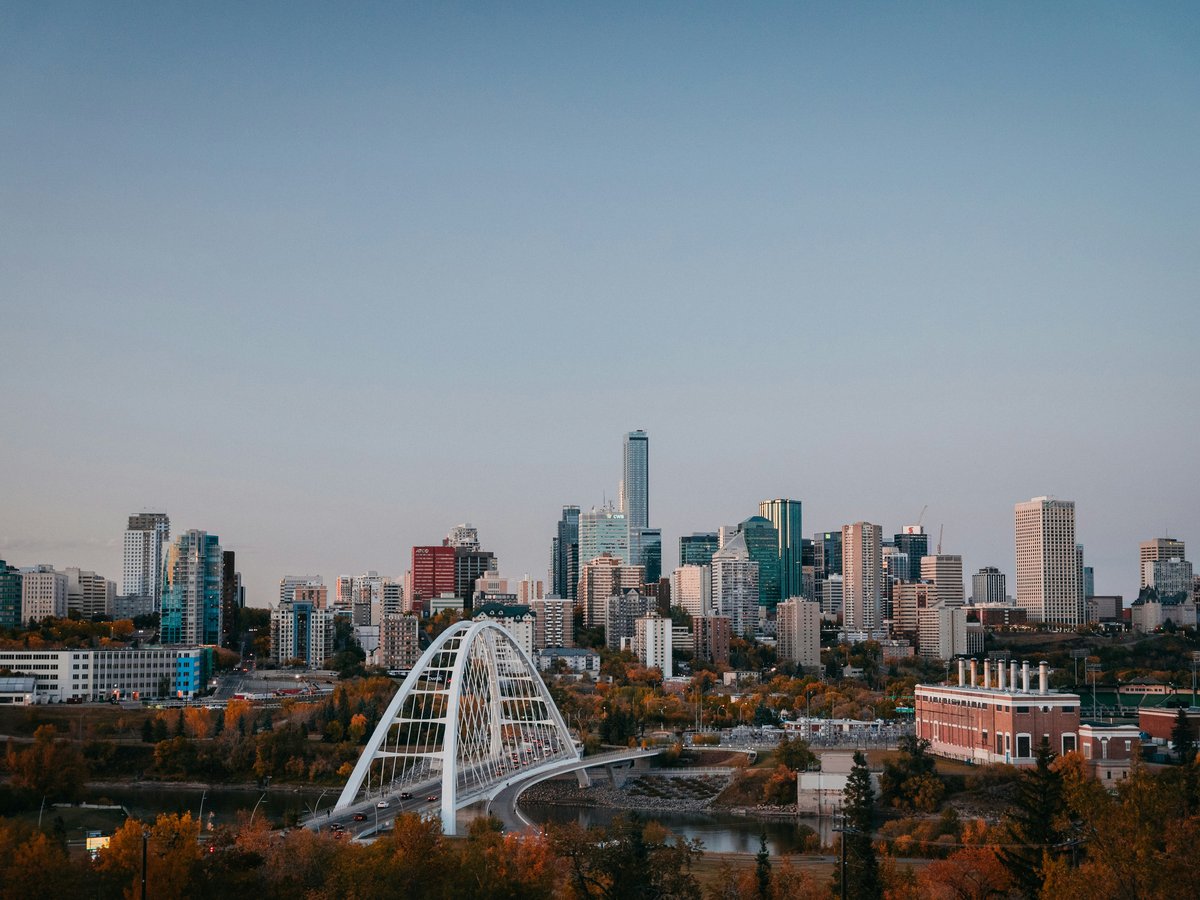
Edmonton is a river city, split by the North Saskatchewan into two halves that locals still call the north side and the south side. The valley itself, one of the largest urban parklands in North America at 7,400 hectares, acts as a green boundary between them. Downtown sits on the north bank, and the University of Alberta campus anchors the south. Most visitors stick to a corridor that runs from Jasper Avenue downtown, across the High Level Bridge, and south along 109th Street into Old Strathcona. That said, Edmonton's interesting neighborhoods tend to be scattered rather than clustered, so you'll likely find yourself driving or riding the LRT between pockets. The Capital Line and Metro Line connect the north end to the university area, though coverage is still limited compared to Calgary's system. Knowing a few key east-west avenues and north-south streets will orient you quickly. Whyte Avenue (82 Avenue) is the south side's main drag. Jasper Avenue is the north side equivalent. 124th Street has quietly become the gallery and design corridor on the west end. And Stony Plain Road, further northwest, is where Edmonton's immigrant food scene has been concentrated for decades.
Neighborhoods
-
Downtown and Ice District
Edmonton's downtown has been in transition for years. The opening of Rogers Place arena in 2016 triggered a wave of condo towers and hotel builds around 104th Avenue and 101st Street, and the area now feels like two neighborhoods stitched together. The older blocks along Jasper Avenue between 100th and 108th Street still have that mid-century prairie office-tower look, with a few sandstone survivors from the pre-war era mixed in. The Ice District side is all glass and steel, busy on Oilers game nights from October to April, quieter than you'd expect on weekday afternoons. Wind is the defining sensory detail here. Downtown Edmonton sits exposed on the river bluff, and winter gusts down Jasper Avenue can feel 10 degrees colder than the posted temperature.
- Best for
- Business travelers, hockey fans, and anyone who wants walkable access to the Winspear Centre, the Art Gallery of Alberta, and the Citadel Theatre without needing a car
- Key streets
- Jasper Avenue between 100th and 108th Street for the older commercial core. 104th Avenue around Rogers Place for the newer hotel and restaurant cluster. Rice Howard Way, a pedestrian lane off Jasper near 101st Street, still has a few independent spots.
-
Old Strathcona and Whyte Avenue
This is probably where Edmonton's personality is most concentrated. Whyte Avenue (82 Avenue) between 99th Street and 109th Street is lined with independent shops, record stores, tattoo parlors, live music venues, and restaurants in converted two-storey brick buildings, most dating from the early 1900s when Strathcona was still its own town. The farmers' market on 83rd Avenue has been operating since 1983 in a converted bus barn. On summer Saturday mornings, the market building gets packed by 9 AM. The noise level on Whyte Avenue after 10 PM on weekends is real, so light sleepers should stay a block or two south. You'll smell roasting coffee from Transcend or Iconoclast before you see the storefronts. The side streets south of Whyte, particularly around 105th Street, are lined with early-century bungalows and large elms.
- Best for
- First-time visitors who want to walk everywhere, couples, anyone who prioritizes food and nightlife over hotel polish. Budget travelers will find more hostel and Airbnb options here than anywhere else in the city.
- Key streets
- Whyte Avenue (82 Avenue) is the spine. 104th Street (called Gateway Boulevard further south) crosses it and has a few restaurants worth ducking into. The stretch of 83rd Avenue near the Old Strathcona Farmers' Market is good for weekend wandering.
-
Oliver
Oliver sits immediately west of downtown, roughly between 121st Street and 109th Street, from the river valley north to about 104th Avenue. It is Edmonton's densest residential neighborhood, with a mix of 1960s walk-up apartments, newer mid-rise condos, and a few older homes that survived the apartment boom. The pace feels more residential than downtown but still walkable to Jasper Avenue. High Street at 102nd Avenue and 124th Street has a cluster of cafes and restaurants. The river valley trails are accessible from several points along the southern edge of the neighborhood, and the walk down to the Groat Road footbridge is one of the better urban trail entries in the city. Oliver tends to be quieter than Old Strathcona at night, which suits some visitors.
- Best for
- Visitors who want a residential base within walking distance of downtown, especially those planning to use the river valley trails. Couples and solo travelers who prefer neighborhood coffee shops to hotel lobbies.
- Key streets
- 124th Street between 102nd Avenue and Jasper Avenue is the main commercial strip, with galleries, wine bars, and a few clothing boutiques. 104th Avenue has a growing number of restaurants. Victoria Promenade, the stretch of road along the river bluff near 116th Street, has some of the best skyline views in the city.
-
Garneau and University
Garneau is wedged between the University of Alberta campus and Old Strathcona, centered around 109th Street south of the river. The neighborhood has a grad-student feel, with older houses converted to rental suites, a handful of independent restaurants, and the Metro Cinema on the ground floor of the old Garneau Theatre building on 109th Street. The university campus itself is worth walking through for the brutalist architecture alone. The Humanities Centre and HUB Mall, a climate-controlled residential and retail corridor built in the 1970s, are genuine architectural curiosities. The area gets noticeably quieter in summer when students leave. At the moment, the LRT connects directly to campus via the University station, making this a reasonable base if you want transit access.
- Best for
- Academic visitors, conference attendees at the Shaw Conference Centre or university venues, budget-conscious travelers. Anyone visiting the Royal Alberta Museum's successor collections at the university.
- Key streets
- 109th Street between 82nd Avenue and the campus has the main commercial strip. 87th Avenue (University Avenue) runs east-west through campus. HUB Mall, an indoor street running north-south through campus, has food court options and a few shops.
-
124th Street District
This strip has been quietly becoming Edmonton's gallery and design corridor over the past 15 years. The stretch of 124th Street between 102nd Avenue and 108th Avenue has independent galleries, design-focused furniture shops, specialty food stores like Acme Meat Market (operating since 1960), and a growing number of mid-range restaurants. The architecture is mostly low-rise commercial buildings, some with brick facades from the 1940s and 1950s. The pace is slower than Whyte Avenue. You might notice that the foot traffic skews older here, more 30-to-60 than the Whyte Avenue crowd. Worth noting, several of the galleries participate in a monthly First Thursday art walk that draws a steady local crowd.
- Best for
- Design-minded visitors, art collectors, anyone who prefers a quieter strip with independent shops over a busy entertainment district. Couples looking for a dinner-and-gallery evening.
- Key streets
- 124th Street is the artery. 107th Avenue and 108th Avenue have a few cross-street spots. Stony Plain Road crosses 124th a few blocks north and has its own separate food scene.
-
Stony Plain Road and Little Italy
Edmonton's Italian community settled along 95th Street north of Jasper Avenue, and the neighborhood still has a few anchors from that era. The Italian Centre Shop at 10878 95th Street is a large deli and grocery that has been there since 1959. Stony Plain Road (111 Avenue), running northwest from about 124th Street, has evolved into one of the city's most interesting immigrant food corridors. Vietnamese, Ethiopian, Salvadoran, and Middle Eastern restaurants sit in unremarkable strip-mall storefronts along a 3-kilometre stretch. The buildings are largely single-storey commercial from the 1950s and 1960s, with large parking lots. It is not walkable in the way Whyte Avenue is. You drive from spot to spot. The area around 95th Street still has a few Italian social clubs and the Giovanni Caboto statue in a small park on 108A Avenue.
- Best for
- Serious food travelers willing to drive. Anyone interested in Edmonton's immigrant history and the communities that shaped the north side.
- Key streets
- 95th Street between 107th Avenue and 111th Avenue for the Italian core. Stony Plain Road (111 Avenue) between 124th Street and 149th Street for the broader food corridor. 118th Avenue east of 97th Street has a separate cluster of African and Middle Eastern shops.
-
Ritchie
Ritchie is a small residential neighborhood south of Whyte Avenue, roughly between 96th Street and 99th Street, centered around 76th Avenue. It was a working-class area for decades and still has modest postwar bungalows on tree-lined streets. The Ritchie Market, a converted warehouse space at 9570 76th Avenue, now holds Blind Enthusiasm Brewing and a few food vendors. The neighborhood has been changing. Home prices in Ritchie rose roughly 30 percent between 2019 and 2024, and new infill houses sit next to original 1940s bungalows. The feel is residential and quiet, with a 10-minute walk north to Whyte Avenue. On summer evenings, the patio at Blind Enthusiasm fills up early with neighborhood regulars.
- Best for
- Visitors who want a quiet residential base near Old Strathcona without the noise of Whyte Avenue. Beer enthusiasts. Families who prefer a low-key neighborhood.
- Key streets
- 76th Avenue between 96th and 99th Street is the commercial heart, though it is only a few blocks long. 99th Street runs north to connect with Whyte Avenue and south toward Mill Creek Ravine, one of the better urban trail corridors in the city.
-
Highlands and Beverly
Highlands sits northeast of downtown on the bluff above the river, roughly between 50th Street and 68th Street along 112th Avenue. The neighborhood has some of Edmonton's best-preserved early-century homes, with Craftsman bungalows and larger foursquares from the 1910s and 1920s lining the streets. 112th Avenue (also called Ada Boulevard east of 50th Street) follows the river bluff, and the views into the valley from the lookout points along Ada Boulevard are likely the most underrated in the city. Beverly, further east, has a more working-class feel with smaller postwar homes and a couple of community league rinks. The drive along Ada Boulevard in October, when the elms and aspens turn, is something locals know about but rarely share with visitors.
- Best for
- Architecture enthusiasts, photographers, visitors with a car who want a quieter residential area away from the main tourist corridors. Not ideal if you need walkable dining or transit access.
- Key streets
- 112th Avenue (Ada Boulevard) along the bluff is the signature street. 112th Avenue through the commercial strip near 65th Street has a few cafes and shops. 118th Avenue further north has the remnants of Beverly's old commercial strip.
FAQ
Where should I stay in Edmonton if I don't have a car?
Old Strathcona near Whyte Avenue gives you the most walkable access to restaurants, shops, and nightlife. Oliver is a good second choice, with 124th Street's restaurants and galleries within walking distance and a short walk to downtown. Both neighborhoods have reasonable transit connections via the LRT at University or Churchill stations. Downtown near Rogers Place works for business travelers, but the streets thin out quickly west of 109th Street after business hours.
Which Edmonton neighborhoods are best for food?
That depends on what you want. Whyte Avenue and 104th Street have the most concentrated sit-down restaurant options, leaning toward mid-range and craft cocktail spots. Stony Plain Road is where the real range lives, with Vietnamese pho shops, Ethiopian injera houses, and Salvadoran pupuserias scattered along a 3-kilometre strip, most charging under 15 dollars a plate. The Italian Centre Shop on 95th Street is worth a trip for deli sandwiches alone. 124th Street has a quieter, slightly more upscale food scene with places like Woodwork and Biera.
Is Edmonton walkable between neighborhoods?
Partially. Old Strathcona, Garneau, and Ritchie are close enough to walk between in 15 to 20 minutes. Downtown and Oliver connect easily on foot along Jasper Avenue. But getting from the south side to downtown means crossing the river valley, usually via the High Level Bridge (about a 20-minute walk) or the LRT. The north-side neighborhoods like Highlands and the Stony Plain Road corridor really require a car or a long bus ride. Edmonton's grid layout makes navigation simple, but distances between interesting areas can be 5 to 10 kilometres.
When is the best time of year to explore Edmonton's neighborhoods on foot?
Late June through early September is the comfortable window, with average highs around 21 to 23 degrees Celsius and long daylight hours that stretch past 10 PM in June. The Edmonton International Fringe Festival in mid-August fills Old Strathcona with outdoor stages and street performers for 10 days. September and early October bring fall colors along the river valley trails and cooler temperatures around 12 to 15 degrees. From November through March, plan to use the pedway system downtown and drive between neighborhoods. Minus-20 days are common in January and February.
Are there neighborhoods to avoid in Edmonton?
Edmonton does not have neighborhoods that are dangerous in the way some larger cities do, but a few areas require common-sense caution after dark. The stretch of 118th Avenue between 82nd Street and 97th Street, and parts of the Boyle Street area east of downtown near 97th Street, can feel rough late at night. Chinatown around 97th Street and 105A Avenue has been struggling with vacancy and social issues in recent years, though the dim sum at places like Jumbo Noodle on 97th Street is still worth a daytime visit. Stick to the main corridors and well-lit streets after dark and you will be fine.
Last verified by automated review (v1.7.2) on . What is automated review?