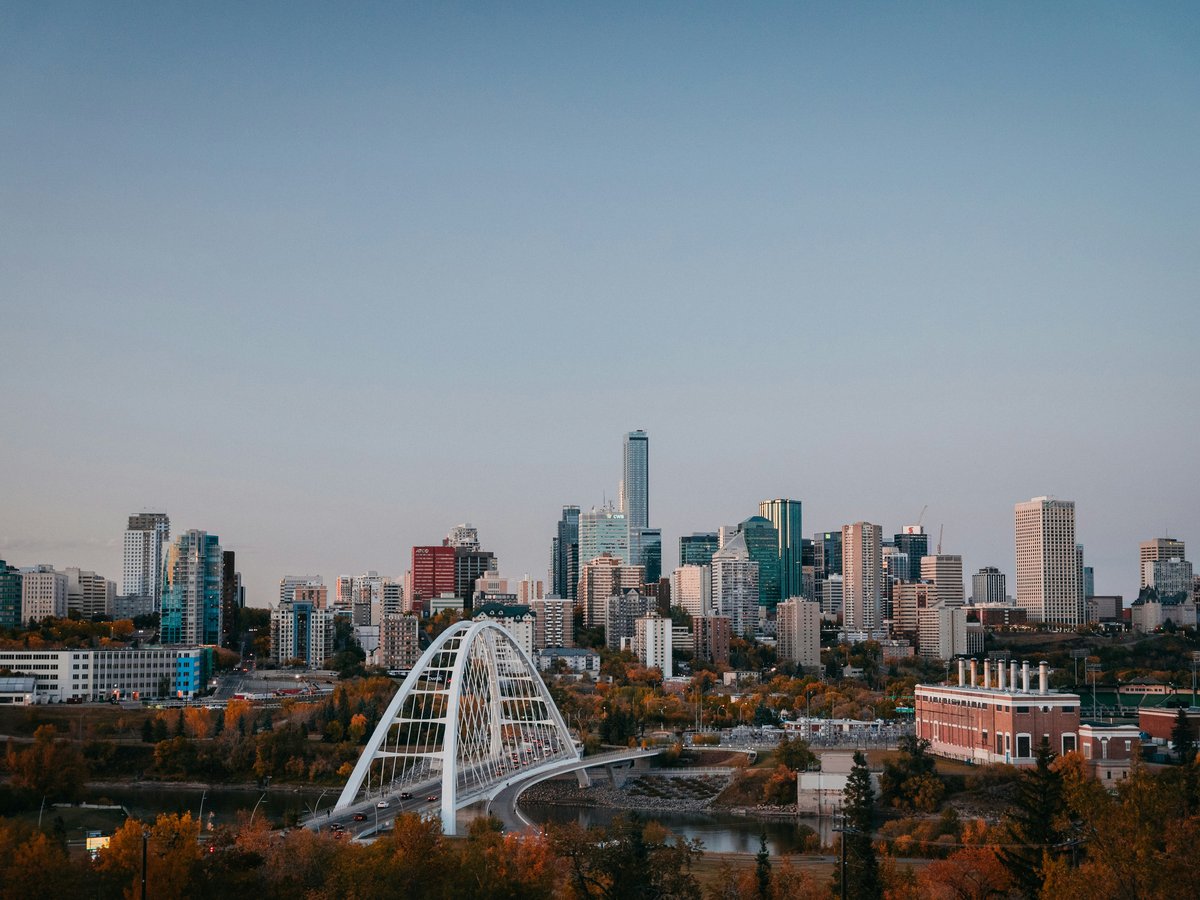
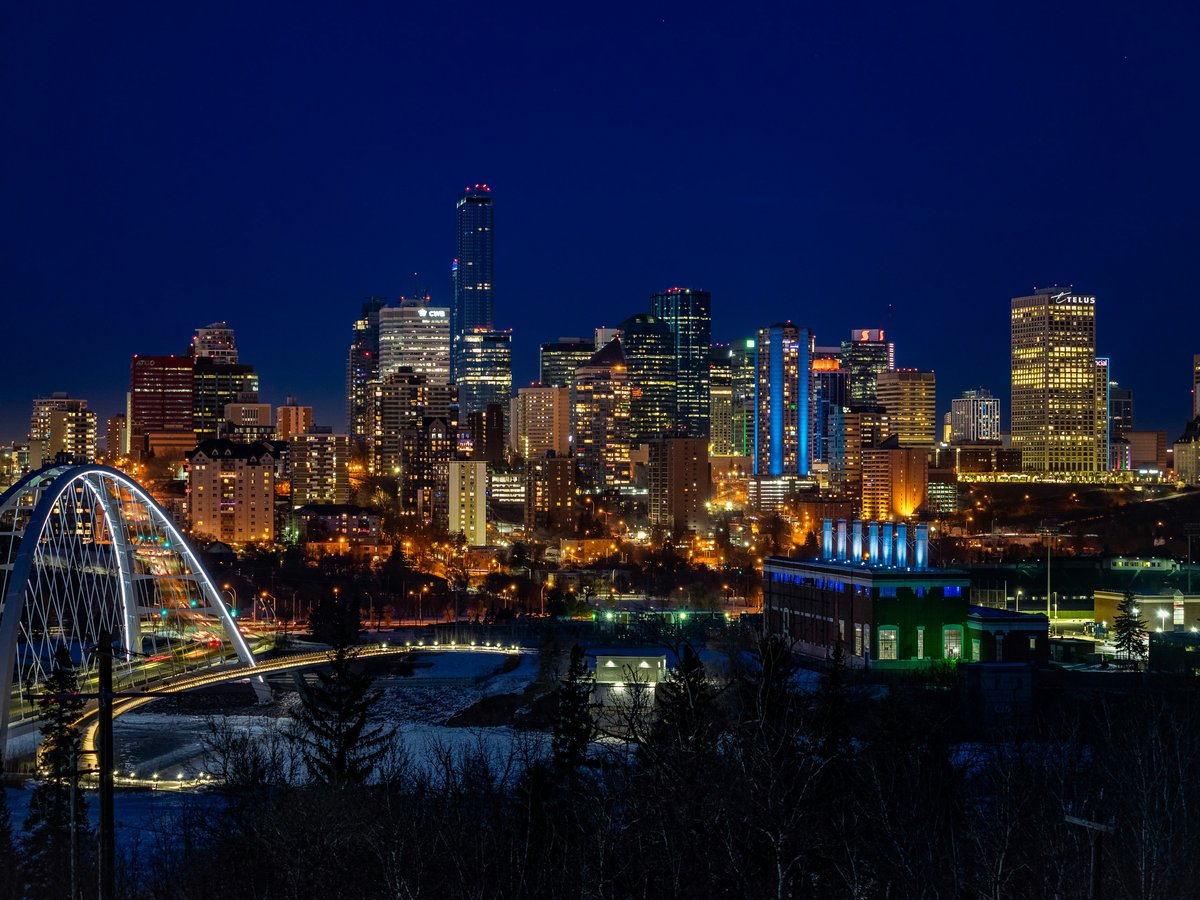
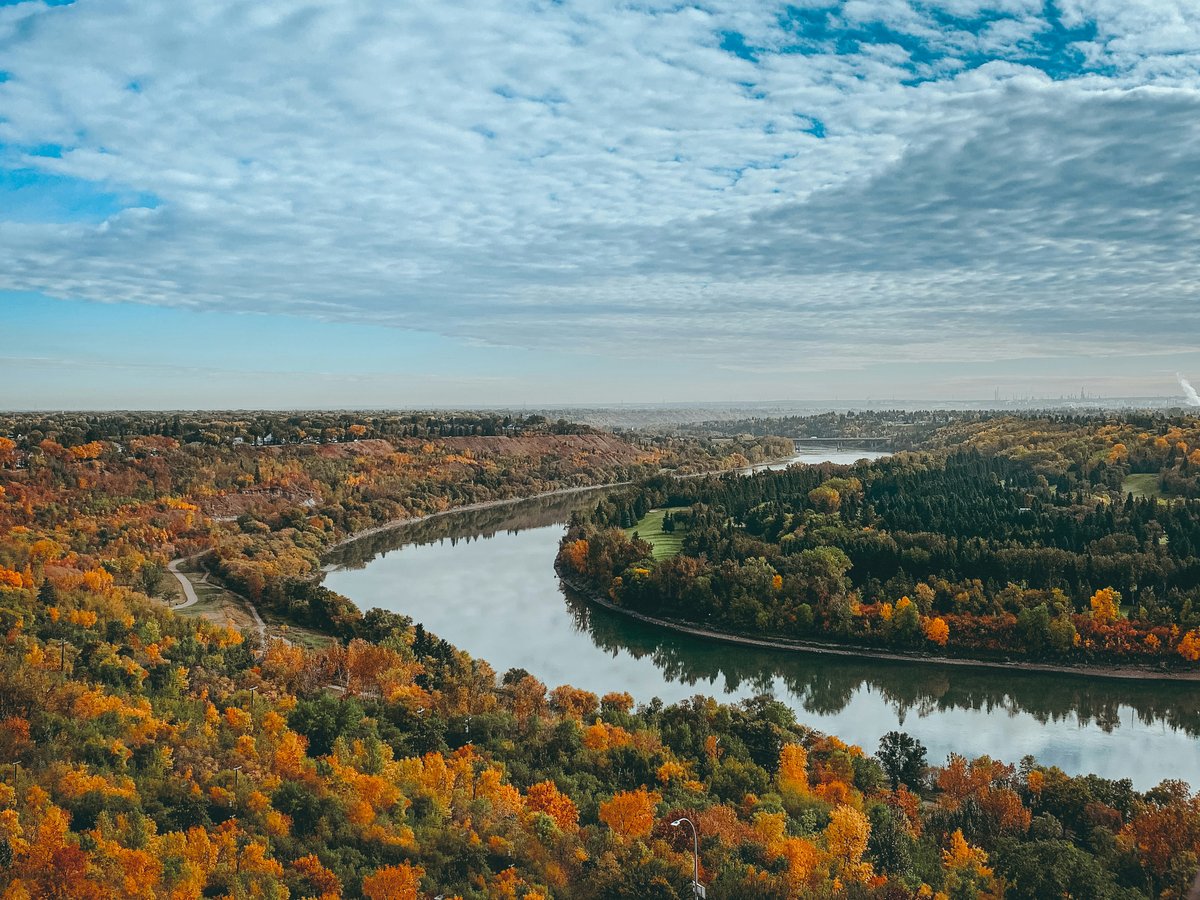
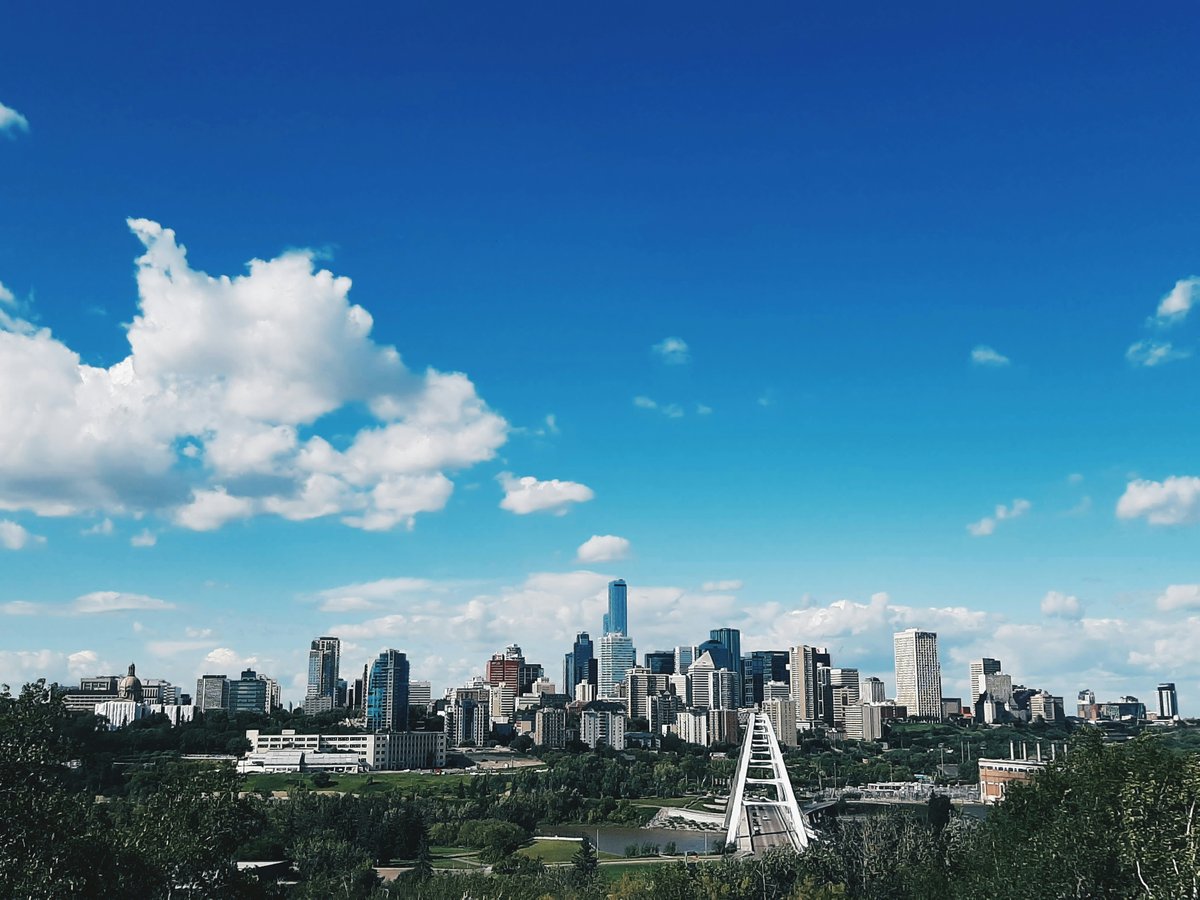
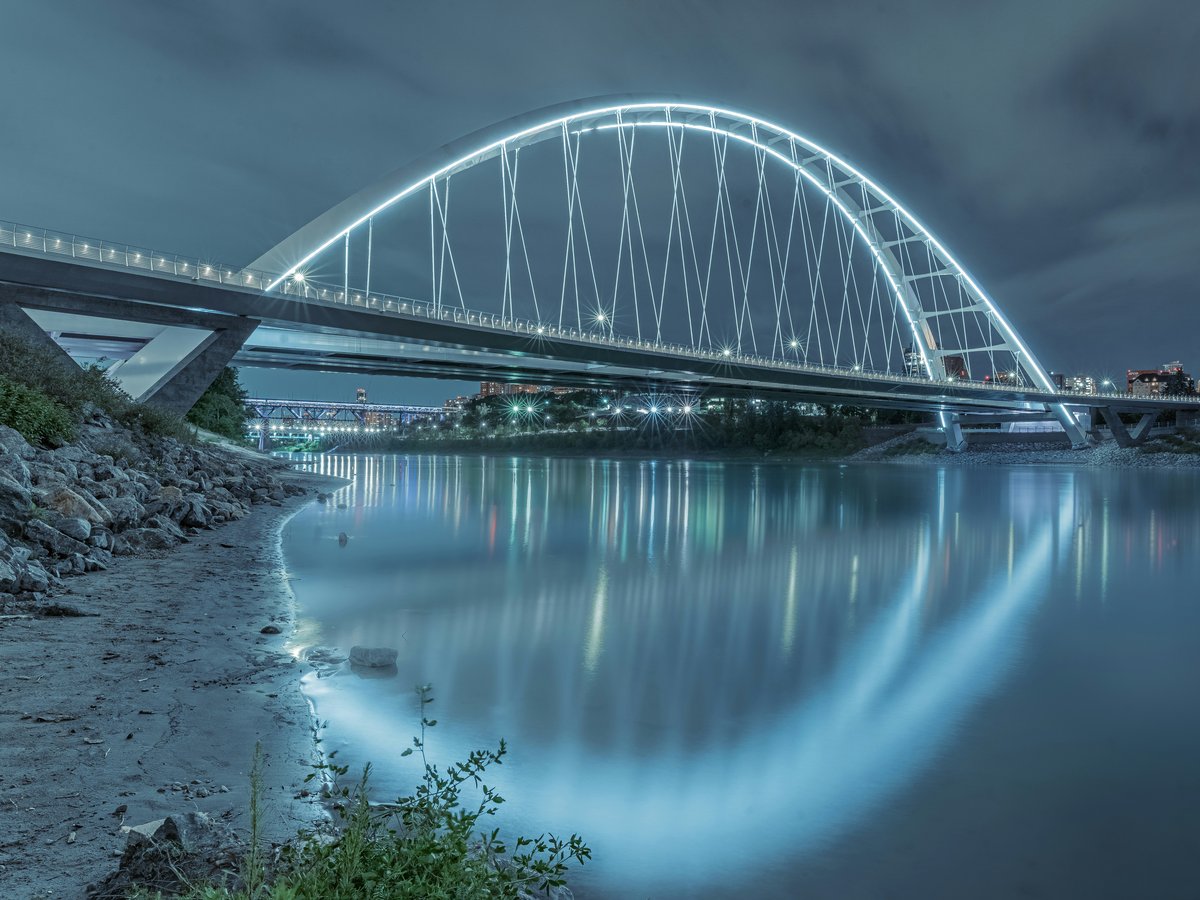
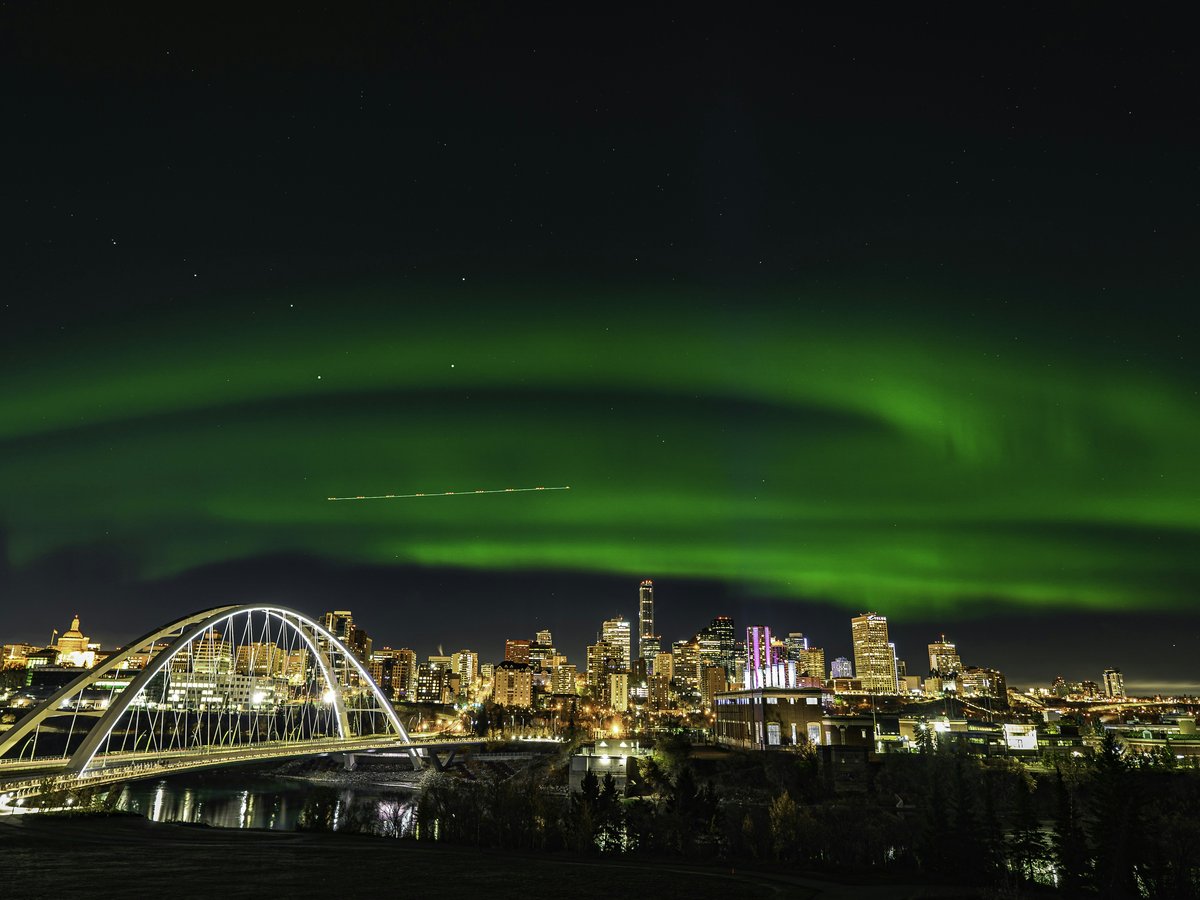
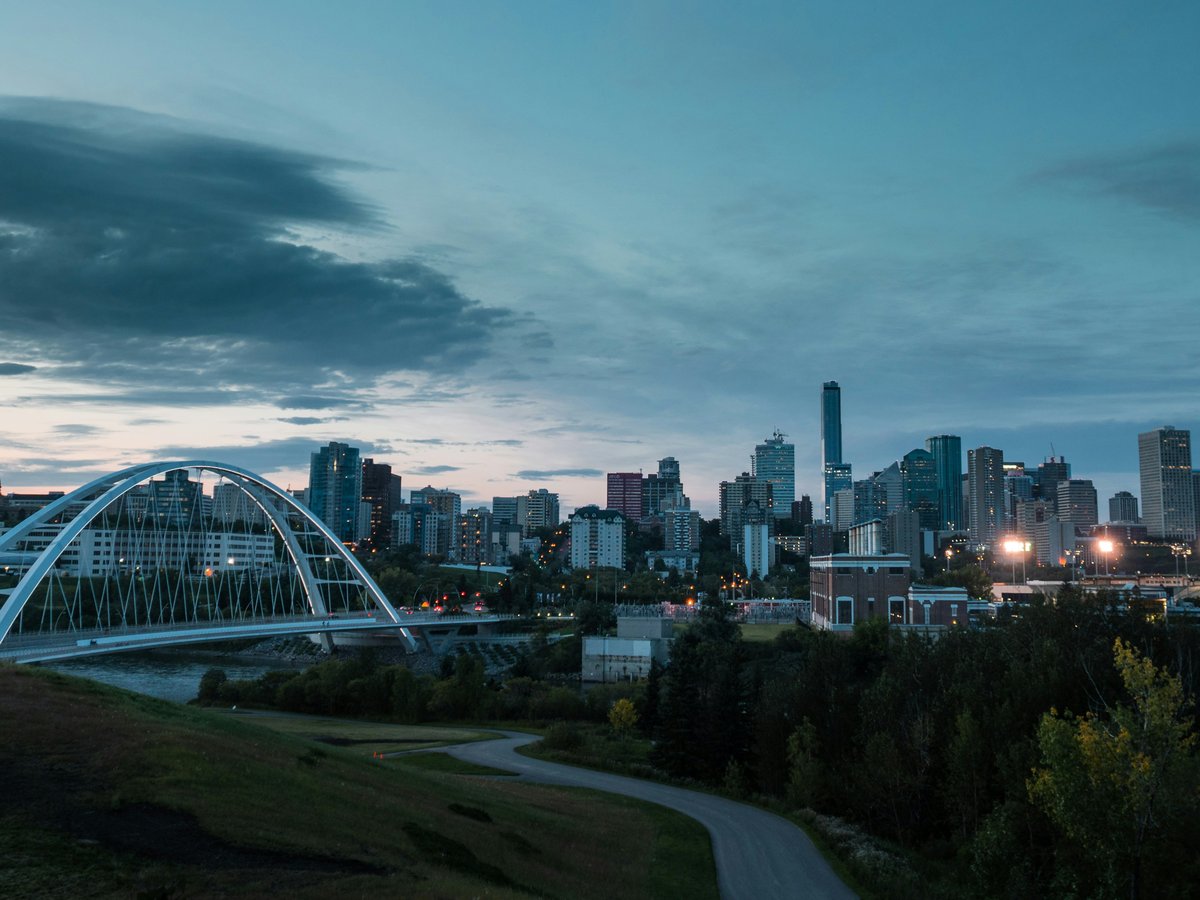
Edmonton sits further north than any other major Canadian city west of Quebec, and you feel it in the light: summer days that stretch past ten at night, winter afternoons that gutter out before five. The North Saskatchewan River cuts a deep valley through the centre of town, and the city has left most of it as parkland, creating one of the largest urban trail systems on the continent. You can walk for hours along the river bluffs without touching a road. Downtown has been reshaped by the Ice District, an arena complex around Rogers Place that replaced surface parking with something that reads as a neighbourhood after dark. South of the river, Old Strathcona along Whyte Avenue is where most visitors spend their evenings: the theatre-and-bar district and home to the Edmonton Fringe, which every August becomes the largest fringe festival in North America. West of downtown, 124 Street has filled in with restaurants and small galleries at a scale you won't find near the arena. Edmonton was a fur-trade post, then a staging ground for the Klondike gold rush, then an oil-economy capital, and each identity left a layer: Fort Edmonton Park reconstructs the first two with unusual care, while the glass towers along Jasper Avenue speak plainly to the third. The city's relationship with winter is pragmatic rather than romantic: people complain about February, but they flood outdoor rinks and pack cross-country ski trails through the river valley the moment conditions allow. If you arrive in summer, the festival calendar is relentless: folk music, street performers, heritage days cycling through dozens of cultural pavilions in Hawrelak Park. Arrive in winter and bring a parka rated to minus thirty; the best restaurants will be half-empty on a Tuesday night, which is not the worst way to experience them.
Edmonton in photos
Edmonton right now
Answers about Edmonton
-
Airport to city
Take the Route 747 bus from YEG arrivals (Door 10) to Century Park LRT station for $5 CAD ($3.57 USD). Transfer to the Capital Line LRT north to Churchill Station downtown. The fare covers both legs. Total trip runs about 50 minutes. After midnight or in deep winter, Uber to downtown costs $35-50 CAD, about 30 minutes.
Read the full answer → -
Best time to visit
July and August are Edmonton's window. The city gets 17 hours of daylight by late June, summer highs sit around 22°C (72°F), and the Edmonton International Fringe Festival fills Old Strathcona with 1,600 performances across 11 days in mid-August. June and September work as shoulder months with thinner crowds. Avoid November through March, when temperatures drop below -20°C and daylight shrinks to 7 hours.
Read the full answer → -
Cost per day
Edmonton costs CAD 75-140 ($54-100 USD) per day for budget travelers. Hostel dorms on Whyte Avenue go for CAD 40-50, Vietnamese pho on 97 Street costs CAD 12, and ETS transit charges CAD 3.50 per ride. Alberta has no provincial sales tax. Midrange sits near $140 USD. The 160 km River Valley trail system costs nothing.
Read the full answer → -
Best day trips
Elk Island National Park, 35 km east on Highway 16, is the best single-day trip from Edmonton for bison viewing and quiet shoreline walks at Astotin Lake. Drumheller, 280 km southeast, has the Royal Tyrrell Museum and its 160,000 fossils but needs an early 7am start. Sylvan Lake works for summer beach days. Jasper, 362 km west, needs 2 nights minimum.
Read the full answer → -
Digital nomads
Edmonton works for budget-conscious nomads who want fast internet and low Canadian rent, though winter limits comfortable months to about 5. Telus PureFibre delivers 300-1,000 Mbps for CAD $85-115 per month. Monthly all-in cost sits around $2,100 USD. Rent in Oliver or Old Strathcona runs CAD $1,300-1,700 for a furnished one-bedroom. November through March means -20°C stretches and fewer than 8 hours of daylight.
Read the full answer → -
Family-friendly
Edmonton scores 8/10 for families. West Edmonton Mall's Galaxyland and World Waterpark fill full rainy days indoors. The Royal Alberta Museum admits kids under 6 free. Wide suburban sidewalks handle strollers easily, though the LRT has limited reach. Winter temperatures drop to -20°C, making indoor attractions the backbone of any December visit with young children.
Read the full answer → -
Food culture
Edmonton's food identity runs on Ukrainian perogies, Vietnamese pho, and the green onion cake that city council named its official dish in 2020. The best eating happens outside downtown. Mill Woods, 20 minutes southeast, serves some of Western Canada's strongest South Asian cooking. The 97th Street pho corridor has been running for over 30 years. Budget CAD 14-22 per meal at neighbourhood spots.
Read the full answer → -
Getting around
Uber and the LRT cover most visitor needs in Edmonton. The Capital Line LRT runs north-south through downtown to Century Park. Load an Arc card with $20 CAD for a few days of transit. Edmonton is a car city, so Uber fills the gaps between LRT stations, typically $8-15 CAD across the central area.
Read the full answer → -
How to get there
Edmonton International Airport (YEG), 30 km south of downtown, is the city's sole commercial airport. Air Canada and WestJet run daily nonstops from Toronto (4.5 hours), Vancouver (2.5 hours), and Calgary (1 hour). US connections include Denver, Minneapolis, and Las Vegas on United, Delta, and WestJet. Round-trip fares from major US cities typically run $350-550 USD.
Read the full answer → -
Is it safe?
Edmonton is safe enough for solo travel but demands awareness. Property crime runs above the Canadian average, and winter cold below -30°C is a genuine physical hazard for several months each year. Violent crime against visitors is rare. The real caution points are specific downtown corridors after dark, not the city as a whole. Emergency number is 911.
Read the full answer → -
Layover guide
Yes, if your layover at Edmonton International (YEG) runs 6 hours or longer. The airport sits 30 km south of downtown, about 35 minutes by rideshare at CAD 50-60 one way. Factor in 20 minutes for immigration each direction and a 90-minute return security buffer, and a 6-hour window leaves roughly 2.5 hours in the city for the Royal Alberta Museum or Whyte Avenue.
Read the full answer → -
LGBTQ-friendly
Edmonton scores 8.5/10 for LGBTQ+ friendliness (sourced from TTDI's editorial rubric). Canada was the fourth country to legalize same-sex marriage, and Edmonton has been Alberta's progressive anchor for decades. The Old Strathcona nightlife strip is where the queer-friendly scene centers. Same-sex couples hold hands on Jasper Avenue without drawing a second glance.
Read the full answer → -
Where locals go
Edmonton's local life clusters along 124th Street in Westmount, south of Whyte Avenue in Old Strathcona, and in Ritchie around Blind Enthusiasm brewery. Transcend Coffee on 124th draws freelancers who stay for hours. The Next Act Pub on 104th Street pulls the theatre crowd. Ritchie Market and Biera anchor the 25-to-40 demographic south of 76th Avenue.
Read the full answer → -
Must-see
The North Saskatchewan River Valley. Edmonton sits on the largest urban parkland in North America, 7,400 hectares of forested ravines 50 metres below the city grid. Walk over 150 km of maintained trails without leaving city limits. In mid-June the cottonwood drifts like warm snow and daylight holds past 10pm. Free, open 24 hours, no reservation.
Read the full answer → -
Solo travel
Edmonton scores 6.5/10 for solo-traveler safety (see the TTDI Solo-Safety Index). The city works best alone from June through August, when the Fringe Festival and Folk Music Festival at Gallagher Park create built-in social structure. Winter drops temperatures to -20°C and makes the city car-dependent. Whyte Avenue in Old Strathcona is the best neighborhood for solo diners. Budget CAD 100-150 per day.
Read the full answer → -
This week
Edmonton's week pivots on two markets. The Old Strathcona Farmers' Market runs Saturday 8am to 3pm on 83rd Avenue, while the 124 Grand Market fills 124 Street on Thursdays from 4pm to 8pm. Summer afternoons push past 29°C before thunderstorm cells build by 4pm. Whyte Avenue bars peak Friday and Saturday past midnight.
Read the full answer → -
3-day itinerary
Day 1 stays downtown. Royal Alberta Museum by 10am, lunch on 104th Street, Art Gallery of Alberta at 2pm, then the river valley Funicular before dinner. Day 2 crosses to Old Strathcona for the Farmers' Market, Whyte Avenue record shops, and Muttart Conservatory's glass pyramids. Day 3 heads west to Galaxyland at West Edmonton Mall, then 124th Street for pastries and galleries. About 28 kilometres total.
Read the full answer → -
What to avoid
Skip the full-day West Edmonton Mall marathon. Two hours covers Galaxyland, the Mindbender, and World Waterpark. Avoid downtown streets east of 97 Street after dark, and never underestimate Edmonton winters. Temperatures drop below -30°C from December through February. Budget C$15-25 for downtown parking and head to 124 Street or 107 Avenue for food.
Read the full answer → -
What to pack
Edmonton's temperature swings define your packing list. Summer days reach 28-30°C but evenings along the North Saskatchewan River valley drop below 12°C, so bring layers you can shed by noon and add back after dark. Winter demands a parka rated to -30°C. Good walking shoes matter year-round for the 160 km river valley trail network.
Read the full answer → -
Where to stay
Stay downtown near the Ice District for a first visit. The area around Rogers Place puts you within walking distance of the Art Gallery of Alberta, the Royal Alberta Museum, and the LRT at Churchill station. Budget $110-180 USD per night for a mid-range hotel. Old Strathcona, across the river on Whyte Avenue, suits repeat visitors who want neighborhood character over transit convenience.
Read the full answer →
Deep guides for Edmonton
Curated lists for Edmonton
accommodation
-
Best boutique hotels
Edmonton spreads across the North Saskatchewan River valley in a grid that rewards travelers who pick their neighborhood before their hotel. The core splits into two downtown clusters: one tight against the river bluffs with views and LRT access, the other reaching toward the legislature grounds. West of center, the sprawl around West Edmonton Mall holds more depth in its hotel inventory than most guides suggest, with prices that undercut the core by a wide margin. South of the core, the strip-mall corridors of Southwest Edmonton and the residential quiet of La Perle offer suite-style rooms for road trippers who want a kitchen and a parking spot more than a walkable block. Greater Strathcona, anchored by Whyte Avenue, is the only neighborhood where the sidewalk scene matters after sundown. The remaining pockets serve specific purposes: proximity to Yellowhead Trail for northbound departures, proximity to the mall for families, proximity to nothing much for travelers who just need a clean room and a reasonable rate. Edmonton is not a city that sells itself on boutique density; it sells itself on space, value, and the fact that every neighborhood listed here sits within a short drive of the river valley trail system. Choose by function, not by charm, and the city works.
See the picks → -
Best hostels
Edmonton's budget accommodation spreads along two corridors: the commercial south, where Gateway Boulevard and Calgary Trail string together motor inns and chain hotels between Whyte Avenue and the airport, and the western fringe, where proximity to West Edmonton Mall anchors another cluster. Downtown holds a smaller share, concentrated around Jasper Avenue and the convention district. The split matters for hostel-budget travelers because Edmonton is a driving city; the LRT runs north-south through the center but thins out fast beyond the university, and most of the affordable rooms sit in car-dependent strips. Whyte Avenue in Old Strathcona is the closest thing to a walkable budget quarter, but the branded hotels ring it rather than line it. The south corridor runs cheapest, with rates starting at $53 and most properties scoring 8.0 or above on Trip.com, while downtown rooms start around $74 and trade walkability for older buildings. West Edmonton Mall draws its own overnight traffic, and the hotels nearby price to that captive audience. None of these neighborhoods pretend to be European pedestrian quarters; they are North American highway-hotel districts with varying degrees of nearby food and transit. The honest question is not which area charms you but which one puts you closest to whatever brought you to Edmonton in the first place.
See the picks → -
Where to stay
Edmonton spreads its hotel inventory across a wide grid that does not cluster the way denser cities do. Downtown splits into three distinct booking zones, each with its own transit links and price band, while the suburban rings to the southwest and northwest hold budget and mid-range stock near the highways. The river valley cuts the city in half; staying north of it keeps you closer to Rogers Place, the Art Gallery of Alberta, and the Ice District, while the south side puts Whyte Avenue's independent shops and Old Strathcona's weekend farmers' market within reach. Winter matters here more than in most cities. A hotel connected to the pedway system, the enclosed walkway network threading through downtown towers, saves you genuine cold-weather misery from November through March. If you are flying in and out of Edmonton International, the southern suburbs shave time off the airport run but leave you far from the river valley and the downtown core. The ten neighborhoods below move from highest hotel density to lowest, and each card names the tier-balanced picks that anchor the area's price range.
See the picks →
attractions
-
Best free attractions
Edmonton's case for a free day out is written into its river valley and its parks, not its ticket booths. The city has stitched together a network of municipal parks, a downtown square, a botanical garden run by the municipality, and a provincial park on its northwestern edge: all of them open to anyone who shows up. The list below leans on that public infrastructure: nine places, all cost-free at the gate, all mapped and named in the public record, and all reachable without a car if you plan around transit. It is a list for the visitor who does not want to spend, the resident showing a friend around, and the traveller who has already paid for the flight and would rather spend the rest on food. Read it as a sequence: the big central park first, then the downtown square, then the parks that spread out along the river and beyond the ring road. Every claim below is grounded in a public source; the opinions are the editor's, and cost you nothing to ignore.
See the picks → -
Best museums
Edmonton's museum shelf is unusually varied for a city its size: a purpose-built downtown art gallery, a provincial history museum a few blocks away, a science centre out on the west side, a small archive dedicated to one of the province's founding immigrant communities, a working railway yard in the county, and a living-history park by the river. The six that follow are not a survey of everything with a plaque; they are the addresses worth an actual afternoon. Two of them sit within a five-minute walk of each other on the edge of Sir Winston Churchill Square, which makes a single downtown day possible without moving a car. The other four each ask something different of you: a drive north, a drive west, a drive south, or a willingness to spend time with a very specific slice of Alberta's story. Read the list in order if you are new to the city; skip to the ones that match your appetite if you are not.
See the picks →
food
-
Best cafes
Edmonton's cafe map is short on scenography and long on working rooms: espresso bars that open before the office towers, bakeries wedged into century-old storefronts on 104 Street, and neighbourhood counters that keep a kettle on until 22:00. The twelve rooms below are the ones we send people to when they ask for coffee that is not a hotel-lobby afterthought. A few sit inside the Jasper Avenue corridor where downtown eats breakfast; others are on 109 Street and Whyte Avenue, closer to the university and Old Strathcona. Two of them are cafes in name and something else in practice, a sushi counter and a cheese room, which is Edmonton being honest about how it uses its rooms. Hours skew early and close by late afternoon, so plan the day around service, not the other way around.
See the picks → -
Best restaurants
Edmonton eats better than its reputation suggests, and the twelve rooms below are the argument. This is a city where the good cooking is scattered: a Jasper Avenue Indian kitchen, a downtown breakfast counter, a Whyte Avenue sandwich shop, a Westmount burger bar, a butcher-run lunch table on 107 Avenue, and the pleasure is in learning which corner rewards the drive. What ties the list together is not a scene but a discipline: kitchens that stay open the hours they post, addresses that have earned their block, menus narrow enough to mean something. Nine of the twelve serve into the evening; three are daytime-only rooms that reward an early alarm. You will find breakfast counters that close before the dinner crowd arrives, a downtown grill that runs until 01:00 six nights a week, and a Korean address on 92 Street currently dark for renovations but worth the wait. Bring an appetite, a car or a transit map, and the willingness to eat where the postal code, not the marketing, does the talking. The list runs from the downtown core out to Westmount, Strathcona and Ritchie: a working map of where Edmonton feeds itself.
See the picks →
Browse by traveler type
Find a flight to Edmonton
Live fares to Edmonton appear here once cookies are accepted.
Last verified by automated review (v1.7.2) on . What is automated review?