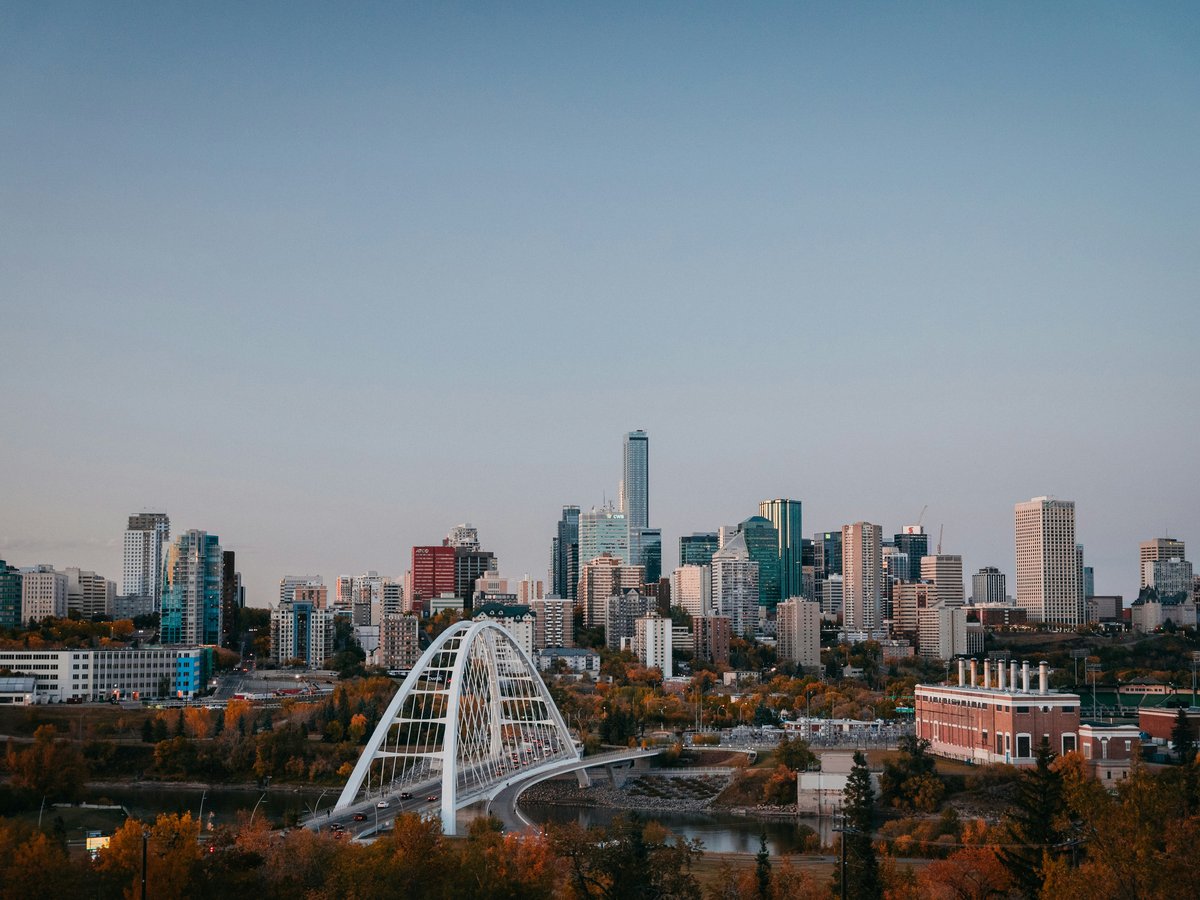
When's the best time to visit Edmonton in 2026?
July and August are Edmonton's window. The city gets 17 hours of daylight by late June, summer highs sit around 22°C (72°F), and the Edmonton International Fringe Festival fills Old Strathcona with 1,600 performances across 11 days in mid-August. June and September work as shoulder months with thinner crowds. Avoid November through March, when temperatures drop below -20°C and daylight shrinks to 7 hours.
July and August are when Edmonton makes sense as a destination. The North Saskatchewan River valley stretches 48 kilometres through the city, and by mid-July the trails through Hawrelak Park and Gold Bar Park are green, dry, and walkable until 10pm. Afternoon highs reach 22 to 24°C (72 to 75°F). The air along the river trails smells like cut grass and warm poplar sap, and you can hear the thump of live music from the Heritage Amphitheatre on most weekends. Restaurants along Whyte Avenue in Old Strathcona put tables on the sidewalk by late June. The Muttart Conservatory's outdoor gardens, open since 1976, hit their peak in July. You can walk from the Royal Alberta Museum downtown to the Legislature Grounds in 15 minutes without worrying about windchill. Hotel rates in central Edmonton run CAD 160 to 240 per night in peak summer, roughly USD 115 to 170 at the current exchange rate.
Edmonton's festival calendar in August is the strongest argument for visiting then. The Edmonton International Fringe Festival, running since 1982, fills Old Strathcona with over 1,600 performances across 40 venues for 11 days in mid-August. You'll smell pierogies and mini-donuts from the food stalls on 83rd Avenue before you see the stage tents. The Edmonton Folk Music Festival takes over Gallagher Park for 4 days in early August. Tickets sell out months ahead, so book by April. The Heritage Festival runs over the August long weekend in Hawrelak Park, where 60-plus cultural pavilions serve lamb shawarma, Filipino lumpia, and Ukrainian borscht at CAD 3 to 5 per plate. Mind you, August afternoons can hit 28°C with sudden thunderstorms that roll in from the west and drop the temperature 10 degrees in 20 minutes. A packable rain jacket earns its luggage space.
June and September are the shoulder months, and both are worth considering. June days stretch to 17 hours of light by the solstice, and the city feels unhurried before festival crowds arrive. Mid-June nights still dip to 12 or 13°C, so bring a light jacket for evening walks along the river valley. The Art Gallery of Alberta on Sir Winston Churchill Square, which has shown work in various forms since 1924, tends to be quiet on weekday mornings. September brings cooler nights around 5 to 8°C, and the river valley's poplar and aspen groves start turning gold by mid-month. The trade-off hits after Labour Day. Some patios on Whyte Avenue close for the season, and the 104th Street City Market scales back to weekends only. Hotel rates drop 20 to 30% from the August peak, and you can walk Mill Creek Ravine without sharing the trail.
November through March is a hard sell for a first visit. Edmonton sits at 53.5°N, roughly the same latitude as Manchester or Hamburg, and January's average low is -17°C (1°F). Wind chill pushes that to -30°C on bad weeks. The sun rises after 8:30am and sets by 4:15pm in December. Exposed skin stings within minutes at those temperatures. West Edmonton Mall, home to Galaxyland and the Mindbender triple-loop coaster, becomes the default indoor activity. The mall's waterpark smells of chlorine and warm humidity, a strange contrast to the dry cold outside. The Crestwood neighbourhood lights up Candy Cane Lane from late November through January 1, and the Ice on Whyte festival brings 5 days of ice-carving competitions to Whyte Avenue in late January. To be fair, Edmonton's winter air has a dry, sharp clarity you won't find south of the 49th parallel. Pack thermal base layers and boots rated to -40°C if you go in that window.
Month-by-month outlook
- Jan Avoid
- Feb Avoid
- Mar Avoid
- Apr Avoid
- May Shoulder
- Jun Shoulder
- Jul Ideal
- Aug Ideal
- Sep Shoulder
- Oct Shoulder
- Nov Avoid
- Dec Avoid
Year-round climate
Averages from the last 5 years.
| Month | Avg high (°C) | Avg low (°C) | Rainfall (mm) |
|---|---|---|---|
| Jan | -6 | -13 | 25 |
| Feb | -7 | -16 | 17 |
| Mar | 0 | -9 | 23 |
| Apr | 10 | -1 | 28 |
| May | 18 | 6 | 60 |
| Jun | 21 | 11 | 100 |
| Jul | 24 | 14 | 90 |
| Aug | 23 | 13 | 79 |
| Sep | 20 | 9 | 28 |
| Oct | 11 | 2 | 21 |
| Nov | 0 | -7 | 24 |
| Dec | -8 | -16 | 36 |
Continental extremes. Summer highs 22-24°C with 17 hours of daylight. Winter lows average -17°C, wind chill to -30°C. July-August rainfall 75-90mm per month.
Last verified by automated review (v1.7.2) on . What is automated review?