
Kathmandu sits at roughly 1,400 metres in a valley that was, geologically speaking, a lake bed until the Bagmati River carved a gorge through the surrounding hills and eventually drained it. That origin explains the city's improbable fertility (a million people sustained by alluvial soil in the middle of the Himalayas) and the particular quality of its light, which pools in the basin and turns the afternoon haze ochre against the brick facades of Newari townhouses. The city keeps Nepal Standard Time, UTC plus five hours and forty-five minutes, one of the world's few quarter-hour offsets, and even this small oddity signals something true: Kathmandu operates by its own logic. Your first morning will likely begin in Thamel, the dense tourist quarter north of the old royal palace, where guesthouse touts and trekking outfitters compete for sidewalk space, but the neighbourhood worth your attention is Asan, a few blocks south, where the market crossroads still functions as it has for centuries: spice sellers, brass vendors, and small temples pressed between shopfronts selling SIM cards. From Asan you can walk to Durbar Square at Hanuman Dhoka, where the 2015 earthquake toppled temples that had stood since the Malla kings and where reconstruction still continues, scaffolding and carved wood standing side by side. Cross the Bagmati south into Patan: technically Lalitpur, a separate municipality, though the urban seam is invisible, and the architecture shifts to something finer, the Newari courtyards quieter and less tourist-worn. Boudhanath's white stupa and Pashupatinath's riverside cremation ghats sit east of centre, close enough for an afternoon but different enough to feel like separate cities entirely. What holds it all together is scale: Kathmandu is a national capital you can still cross on foot, where medieval infrastructure and modern disorder occupy the same narrow lanes without any apology.
Kathmandu in photos


Kathmandu right now
Answers about Kathmandu
-
Airport to city
From Tribhuvan International Airport (KTM), take a prepaid taxi from the counter inside the arrivals hall. Fixed fare to Thamel is NPR 700-800 ($5), and the ride takes 20-40 minutes. The receipt settles the price before you reach the car. No negotiation needed, and the counter operates for every arriving flight.
Read the full answer → -
Best time to visit
October and November are the best months for Kathmandu. Monsoon clouds clear by early October, and the Himalayan range becomes visible from Nagarkot and Swayambhunath. Temperatures sit between 10°C and 25°C. Dashain and Tihar festivals fill Basantapur Durbar Square with marigold garlands, and hotel rates stay 20-30% below the December peak.
Read the full answer → -
Cost per day
Budget travelers spend around NPR 2,250 ($15) per day in Kathmandu. A hostel dorm in Thamel runs NPR 600-900, dal bhat costs NPR 150-200 at local spots outside the tourist corridor, and local buses cost NPR 25-35. Midrange lands near $50, luxury around $150+. The biggest hidden cost is foreigners-only entry fees at Durbar Squares and Pashupatinath, which can add NPR 4,800 ($32) across a two-day temple run.
Read the full answer → -
Cultural etiquette
Greet with 'namaste', palms together at chest height with a slight bow. Never point feet at people or religious objects. Remove shoes before entering temples and homes. The left hand is considered impure, so pass food and money with your right. Non-Hindus cannot enter Pashupatinath Temple's main sanctum. Tipping 10% at tourist restaurants in Thamel is now common, though not expected at local dal bhat shops.
Read the full answer → -
Best day trips
Bhaktapur is the strongest single-day trip from Kathmandu, 13 km east, reachable by local bus for 30 NPR in 40 minutes. Nagarkot and Dhulikhel give Himalayan panoramas within 90 minutes by taxi. Patan sits 5 km south and fills a half-day. Changu Narayan and Namo Buddha reward couples who want quiet over crowds.
Read the full answer → -
Digital nomads
Kathmandu scores 6/10 for nomads. WorldLink or Vianet fiber delivers 50-100 Mbps in Jhamsikhel and Lazimpat apartments for NPR 1,500-2,500/month, but load-shedding still drops connections 2-4 hours daily without a UPS. Coworking at Chhito costs NPR 8,000/month for a dedicated desk. All-in budget sits around $950/month. The 150-day annual tourist visa cap forces a border run or exit twice yearly.
Read the full answer → -
Family-friendly
Kathmandu is moderately family-friendly. Nepali people are warm toward children, and the valley's temple squares keep kids engaged. But strollers are nearly useless on broken sidewalks, changing tables barely exist outside 4-star hotels, and monsoon humidity from June through September means kids under 3 wilt by noon. Bring a child carrier, not a stroller.
Read the full answer → -
Food culture
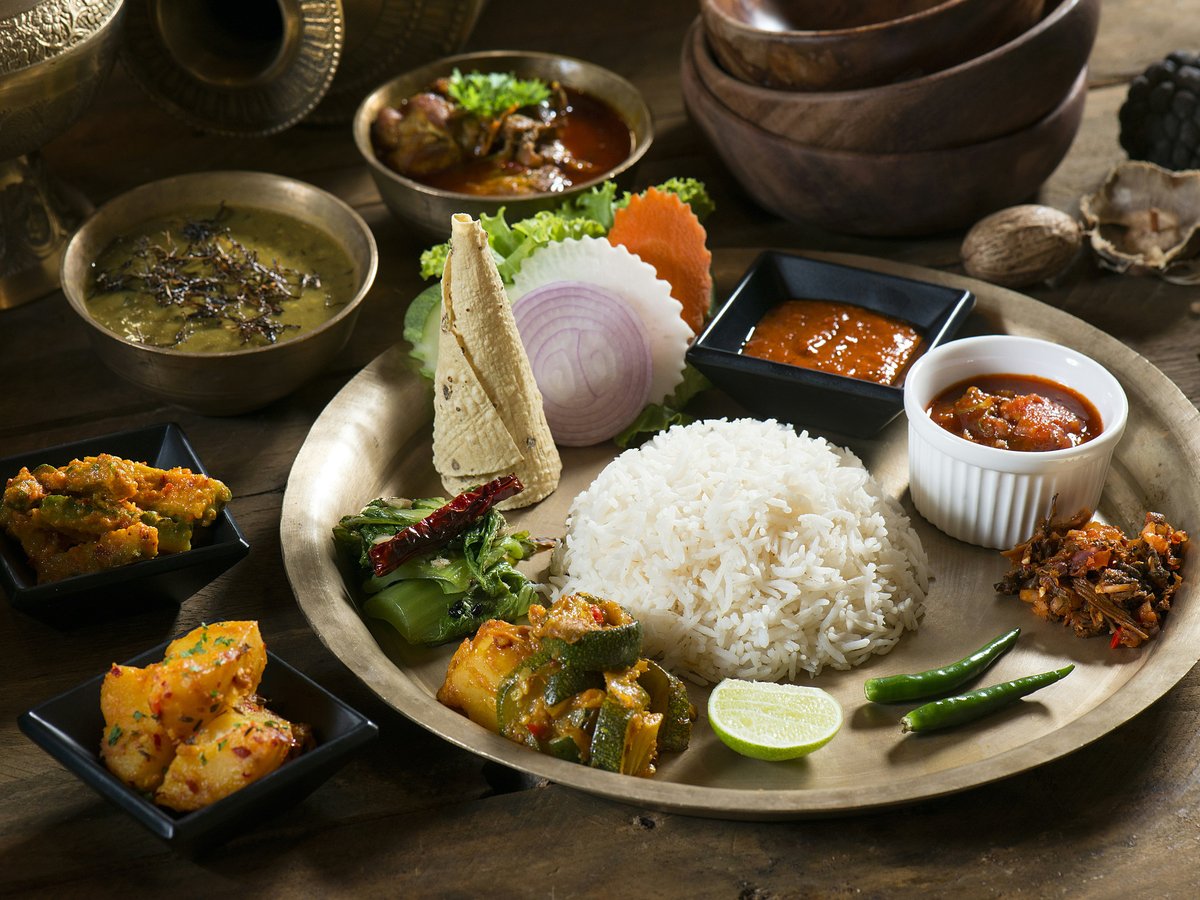
Kathmandu runs on dal bhat, the twice-daily lentil-rice-pickle plate that locals eat at 10am and 7pm. The deeper story is Newari cuisine from the Kathmandu Valley's indigenous Newar community. Buff momos at 80-150 NPR from Ason stalls, chatamari rice crepes in Patan's backstreets, and choyla grilled meat in Bhaktapur pull food-focused travelers beyond Thamel's tourist menus.
Read the full answer → -
Getting around
Pathao (Nepal's ride-hail app) for anything beyond walking distance, your feet for the Thamel-to-Durbar Square corridor, and the pre-paid taxi counter at Tribhuvan Airport on arrival. Download Pathao before landing. Metered taxis exist but drivers rarely run the meter. Budget 200-500 NPR per ride within the Ring Road.
Read the full answer → -
How to get there
Tribhuvan International Airport (KTM), 6 km east of central Kathmandu, is Nepal's only major international gateway. No nonstop flights exist from North America or Europe. Most travelers connect through Delhi, Doha, or Istanbul on Qatar Airways, Turkish Airlines, or IndiGo. Round-trip fares from the US run $900-1,400, from London £500-900. October-November peak trekking season drives prices up 30-50%.
Read the full answer → -
Is it safe?
Kathmandu is reasonably safe for solo travellers, TTDI rating solo safety at 6.2/10 (see the TTDI Solo-Safety Index), and violent crime against visitors is rare. The risks that matter are traffic, winter smog, monsoon landslides on the highways out of the valley, political protests near Maitighar Mandala, and scams in Thamel. For police, dial 100; for the English-speaking Tourist Police, 1144.
Read the full answer → -
Language basics
Nepali, written in Devanagari script. English works in Thamel's hotels, trekking agencies, and tourist restaurants, but drops to near-zero at Ratna Park bus station, Asan Bazaar market stalls, and most of the Kathmandu Valley outside the tourist pocket. Learn "namaste" (hello), "dhanyabad" (thank you), and "kati ho?" (how much?) to cover about 80% of daily transactions.
Read the full answer → -
Layover guide
Yes, if your layover at Tribhuvan International Airport runs 6 hours or longer. Immigration with visa on arrival takes 20-50 minutes, and Boudhanath Stupa sits 15 minutes from the terminal by taxi (about 500 NPR). Pashupatinath Temple is even closer. Under 6 hours, stay airside. Most passports qualify for visa on arrival, but verify yours before committing to leave.
Read the full answer → -
LGBTQ-friendly
Kathmandu scores 6.2/10 for LGBTQ+ friendliness (sourced from TTDI's editorial rubric). Nepal's constitution bans discrimination by sexual orientation, and the courts have pushed parliament toward marriage equality. The scene is small, centered in Thamel. Same-sex couples walk together comfortably in tourist areas, though public affection beyond hand-holding draws stares citywide.
Read the full answer → -
Where locals go
Kathmandu locals skip Thamel entirely. Jhamsikhel (locals call it Jhamel) draws the under-35 crowd to cafes along the 200m strip south of Pulchowk. Kirtipur, the university hill town 5km southwest, has NPR 150 dal bhat sets and zero foreigners. Boudha's kora circuit fills before 6am with Tibetan and Tamang residents, not tourists.
Read the full answer → -
Must-see
Boudhanath Stupa, not Durbar Square. The 36-metre white dome in the Boudha neighborhood sits at the center of Kathmandu's Tibetan quarter. The evening kora around it, with butter lamps flickering and monks chanting from surrounding monasteries, is the single most concentrated spiritual experience in the valley. No reservation needed. Entry is NPR 400, about $2.65.
Read the full answer → -
Solo travel
Kathmandu rates 6/10 for solo travel. Thamel's guesthouse corridor works like a permanent hostel common room where trekking partners and dinner plans materialize over 250-NPR dal bhat. No restaurant in the valley expects a party of two, single rooms rarely carry a supplement, and the 1,400-meter elevation keeps evenings cool enough for walking.
Read the full answer → -
This week
Kathmandu's week pivots on Saturday, Nepal's official holiday, not Sunday. Temples like Pashupatinath and Boudhanath fill with local worshippers by 7am Saturday. Monsoon afternoons bring daily rain by 2pm, so outdoor sightseeing works best before noon. Thamel's bars and restaurants peak Thursday through Saturday nights. Tuesday is the main museum closure day.
Read the full answer → -
3-day itinerary
Day 1 covers Basantapur Durbar Square, Hanuman Dhoka, and Asan Tole on foot, ending in Thamel. Day 2 heads 6 km east to Pashupatinath Temple and Boudhanath Stupa. Day 3 crosses south to Patan Durbar Square and its museum, then west to Swayambhunath for the valley's best panorama. About 18 km of walking total.
Read the full answer → -
What to avoid
Skip Thamel's knockoff-gear touts, the painted sadhus at Pashupatinath who demand 500-1,000 NPR per photo, and any taxi without a working meter. Avoid the June-September monsoon if you can. Winter air quality in the valley drops to 10 times the WHO guideline. Drink bottled or filtered water only, even for brushing teeth.
Read the full answer → -
What to pack
Pack lightweight layers for Kathmandu's 1,400-metre altitude, where temperatures swing from 5°C in November mornings to 30°C in pre-monsoon May. Bring knee-covering clothes for Pashupatinath Temple, sturdy closed-toe shoes for the uneven brick streets around Asan Tole, and N95 masks for valley dust and exhaust. Buy umbrellas locally in Thamel for 100 NPR.
Read the full answer → -
Where to stay
Stay in Thamel for a first trip to Kathmandu. It puts you within a 12-minute walk of Basantapur Durbar Square, inside the densest cluster of hotels at $25-80 per night, and next to every trekking agency and money-changer you will need. Move to Lazimpat or Patan on a repeat visit.
Read the full answer →
Deep guides for Kathmandu
Curated lists for Kathmandu
accommodation
-
Best boutique hotels
Kathmandu organizes itself more by altitude and noise than by distance. The old core around Thamel and the palace quarter packs trekking shops, rooftop bars, and courtyard gardens into lanes you can cover on foot, while the valley rim at Chandragiri and the forest at Gokarneshwor trade that convenience for clean air and quiet. Between them sit the working districts: embassy-lined Lazimpat, office-heavy Hattisar, the government blocks around Singha Durbar, and the market streets of Kalimati on the western side. The inventory for a boutique search here is mid-range almost everywhere, and the spread is narrow, with Gokarna Forest Resort asking about $82 a night at the low end and The Soaltee about $150 at the top, and ratings running from 8.5 to 9.3. Price will not settle this for you, so let the neighborhood do it. Resist the reflex to book the most central pin on the map; the quieter ring just outside the tourist lanes is where a night's sleep comes easier, and the locals know it. Choose first by what you want outside the door at seven in the morning and at eleven at night, then pick the hotel.
See the picks → -
Best hostels
Kathmandu's cheap beds crowd into the tight grid of lanes around Thamel, and most of this list sits inside or right beside it: Paknajol and Kaldhara to the north and west, Chhetrapati and Dhobichaur on the slope down toward the Bishnumati River. The differences between them look small on a map and feel large at midnight, when one lane is still thumping with live cover bands and the next is shuttered and silent. Beyond that core, the choices come down to purpose: Boudha puts you beside the great stupa and its dawn circuit of pilgrims, Sinamangal sits by Tribhuvan International Airport for early flights, Lalitpur trades backpacker bustle for Patan's Newari courtyards, and Budhanilkantha climbs toward the Shivapuri foothills. Prices across the picks run from pocket change to mid-range hotel rates, so decide first how much noise, how much walking, and how much taxi time you want, then pick the bed.
See the picks → -
Where to stay
Kathmandu is a valley city with no metro, so the neighborhood you book determines how much of your trip is spent on foot and how much in a taxi on the Ring Road. Most visitors default to the lanes of Thamel, and for a first visit that is a fair call: the trekking agencies, the Garden of Dreams, and the walk south to Kathmandu Durbar Square all sit close together. The city has quieter answers too: Lazimpat and the government quarter around Singha Durbar trade bar noise for wide roads and old Rana palaces, while Lalitpur, across the Bagmati, puts you beside Patan Durbar Square. Sinamangal suits an early flight, and Budhanilkantha suits anyone who wants forest air at the valley's northern rim. Prices stay low across the board: guesthouse beds near Thamel start around $5 a night, and the grandest hotel lawns in the west of the city ask about $150. Pick the area first, because crossing town at rush hour costs more patience than money.
See the picks →
food
-
Best cafes
A Kathmandu cafe is rarely just a cafe, and this list doesn't pretend otherwise. Of the 12 places here, one puts tea ahead of coffee in its own listing, one calls itself a pub while trading as a tea shop with cookies and hukka, and one is a regional kitchen on Thamel Marg. The hours stretch as wide as the menus: Pumpernickel Bakery opens at 06:30, and Roadhouse Cafe on Boudha Main Road pours until 22:00. This is a list for the visitor who wants an hour at a table, not a logo on a takeaway cup. We have kept to what we could verify: addresses, hours, what each kitchen says it makes, and a phone number to ring. Where we could not confirm opening times, we say so and give you the line to call. The opinions are ours. Skip the hotel coffee, start early, and drink tea at least once.
See the picks → -
Best restaurants
Kathmandu's restaurants don't sort neatly, and this list of 12 doesn't pretend they do. It opens with a momo house on Pashupati Marga and ends at a bar whose kitchen lists everything from curry to cake. In between sit a French kitchen at Baber Mahal Revisited, a Korean barbecue open until 23:00, a fusion address on Freak Street, and a Thakali and momo station in Boudha. Two of the picks are in Thamel, and both are there for their Nepali cooking. The list is for visitors who want to eat the way the city eats on an ordinary weekday, and who would rather know a closing time than read an adjective. Every hour, street, and phone number below comes from a checked listing. The opinions are ours, and we have tried to keep the two apart. Where a kitchen's listing wanders across five cuisines, we say which part of it we would order from.
See the picks →
Browse by traveler type
Book experiences in Kathmandu

Everest Base Camp Trek - 14 Days
Outdoor experience: 14 days.
via Viator Free cancellation
 Kathmandu Sightseeing | UNESCO World Heritage sites Private/Group
City tour: free cancellation.
via Viator Free cancellation
 Half day cooking class in Thamel kathmandu
Cooking class: 2.5 hours, free cancellation.
via Viator Free cancellation
 Everest Base Camp Trekking
Outdoor experience: 14 days, free cancellation.
via Viator Free cancellation
 Nagarkot Sunrise View and Day Hiking from Kathmandu
Outdoor experience: free cancellation.
via Viator
Annapurna Circuit Trek with Tilicho Lake
Outdoor experience: 16 days.
via Viator Free cancellation
 Manaslu Circuit Trek
Outdoor experience: 13 days, free cancellation.
via Viator Free cancellation
 Kathmandu: Cook Nepali Dishes & Momos with Local Chefs & Pickup
Cooking class: 3.5 hours, free cancellation.
via Viator Free cancellation
 Everest Base Camp Trekking - 13 Day
Outdoor experience: 13 days, free cancellation.
via Viator
Everest Base Camp Trek
Outdoor experience: 12 days.
via Viator Free cancellation
 Everest Base Camp Trek -14 Days
Outdoor experience: 13 days, free cancellation.
via Viator
12 Days Everest Base Camp Trek
Outdoor experience: 12 days.
via ViatorBrowse by interest
Find a flight to Kathmandu
Live fares to Kathmandu appear here once cookies are accepted.
Last verified by automated review (v1.7.2) on . What is automated review?