
Riga sits where the Daugava River widens into the Gulf of Riga, and that position at the mouth of a major Baltic trade route has shaped everything about it since Bishop Albert founded the city in 1201 as a base for Christianizing the region. Eight centuries of German, Swedish, Russian, and Soviet rule left behind a city that looks like no single empire's project: the medieval spires of Vecrīga, the Old Town, share a skyline with one of Europe's densest concentrations of Art Nouveau facades, more than 800 of them lining the streets of what locals call the Quiet Centre, particularly along Alberta iela and Elizabetes iela, where building after building stacks mythological figures and screaming masks above the sidewalk. A first-time visitor's day tends to start at the Central Market, five enormous pavilions built from repurposed Zeppelin hangars in the 1930s, where the fish pavilion alone runs longer than most European market halls and the vendors sell smoked lamprey, rye bread dark enough to pass for cake, and jars of birch sap alongside ordinary produce. From there it is a short walk across the canal into Vecrīga, past the Three Brothers: a row of medieval houses spanning three centuries of construction on a single lane, and toward the Freedom Monument on Brīvības bulvāris, where Riga's 1991 independence from the Soviet Union still registers in the fresh flowers locals leave at the base. Cross the Daugava into Āgenskalns and the mood shifts to wooden houses and a slower residential pace; head north to Mežaparks and you reach pine forest and a lake within the city limits. Riga runs two hours ahead of London, keeps its summers long and pale (sunset past ten in June) and turns bitterly cold by November, which is when the Christmas market fills Dome Square and the city claims, with some historical basis, to have hosted the first decorated Christmas tree in 1510.
Riga in photos

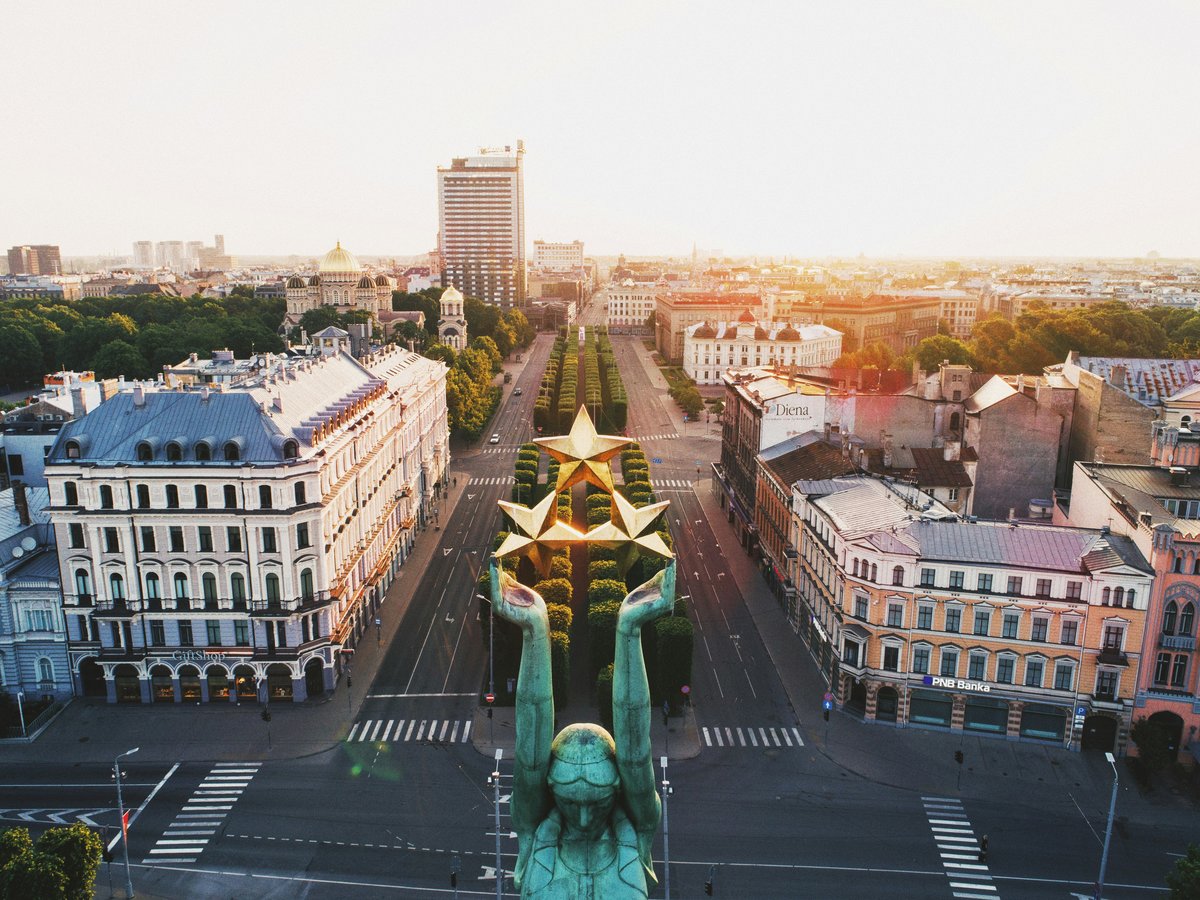
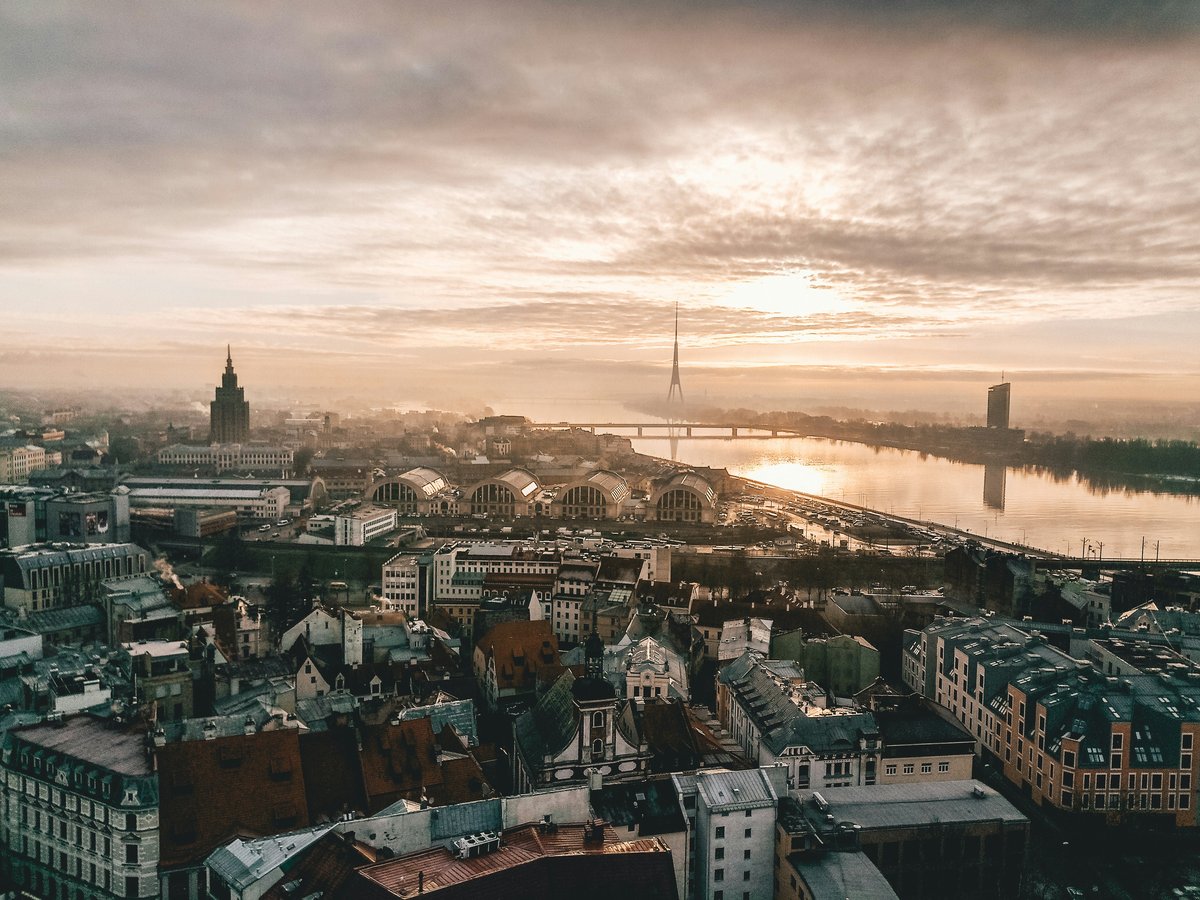
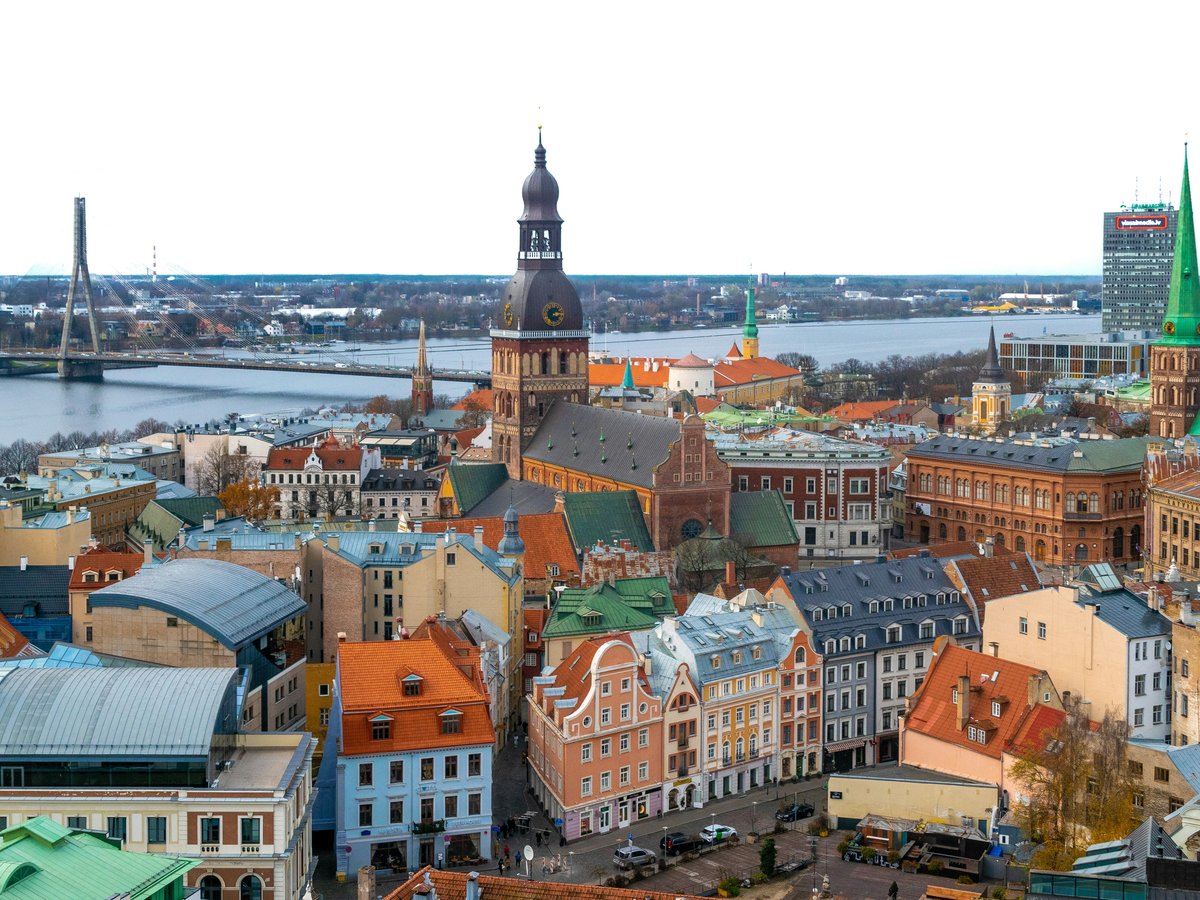
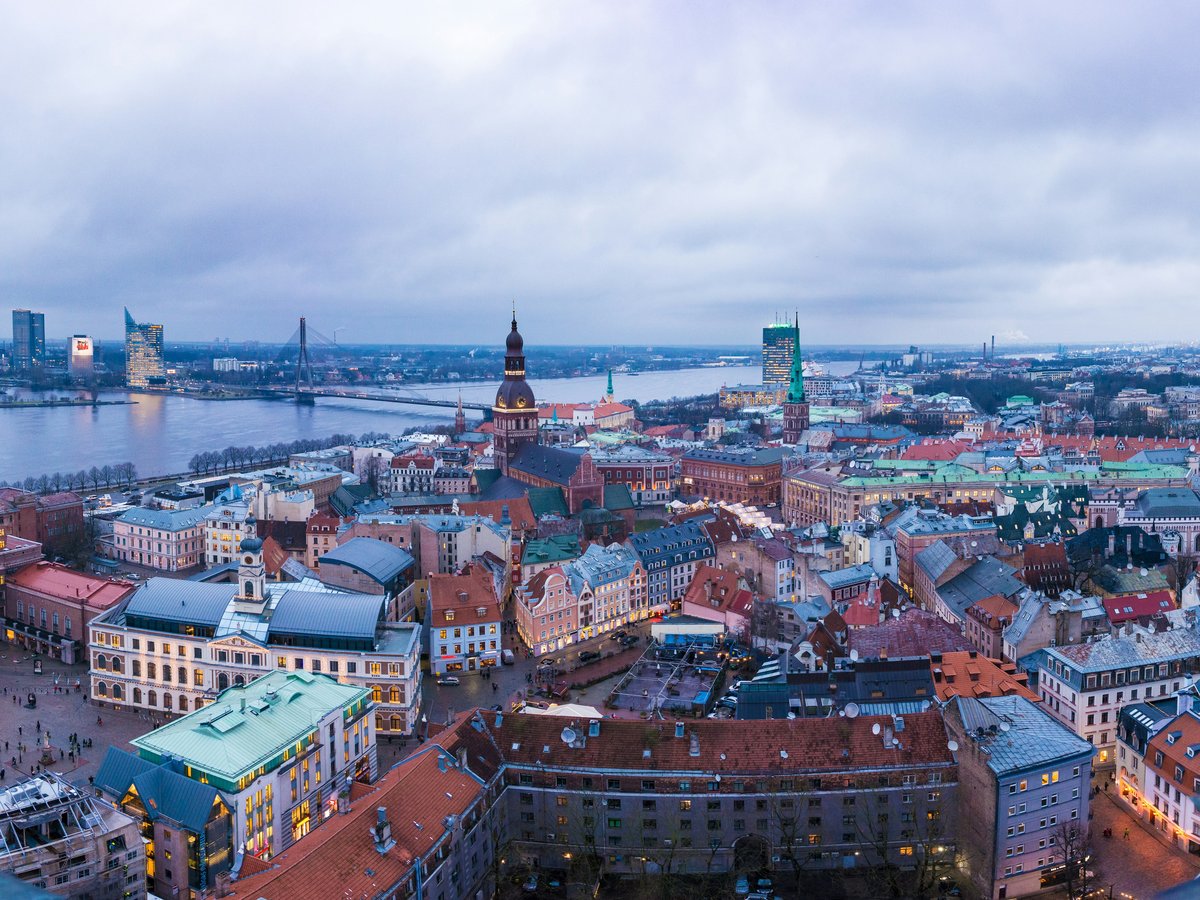
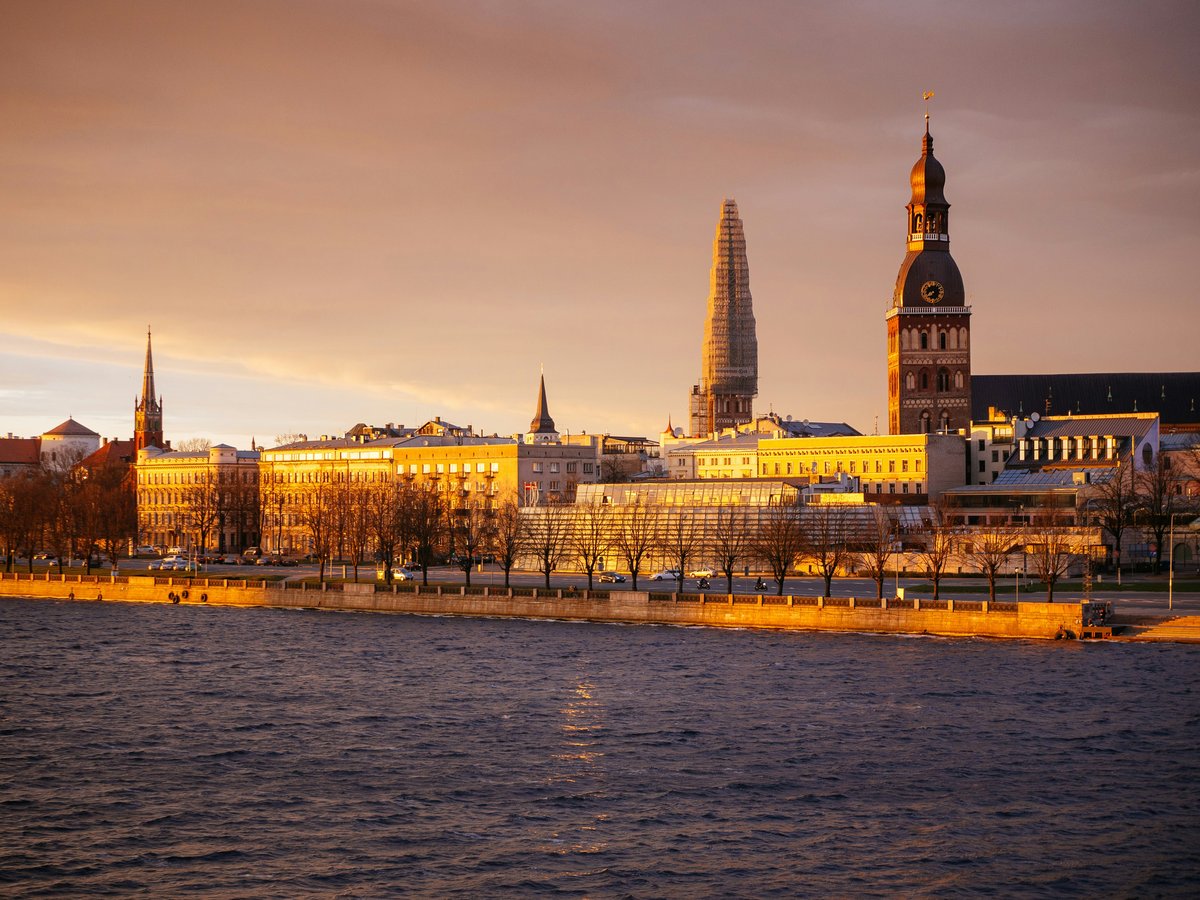
Riga right now
Answers about Riga
-
Airport to city
From Riga International Airport (RIX), take Bus 22 to the city center. It costs €2 from the driver, runs every 10 to 20 minutes from 5:30am to 11:30pm, and reaches the stop near 13. janvāra iela in about 30 minutes. After midnight or with heavy luggage, book a Bolt ride for €10 to €15, about 15 minutes to Vecrīga.
Read the full answer → -
Best time to visit
We'd book Riga for late May to mid-June, or for September, when evenings stay light, terraces are open, and the summer cruise crowds have either not arrived yet or have already gone. Steer clear of the Midsummer holidays, when much of the city closes. Winter brings little daylight and a lot of slush, and the season earns its way mainly through the December Christmas market.
Read the full answer → -
Cost per day
Riga runs €35-40 ($41-47) per day on a hostel dorm, Centraltirgus market meals, and walking. A bed costs €12-18 per night, three meals from the market and Lido total €10-14, and the Rīgas Satiksme day ticket is €5. Vecriga is small enough to cover on foot, and most major sights are free.
Read the full answer → -
Cultural etiquette
Latvians are reserved and direct. Greet with a firm handshake and 'Labdien' (good day). The biggest cultural trip wire is the Soviet occupation, which ended in 1991. Never frame Latvia as 'basically Russia' or treat the era casually. Tipping 10% at Riga restaurants is standard. Cover shoulders and knees in churches like Riga Cathedral.
Read the full answer → -
Best day trips
Sigulda over Jūrmala for a full day. The Gauja Valley is 53 km northeast by train from Riga Pasažieru (about €3, 1h10, hourly on the Riga-Valga line), and Turaida Castle plus the cable car fill 6 hours. Jūrmala works as a half-day beach stop. Rundāle Palace needs a car but earns the effort with Rastrelli-designed gardens.
Read the full answer → -
Digital nomads
Riga scores 7.2/10 for digital-nomad suitability (sourced from TTDI's editorial rubric). Latvia's fibre network delivers 200-500 Mbps in most Centrs apartments for €400-650/month rent. Coworking runs €99-179/month at Teikums or Workland. Monthly all-in budget sits around $1,800. The catch is winter, when November through February drops below 0°C with 7 hours of daylight and half the cafe scene closes early.
Read the full answer → -
Family-friendly
Riga works well for families. The Old Town's cobblestones defeat lightweight strollers, but Mežaparks (Riga Zoo, forest trails) and the Latvian Ethnographic Open-Air Museum give kids full outdoor days. Lido buffet restaurants solve picky eating at under €8 per child. Summer temperatures sit around 20-22°C. Walkable, safe, and 40% cheaper than Stockholm.
Read the full answer → -
Food culture
Riga's food culture runs on dark rye bread, smoked fish, and grey peas with bacon, shaped by Baltic winters and 800 years of German, Scandinavian, and Russian influence. Riga Central Market, built inside five former Zeppelin hangars in the 1930s, is where locals still shop daily. Expect restaurant prices 40-60% below Paris or London.
Read the full answer → -
Getting around
Walk Vecrīga, tram beyond it, Bolt after dark. Riga has no metro. Load an e-Talons card at any Narvesen kiosk for €1.15 per tap versus €2.00 cash on board. Bolt runs €4-8 across the center and is the only ride-hail app. Bus 22 from the airport costs €1.15 and takes 30 minutes.
Read the full answer → -
How to get there
Riga International Airport (RIX) sits 10 km southwest of the old town. airBaltic connects directly to over 70 European cities from its RIX hub. From North America, connect through Helsinki, Frankfurt, or Amsterdam for $600-1,100 round-trip. From London, Ryanair and airBaltic fly direct in under 3 hours for £40-180.
Read the full answer → -
Is it safe?
Riga scores 7.2 out of 10 for solo-traveler safety (see the TTDI Solo-Safety Index). Violent crime against tourists is rare. The real risks are stag-party aggression in Vecrīga on weekends, pickpocketing at Riga Central Market on Saturdays, and a bar-invitation scam near St. Peter's Church. Maskavas forštate feels rough after dark.
Read the full answer → -
Language basics
Latvian, a Baltic language written in Latin script with diacritical marks (ā, č, ģ, ņ). English proficiency in Riga's tourist zones runs about 7/10. Under-35 service staff at hotels and restaurants in Vecrīga speak it fluently. Russian is the practical second language for roughly 37% of Riga's population. 'Paldies' (thank you) and 'lūdzu' (please) are the two phrases that matter most.
Read the full answer → -
Layover guide
Yes, five hours is the floor for leaving Riga International Airport on a layover. RIX sits 10 km southwest of Vecrīga, and Bus 22 reaches the city center in about 30 minutes for 2 EUR. Latvia is in the Schengen Area, so intra-Schengen connections skip passport control. Non-Schengen arrivals should budget 10-15 minutes for immigration.
Read the full answer → -
LGBTQ-friendly
Riga scores 4/10 for LGBTQ+ friendliness (sourced from TTDI's editorial rubric). Latvia amended its constitution in 2006 to restrict marriage to opposite-sex couples, and the Saeima has stalled on partnership legislation. The queer scene is small, concentrated in a few rotating venues, and public affection between same-sex couples draws stares outside the tourist center.
Read the full answer → -
Where locals go
Rigans work from Rocket Bean Roastery on Miera iela, shop at Āgenskalns Market across the Daugava, and drink in the garden at Kaņepes Kultūras centrs on Skolas iela. Saturdays mean the Kalnciema Quarter market in Pārdaugava. For a full laptop day, the National Library of Latvia beats any cafe. We'd skip the bars on Doma laukums.
Read the full answer → -
Must-see
The Art Nouveau quarter along Alberta iela. Riga holds roughly 800 Jugendstil buildings, the highest concentration in any European city. Mikhail Eisenstein designed the most theatrical facades on this single street between 1903 and 1906. Walk it before 10am when low Baltic morning light picks out the plaster relief. Free, no reservation.
Read the full answer → -
Solo travel
Riga ranks among the most solo-friendly capitals in northern Europe. Vecrīga is walkable end to end in 20 minutes, tram rides cost €1.15, and a sit-down dinner near the Central Market runs €8-14. English is functional with anyone under 40. Single-occupancy rates at mid-range hotels like the Neiburgs typically match the double rate, which is unusual for the region.
Read the full answer → -
This week
Riga's summer week pivots on the Central Market, best Tuesday through Saturday mornings for smoked fish and caraway cheese. Most museums close Monday. Evenings stay light past 10pm at temperatures around 22-26°C. Weekday mornings are the time for the Art Nouveau district on Alberta iela. Sunday is for the parks along the Daugava.
Read the full answer → -
3-day itinerary
Day 1 covers Vecrīga on foot, from Riga Cathedral to St. Peter's tower and the Freedom Monument. Day 2 splits between the Art Nouveau facades on Alberta iela and Central Market's Zeppelin hangars. Day 3 crosses the Daugava to Āgenskalns and Mežaparks. About 22 kilometres of walking total, with two or three tram rides filling the gaps.
Read the full answer → -
What to avoid
Decline any invitation from women offering men a drink in Vecrīga, since that bar bill can reach several hundred euros, and give the same treatment to the terrace restaurants on Līvu laukums, unmarked taxis at Riga International Airport, and Riga Black Balsam drunk neat. Take bus 22 or Bolt from the airport, and eat at Lido or Riga Central Market instead.
Read the full answer → -
What to pack
Flat-soled walking shoes that grip wet cobblestones. Riga's Vecrīga district has uneven granite underfoot for kilometers, and summer weather swings from 14°C mornings to 28°C afternoons with rain arriving without warning. Pack layers you can strip off by noon, a compact rain shell, and a Type C plug adapter for Latvia's 230V outlets. Leave the umbrella. Buy one at Rimi for €3.
Read the full answer → -
Where to stay
Vecrīga (Old Town) for a first visit. You're 5 minutes on foot from Riga Cathedral, the Freedom Monument, and most restaurants worth eating at. Budget €55-90 for a mid-range hotel on Kalēju iela or Audēju iela. If weekend stag-party noise bothers you, book in the Quiet Centre instead, a 10-minute walk north across Bastejkalns park.
Read the full answer →
Deep guides for Riga
Curated lists for Riga
accommodation
-
Best boutique hotels
Riga's Old Town and its surrounding blocks hold most of the city's bookable inventory within a compact grid bounded by the Central Market's Zeppelin hangars to the south, the Freedom Monument to the east, and the canal park curving north toward the Art Nouveau district on Alberta iela. Two clusters stand out: the dense historic core along Kalku iela, where the cathedral and the guild halls anchor the streets, and the quieter stretch near the National Opera that gives way to jugendstil facades beyond the canal. Both sit inside a single tram zone, so the choice is about street character, not transit convenience. The Old Town core stays loud past midnight with bar traffic on cobblestones; the opera-side blocks settle into silence well before that. Mid-range inventory dominates both clusters, with strong ratings and fair prices for a northern European capital. Luxury options are sparse, and budget beds drift toward the train station where the walkability thins out. Staying central in Riga is the right call: the river, the market, the spires, and the parks all sit close enough that the neighborhood you pick shapes your evenings more than your itinerary.
See the picks → -
Best hostels
Riga's hostel and budget accommodation scene spreads across neighborhoods that look and feel nothing alike. The medieval Old Town core packs cobblestone lanes and church spires into a walkable grid where most travelers land first, but the price floor stays higher than expected for the Baltics. Move a few tram stops south or east and the rates drop, the buildings shift from Hanseatic gables to Art Nouveau facades or Soviet-era blocks, and the streets go quiet after dark. The Daugava River splits the city cleanly: west-bank neighborhoods serve the airport corridor, while the east bank holds the train station, the Central Market, and the residential quarters where university students and young professionals rent. For hostel travelers, the calculus is simple: Old Town for walkability and atmosphere at a slight premium; the inner suburbs for space, free parking, and local restaurants that skip the English menu. Ten neighborhoods below, ranked by inventory depth, cover the full spread from $14 dorm beds to $80 boutique rooms with old-city views.
See the picks → -
Where to stay
Riga spreads its hotels across a compact grid where the medieval Old Town, the Art Nouveau belt, and the Soviet-era residential quarters each offer a different price tier and a different morning. The densest inventory clusters inside the canal ring, where cobblestone streets connect the Freedom Monument to the Central Market at a walking pace. Beyond that ring, neighborhoods like Avoti and Maskavas forštate carry lower nightly rates and a grittier local texture that rewards travelers willing to ride a tram two stops instead of walking from the cathedral door. The further-flung picks near the airport or the Sarkandaugava waterfront serve early flights and quiet retreats, not sightseeing convenience. Riga's top-rated budget rooms score remarkably well for the price; a bed scoring 9.5 here costs what a forgettable room costs in most Western European capitals. That gap between quality and cost is why budget travelers and luxury seekers both find the city generous.
See the picks →
attractions
-
Best free attractions
Riga gives away a lot of its best ground, and this list is built from exactly that: gardens, parks, and squares that ask nothing more than your time. The range is wider than most visitors expect. Vērmanes Garden dates from 1817, Herder Square from 1864, and the National Botanic Garden of Latvia from 1956, so a single free day can take you across very different periods of the city. Several entries are protected as local architectural monuments, which means the layout itself is part of the heritage record, not a backdrop added for tourists. This list is for the traveler who has done the paid sights and wants the city at walking pace, for the parent whose children need room to run, and for anyone who thinks a good bench is worth more than a souvenir. We ranked the gardens first because they pay back the most per hour. The squares come last because they work best in passing, in ten-minute stops on the way somewhere else.
See the picks → -
Best museums
Riga's museum map is unusually dense for a capital of under a million, and it rewards a slow walker more than a hop-on bus. Inside the Old Town, the addresses cluster within a few minutes of each other on Doma laukums, Palasta iela, Smilšu iela and Skārņu iela, so you can move from a 20th-century occupation testimony to a room of foreign paintings to an architectural archive without hailing a cab. Beyond the medieval core, the collections spread out with purpose: a natural history house on Krišjāņa Barona iela, a film museum on Peitavas iela, a railway hall on the left bank at Uzvaras bulvāris, and a motor collection out at Sergeja Eizenšteina iela 8 that is worth the tram ride. The list below is for a visitor who came for more than a photograph of the House of the Blackheads, who wants Latvia's own account of Latvia, and who is willing to trade one more river-cruise ticket for an afternoon inside a real archive.
See the picks → -
Must-see attractions
Riga's must-see list is short on spectacle and long on layers: a compact medieval core on the Daugava's right bank where a cathedral, a castle, a Lutheran nave and a Roman Catholic one stand within a ten-minute walk of each other. The city gathers its landmarks tightly. Herdera laukums 6, Pils laukums 3 and Jēkaba iela 9 sit inside a few hundred metres of each other, and the Brīvības axis then carries you east to the Nativity Cathedral at Brīvības bulvāris 23 and further to St. Alexander Nevsky at Brīvības iela 56. Add a Powder Tower, a Freedom Monument and a Swedish Gate, and the Old Town's fortification story tells itself on foot. For a broader horizon, Zaķusalas krastmala 1 on Zaķusala island answers with a tower that pulls the whole city into one view. This list is for a visitor who wants to read Riga as a working capital rather than a stage set, an itinerary that rewards slow walking and honest looking.
See the picks →
food
-
Best cafes
Riga's cafe scene is a small, stubborn ecosystem that punches above the city's size. The Old Town is dense enough that a serious specialty roaster, a rock-club kitchen that never quite closes, and a proper tea house can all sit within a ten-minute walk of one another, and the Quiet Centre north of the boulevard adds a second tier of espresso rooms designed for people who work from a laptop and take their filter black. What follows is twelve cafes chosen for what they do at their address: where the coffee is treated as a craft, where the room is worth sitting in, where the hours are honest, where a waffle or a donut or a slice of pizza is the reason to walk in. Chains appear where a specific branch earns its slot on geography or timing; independents appear where the person behind the bar is the point. Addresses, phone numbers, hours and websites all come from OpenStreetMap and the venues' own sites, cited inline so you can verify before you go.
See the picks → -
Best restaurants
Riga eats along a short walk. The old town packs its restaurants into medieval streets between Doma laukums and the station, and the twelve rooms below sit almost entirely inside a 20-minute radius of that grid, with a small cluster pushing north across the canal into the LV-1010 embassy quarter. The cooking splits three ways: Latvian regional kitchens working rye, dill, cured pork and forest berries; internationalist rooms doing steak, pasta or fusion for the business lunch crowd; and a handful of one-idea specialists worth the detour on their own terms. What follows is not a ranking of ambition, it is a ranking of usefulness to a visitor with a week and roughly eighteen meals to spend. Read the hours first, then the address, then the paragraph, in that order. Every factual line traces to OpenStreetMap or the venue's own site, and the opinions are ours to defend.
See the picks →
Browse by traveler type
Book experiences in Riga
 Free cancellation
 2 countries! Hill of Crosses, Rundale Palace and Bauska castle
Day trip: 8 hours, free cancellation.
via Viator Free cancellation
 Hill of Crosses and Jelgava Tour 2 Countries in 1 Day
Day trip: 7.5 hours, free cancellation.
via Viator Free cancellation
 5,5 Hour Small Group Tour to Hill of Crosses from Riga
Day trip: 5.7 hours, free cancellation.
via Viator Free cancellation
 Group Day trip to Rundale Palace, Hill of Crosses & Bauska Castle
Day trip: 8 hours, free cancellation.
via Viator Free cancellation
 Riga Highlights Bike Tour
Day trip: 2.5 hours, free cancellation.
via Viator Free cancellation
 Private Full-Day Trip to Turaida, Sigulda, and Cesis
Day trip: free cancellation.
via ViatorBrowse by interest
Find a flight to Riga
Live fares to Riga appear here once cookies are accepted.
Last verified by automated review (v1.7.2) on . What is automated review?