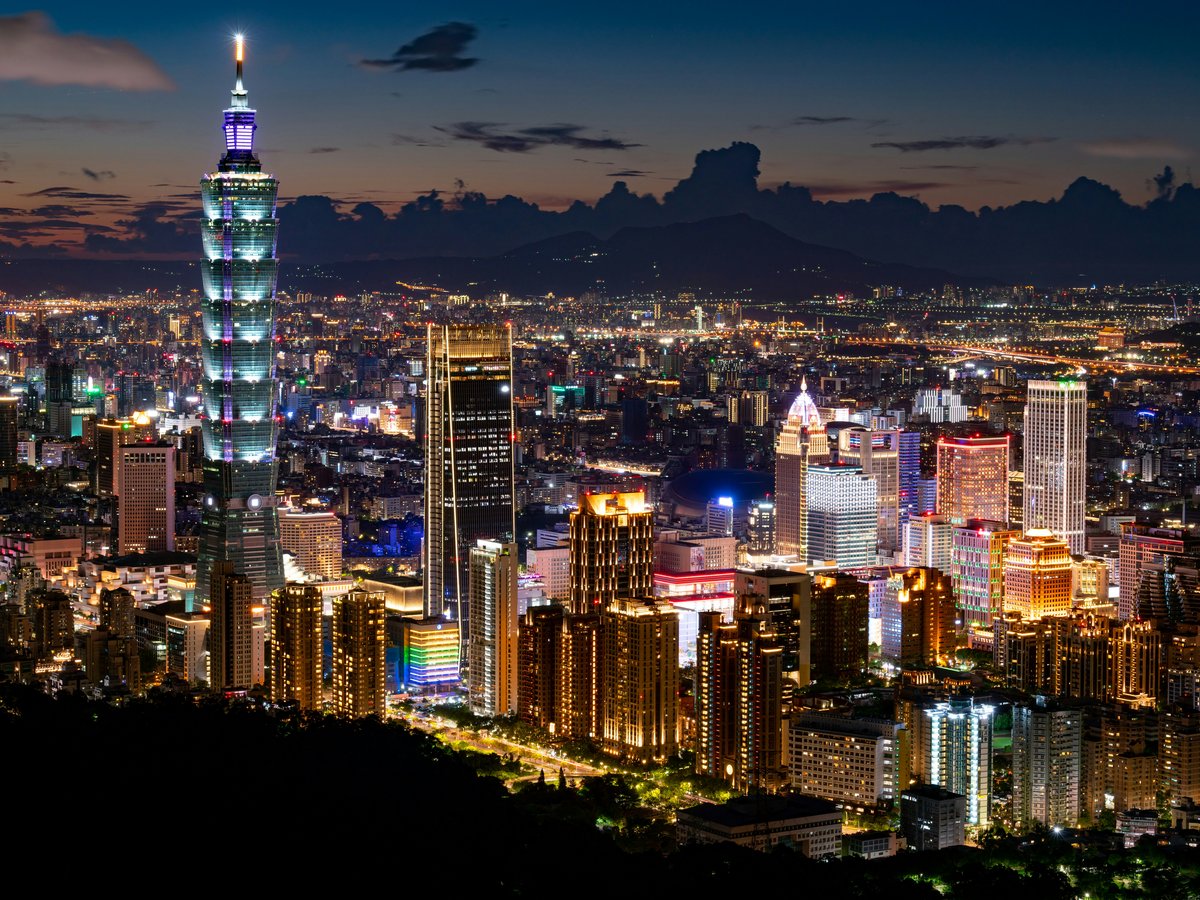
Taipei tends to surprise people who arrive on a tight budget. The city runs on an infrastructure of temples, parks, and public spaces that has been open to everyone for decades, in some cases centuries. Longshan Temple in Wanhua dates to 1738, and its incense-clouded courtyard has never had a ticket booth. The MRT covers 131 stations across 6 lines, placing most of Taipei's free attractions within a short ride and a walk. Yangmingshan National Park, with its sulfur vents and hiking trails, sits about 40 minutes by bus from Taipei Main Station. Night markets like Shilin and Raohe cost nothing to walk through. The smell of scallion pancakes and stinky tofu hangs in the warm evening air whether you buy anything or not. Taipei's public art shows up in MRT stations, along riverfronts, and outside corporate towers in the Xinyi district. The guard-changing ceremony at Chiang Kai-shek Memorial Hall still runs every hour. Temple processions shut down streets in Dadaocheng on festival weekends. You'll find the city remarkably generous with its cultural life. A solid 3 to 4 days of genuine sightseeing here can be filled without paying a single admission fee.
Free attractions
-
Longshan Temple (龍山寺)
Taipei's oldest temple has stood in Wanhua since 1738. The main hall smells of sandalwood and camphor, and the sound of wooden prayer blocks hitting stone tiles carries across the courtyard. Devotees cycle through daily, burning joss paper in the central furnace. Entry is free, and the temple opens from 6 a.m. to 10 p.m. The Longshan Temple MRT exit drops you about 2 minutes from the entrance.
Wanhuatemple -
Chiang Kai-shek Memorial Hall (中正紀念堂)
The white marble hall and its 240,000-square-meter plaza are open to visitors at no charge. The hourly changing of the guard ceremony runs from 9 a.m. to 5 p.m. daily. The ceremony itself lasts about 10 minutes, with synchronized rifle drills that draw a crowd. Liberty Square, the surrounding garden, and the National Theater and Concert Hall buildings frame the plaza. Worth noting that the hall's name and political framing have shifted over the years, but the building and grounds remain free.
Zhongzhengmemorial -
National Dr. Sun Yat-sen Memorial Hall (國父紀念館)
A large hall in the Xinyi district with no admission fee. It has its own guard-changing ceremony, similar to the one at Chiang Kai-shek Memorial Hall, running hourly from 9 a.m. to 5 p.m. The surrounding park and plaza are popular with tai chi groups in the early morning. Taipei 101 is visible from the front steps, making this a good photo angle without the observation deck fee.
Xinyimemorial -
Elephant Mountain (象山, Xiangshan)
The most accessible viewpoint for Taipei 101 and the city skyline. The trailhead starts near Xiangshan MRT station on the Red Line, exit 2, and the main viewing platform is a 20-to-25-minute climb up stone steps. The trail is steep but short. Expect humidity and mosquitoes in summer months. Sunset tends to draw the biggest crowds, but early morning has better air quality and fewer people. No fee.
Xinyiviewpoint -
Daan Forest Park (大安森林公園)
Taipei's largest central park covers 25.9 hectares in the Daan district. An outdoor amphitheater hosts free concerts on some weekends. The ecological pond draws herons and egrets, and a paved loop trail runs the perimeter in about 30 minutes at walking pace. The park sits directly above Daan Park MRT station. Mornings bring groups practicing qigong on the open lawns.
Daanpark -
Taipei Botanical Garden (台北植物園)
An 8.2-hectare garden in Zhongzheng district, open since 1921. It holds over 1,500 plant species, a lotus pond that blooms heavily in June and July, and mature banyan trees that shade the gravel paths. Entry is free. The National Museum of History sits on the grounds, though the museum itself has a separate admission fee. The garden opens at 5:30 a.m. and closes at 10 p.m.
Zhongzhengpark -
Beitou Hot Spring Museum (北投溫泉博物館)
A former public bathhouse built in 1913 during the Japanese colonial period, converted into a free museum in 1998. The building mixes Japanese and European architectural styles. Visitors remove shoes at the entrance. Inside, the original bath hall has a vaulted ceiling and stained glass windows that cast colored light across the tile floor. Exhibits cover the geology of Beitou's thermal valley and the area's hot spring history. Open Tuesday through Sunday, 10 a.m. to 6 p.m. Closed Mondays.
Beitoumuseum -
Lin An Tai Historical House (林安泰古厝)
A Fujian-style courtyard house originally built in 1783, later relocated to its current site near Taipei Expo Park. The wooden architecture and stone carvings are well preserved. The courtyard garden follows traditional feng shui layout principles. Free admission. Open Tuesday through Sunday, 9 a.m. to 5 p.m. It tends to be quieter than most Taipei attractions, even on weekends.
Zhongshanmuseum -
Beitou Thermal Valley (地熱谷)
A steaming, pale-green sulfur spring pool at the head of the Beitou hot spring area. The water temperature reaches about 80 to 100 degrees Celsius, so you observe from a wooden boardwalk above. The sulfur smell is strong and immediate. A short walk uphill from Xinbeitou MRT station, about 10 minutes on foot. Free to visit. Open Tuesday through Sunday, 9 a.m. to 5 p.m.
Beitounatural attraction -
Huashan 1914 Creative Park (華山1914文化創意產業園區)
A former wine factory converted into an arts and culture campus in Zhongzheng district. The outdoor grounds, lawns, and several gallery spaces are open to the public at no charge. Temporary art exhibitions rotate through the buildings. Some special exhibitions inside the main halls charge a fee, but the general campus, outdoor installations, and most of the smaller galleries are free to enter. The nearest MRT station is Zhongxiao Xinsheng, about a 5-minute walk.
Zhongzhengarts complex -
Yangmingshan National Park (陽明山國家公園)
Taipei's mountain park covers 11,338 hectares of volcanic terrain north of the city center. No entrance fee. Bus 260 runs from Taipei Main Station to the Yangmingshan bus terminal in about 40 minutes. Trails range from the gentle Erziping circular walk at about 1.7 km to the more demanding Seven Star Mountain summit at 1,120 meters. Calla lily fields bloom in Zhuzihu from March through May. The fumaroles around Xiaoyoukeng vent sulfur year-round, and you can smell them before you see them.
Beitou / Shilinnational park
Free activities
-
Dadaocheng and Dihua Street Walking Route
Dihua Street (迪化街) in the Dadaocheng area is Taipei's oldest commercial street, active since the 1850s. Baroque and southern Fujian-style shop facades line both sides for about 800 meters. Dried goods shops stack floor-to-ceiling with mushrooms, herbs, and Chinese medicine ingredients. The street gets particularly dense around Lunar New Year when vendors sell spring couplets and candy boxes. On regular days, the fabric shops along the southern end and the traditional tea houses on the north end are good stops. Start at Beimen MRT and walk north.
Datongwalking route -
Tamsui Waterfront Promenade
The waterfront boardwalk in Tamsui stretches roughly 2 km along the river, from Tamsui MRT station (the last stop on the Red Line, about 40 minutes from Taipei Main Station) north past the old customs warehouse and Fort San Domingo area. Street performers set up along the promenade on weekend evenings. The sunset views across the river toward Bali are a reliable draw. Browsing Tamsui Old Street's food stalls costs nothing, though the iron eggs and fish crackers are hard to walk past without buying.
Tamsuiwalking route -
Shilin Night Market Browsing
Taiwan's most visited night market sprawls across several blocks around Jiantan MRT station. Browsing the stalls costs nothing. The market opens nightly around 5 p.m. and runs to midnight or later. The underground food court in the main building and the surrounding streets sell everything from oyster omelets to flame-torched beef cubes. Game stalls, clothing vendors, and phone accessory shops fill the side alleys. Friday and Saturday nights can be shoulder-to-shoulder dense.
Shilinmarket -
Ximending Pedestrian Zone
Taipei's youth culture district centers on a pedestrian-only block near Ximen MRT station. Street performers, breakdancers, and buskers set up most evenings. The Red House (西門紅樓), a 1908 octagonal brick building, has a free-to-enter ground floor and an outdoor craft market on weekend evenings along its south side. Ximending is also home to some of Taipei's best surviving Japanese colonial-era architecture along the back lanes between Kunming Street and Chengdu Road.
Wanhuawalking route -
Taipei Riverside Bike and Walking Paths
Over 110 km of paved riverside paths follow the Tamsui, Keelung, and Xindian rivers through Taipei. The paths are flat, separated from traffic, and run past basketball courts, exercise stations, and riverside parks. The stretch from Dadaocheng Wharf south to Gongguan passes under several bridges with painted murals. The paths are open 24 hours and free to use on foot. YouBike rental stations are spaced along the route, though the bikes themselves have a small per-ride fee.
citywideoutdoor activity -
Jianguo Weekend Flower Market and Jade Market
Every Saturday and Sunday, the space beneath the Jianguo Elevated Road between Ren'ai Road and Xinyi Road fills with flower vendors on one side and jade and stone dealers on the other. Browsing is free. The flower market has been running since 1982 and sells orchids, bonsai, succulents, and seasonal plants at local prices. The jade market vendors spread their goods on cloth-covered tables. The nearest MRT station is Daan, about a 5-minute walk.
Daanmarket -
Xinyi District Public Art Walk
The blocks around Taipei 101 and Taipei City Hall in the Xinyi district have a high concentration of outdoor public art installations. Large sculptures and commissioned works sit outside the shopping malls and corporate towers. Songshan Cultural and Creative Park (松山文創園區), a former tobacco factory about 10 minutes east of Taipei City Hall MRT, has free outdoor grounds and occasional open gallery shows. The entire walk from City Hall MRT through the Xinyi corridor to Songshan takes about 45 minutes.
Xinyipublic art
Free events
-
Nuit Blanche Taipei (台北白晝之夜)
Annually, typically October (one night)An annual all-night contemporary art event that transforms a different Taipei neighborhood each year with light installations, performances, and interactive art. The event has run since 2016 and typically draws several hundred thousand visitors in a single night. Past host neighborhoods include Zhongshan, Nangang, and Shilin. All installations and performances are free. The event usually runs from 6 p.m. to 6 a.m.
Rotating neighborhood, announced each year -
Taipei Lantern Festival (台北燈節)
Annually, February (around Lunar New Year, 9-10 days)A city-sponsored lantern festival with themed light installations, stage performances, and street parades. The festival has been held annually since 1997 and typically lasts 9 to 10 days. Recent editions have been staged along the Tamsui riverside near Beimen and in the Xinyi district. Thousands of lanterns line the festival corridors, and the main lantern display usually features that year's Chinese zodiac animal.
Varies by year, often near Beimen or Xinyi -
Dragon Boat Festival Races
Annually, 5th day of the 5th lunar month (usually June)Competitive dragon boat races on the Keelung River during the Duanwu Festival. Teams of 20 or more paddlers race in decorated longboats while drums keep the rowing rhythm. The riverbanks at Dajia Riverside Park fill with spectators. Free to watch from the shore. Food stalls and cultural activities set up alongside the race course.
Dajia Riverside Park, Zhongshan -
Baoan Temple Cultural Arts Festival
Annually, March through June (centered on lunar 3rd month, 15th day)Dalongdong Baoan Temple (大龍峒保安宮), a UNESCO Asia-Pacific Heritage Award recipient originally established in the 1740s, holds a months-long cultural festival each spring. Free performances include Taiwanese opera (歌仔戲), puppet theater, and traditional folk music on an outdoor stage in front of the temple. The festival centers around the birthday celebration of Baosheng Dadi, the temple's patron deity.
Dalongdong Baoan Temple, Datong -
Free Weekend Concerts at Daan Forest Park Amphitheater
Select weekends, primarily April through OctoberThe outdoor amphitheater in Daan Forest Park hosts free concerts organized by the Taipei City Government's cultural affairs department. Programs include jazz, classical chamber music, and traditional Chinese instrumental performances. Audiences sit on the concrete steps or bring blankets for the lawn area. Schedules vary by season, but performances are most frequent from April through October.
Daan Forest Park Amphitheater, Daan
The Beitou Hot Spring Loop, All Free
Beitou is the one Taipei neighborhood where you can build an entire half-day around free attractions alone. Take the Red Line to Xinbeitou station, the short spur line from Beitou station. From the platform, walk about 10 minutes uphill along the tree-lined Beitou Creek to Thermal Valley (地熱谷), where sulfurous steam rises off a pale-green pool that sits at roughly 90 degrees Celsius. The wooden boardwalk keeps you safely above the water. The smell is unmistakable. Mineral deposits coat the creek bed all the way down. On the walk back downhill, the Beitou Hot Spring Museum (北投溫泉博物館) is on your left. This 1913 bathhouse building is free to enter, shoes off at the door, and the original bath hall with its arched windows is worth the stop. Across the street, Beitou Park has benches along the creek where warm water mixes with the cooler stream. The free public foot-soaking pool at Fuxing Park, about a 5-minute walk south, lets you sit on a stone bench and dip your feet into naturally heated spring water. The water temperature varies by season, tending to run hotter in winter. Mind you, weekday mornings are significantly less crowded than weekend afternoons at the foot bath. The entire loop from Xinbeitou MRT to Thermal Valley to the museum to the foot bath and back takes about 2 to 3 hours at a relaxed pace.
When Free Becomes Paid, and What to Watch For
A few Taipei attractions have admission policies that catch visitors off guard. The National Palace Museum (國立故宮博物院) in Shilin charges NT$350 for foreign adult visitors. It has occasionally offered free admission on certain national holidays, but the default is paid entry. Taipei 101's observation deck on the 89th floor runs NT$600 for adults. The Taipei Fine Arts Museum (台北市立美術館) currently charges NT$30 for general admission, which is low enough that it barely registers, but it is not technically free on a standard visit. Some special exhibitions inside Huashan 1914 and Songshan Cultural and Creative Park charge separate entry fees even though the general grounds are free. The Beitou Hot Spring Museum is genuinely free, but the actual hot spring bathing houses in Beitou, like Millennium Hot Spring (千禧湯), charge NT$40 per session. Temple entry throughout Taipei remains free, though donation boxes are placed near the entrance. That said, no one will pressure you. Also worth noting that several museums and cultural sites close on Mondays, including the Beitou Hot Spring Museum and Lin An Tai Historical House. Checking the day of the week before heading to a museum saves a wasted trip.
FAQ
Is the National Palace Museum in Taipei free to visit?
No. The National Palace Museum in Shilin currently charges NT$350 for regular adult admission. It has offered free entry on select national holidays in the past, but the standard policy is paid. Student and senior discounts are available. If you want a free museum experience, the Beitou Hot Spring Museum and Lin An Tai Historical House are both genuinely free.
Are Taipei's night markets free to enter?
Yes. Every night market in Taipei is free to walk through. Shilin, Raohe, Ningxia, Tonghua, and Huaxi Street night markets are all open-air public spaces with no gate or entry fee. You'll only spend money if you buy food or goods. Browsing, people-watching, and soaking in the atmosphere costs nothing.
What is the best free viewpoint for Taipei 101?
Elephant Mountain (象山, Xiangshan) is the most popular free viewpoint. The trailhead is near Xiangshan MRT station, exit 2. The main photo platform is a roughly 20-minute climb up stone steps. For a less crowded alternative, the Four Beasts Mountain trail system extends beyond Elephant Mountain to Leopard Mountain (豹山) and Tiger Mountain (虎山), both with Taipei 101 sightlines and fewer visitors.
Is it safe to walk around Taipei at night for free sightseeing?
Taipei consistently ranks among the safest major cities in East Asia. Night markets run until midnight or later, and the MRT operates until around midnight on most lines, with slightly later service on weekends and holidays. The riverside paths are lit in most sections. Standard urban awareness applies, but violent crime against visitors is extremely rare. Neighborhoods like Daan, Zhongshan, and Xinyi feel as safe at 11 p.m. as at 11 a.m.
Do Taipei temples charge admission or expect donations?
Taipei's major temples, including Longshan Temple, Baoan Temple, and Xingtian Temple (行天宮), do not charge admission. Donation boxes sit near the entrance, but contributing is entirely voluntary. At Longshan Temple, free incense used to be provided, though this has changed in recent years for air quality reasons. Xingtian Temple in Zhongshan stopped providing incense entirely in 2014. You can still enter, observe, and participate in prayer rituals at no cost.
How much does public transportation cost to reach these free attractions?
The Taipei MRT charges between NT$20 and NT$65 per ride depending on distance. An EasyCard or iPASS stored-value card gives a 20% discount on MRT fares. Most of the free attractions listed here are within 1 to 2 MRT stops of each other in the central districts, meaning a typical day of free sightseeing might cost NT$40 to NT$80 in transit. Taipei city buses, also usable with EasyCard, start at NT$15 per ride.
Last verified by automated review (v1.7.2) on June 7, 2026. What is automated review?