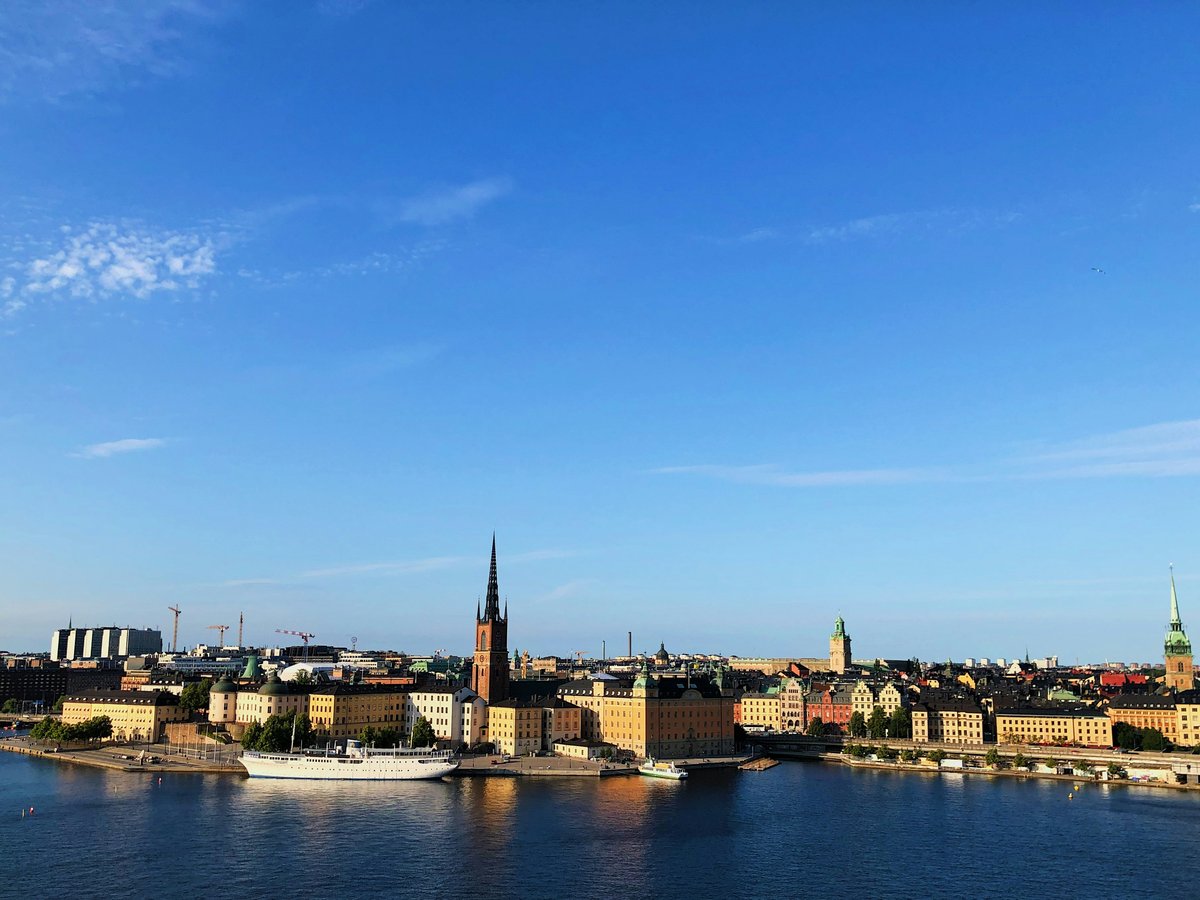
Stockholm spreads across 14 islands where Lake Mälaren feeds into the Baltic Sea, and a surprising share of the city's cultural life costs nothing to experience. The Swedish government dropped admission fees at 18 state-run museums in 2016, and many of those institutions still welcome visitors at no charge. Nationalmuseum, Historiska museet, Livrustkammaren, Armémuseum. All free. Djurgården, the royal park island at the center of the city, requires no entry fee. You can swim off the rocks at Långholmen, watch the sun drop behind Stadshuset from 53-meter-high Skinnarviksberget, or spend a morning in Gamla Stan's 13th-century lanes. A sit-down meal for two in Östermalm might run 800 SEK or more before drinks, and a 30-day SL transit pass currently costs around 970 SEK, so the city's reputation for high prices is earned. But Stockholm's cultural and outdoor life runs on a public-access tradition that stretches back decades, and the municipal bathing spots scattered across the islands all charge nothing.
Free attractions
-
Nationalmuseum
Sweden's principal art and design collection sits on the Blasieholmen peninsula, about a 10-minute walk east of T-Centralen. The permanent galleries are free and hold roughly 700,000 works, including pieces by Rembrandt, Carl Larsson, and Anders Zorn. The building reopened in October 2018 after a 5-year renovation that restored much of the original 1866 interior. Plan at least 2 hours for the ground-floor galleries alone. Temporary exhibitions sometimes carry a separate fee, typically around 100 to 150 SEK, so check the board near the entrance. The museum cafe has views across the water toward Skeppsholmen that rival some of Norrmalm's paid rooftop bars.
Blasieholmenmuseum -
Historiska museet
The Swedish History Museum on Narvavägen in Östermalm covers everything from the Stone Age through the Viking era to the medieval period. Free entry. The Guldrummet (Gold Room) in the basement holds over 3,000 gold and silver objects behind a vault door, including the 5th-century Timboholm collar. The Viking exhibition tends to draw the biggest crowds, though the medieval textile hall is probably the quieter highlight. The building dates to 1943 and has that solid, warm-brick Scandinavian institutional quality. On weekday mornings you might have the galleries nearly to yourself.
Östermalmmuseum -
Livrustkammaren
The Royal Armoury occupies the cellar vaults beneath Kungliga slottet in Gamla Stan. Sweden's oldest museum, founded in 1628 by Gustav II Adolf. Free entry. The collection includes royal costumes, coronation carriages, and the bloodstained shirt Gustav III wore when he was shot at a masked ball in 1792. The vaulted stone ceilings keep the space cool even in July, and there's a faint mineral dampness to the air down there. Allow about 45 minutes.
Gamla Stanmuseum -
Armémuseum
The Army Museum at Riddargatan 13 in Östermalm covers roughly 500 years of Swedish military history across 3 floors. Free entry. The life-size dioramas are startlingly detailed, with sound effects and reconstructed environments that give a physical sense of what 17th-century camp life or 1940s Swedish mobilization felt like. The smell of canvas and old leather comes through in some of the reconstructions. It tends to be uncrowded even on Saturday afternoons. The courtyard occasionally hosts free summer concerts.
Östermalmmuseum -
Naturhistoriska riksmuseet
The Swedish Museum of Natural History sits in the Frescati area near Stockholm University, reachable via the Universitetet metro stop on the red line. The permanent exhibitions are free and include a complete blue whale skeleton, mineral halls, and a polar regions gallery. The Cosmonova IMAX theater inside the building charges separately, currently around 130 SEK. The surrounding parkland and the Bergianska trädgården botanical garden next door are both free to walk through. Good for half a day if you combine the museum with the gardens.
Frescatimuseum -
Stockholms stadsbibliotek
Gunnar Asplund's 1928 public library at Sveavägen 73 is one of Stockholm's great architectural interiors and free to walk into. The main reading room is a full cylinder, 3 stories of books wrapping the walls in a continuous curve. Light falls from above and the acoustics are cathedral-quiet. You don't need a library card to enter. The building sits at the edge of Observatorielunden park, a small hilltop green space with benches and views over Norrmalm. Together they make a good 30-minute stop.
Vasastanlandmark -
Djurgården
The royal park island sits east of central Stockholm and covers about 279 hectares of oak forest, meadow, and waterfront. Free to enter at all hours. The old-growth oaks along Djurgårdsbrunnsvägen date back 300 years or more, and in autumn the canopy turns a deep amber. Rosendals Trädgård, the biodynamic garden on the island, is free to walk the grounds, though the bakery and shop charge. The waterfront path from Djurgårdsbron to Blockhusudden runs about 3 kilometers and gives views of archipelago ferries and the open water. Mind you, several paid attractions are also on the island, including Vasamuseet (around 190 SEK) and Skansen (around 220 SEK), so don't assume everything here is free.
Djurgårdenpark -
Hagaparken
This English-landscape royal park sits in Solna, north of the city center, reachable by bus 515 from Odenplan in about 10 minutes. Gustav III commissioned the grounds in the 1780s, and the ruins of his unfinished grand palace still stand on the hill. Free entry. The Koppartälten (Copper Tents), originally built as royal guard quarters, are painted a weathered blue-green and house a cafe at ground level. The park borders Brunnsviken lake on its southern edge, and the shores draw swimmers on warm days. Roughly 26 hectares, and far quieter than Djurgården even on summer weekends.
Solnapark -
Kungsträdgården
Stockholm's most central park sits between Hamngatan and the waterfront in Norrmalm, directly above the Kungsträdgården metro station. The station itself is worth a look for its cave-like rock formations and archaeological fragments. Above ground, the park blooms with cherry blossoms around mid-April, when roughly 60 Prunus serrulata trees draw crowds that can number in the thousands. From late October through early March (weather permitting), a free ice-skating rink opens at the Hamngatan end. The park runs maybe 350 meters end to end, a compact space that works as a meeting point more than a destination on its own.
Norrmalmpark -
Skinnarviksberget
The highest natural point in central Stockholm, at roughly 53 meters above sea level, sits in western Södermalm. The view opens west over Riddarfjärden, Stadshuset's copper tower, and the rooftops of Kungsholmen. Free at all hours. The flat rock face has become Stockholm's preferred sunset spot from May through August, and on warm evenings the area fills by 20:00. No railings, no facilities, no signage. Bring something to sit on, and maybe a jacket. The wind picks up as the sun drops.
Södermalmviewpoint -
Monteliusvägen
A 500-meter cliffside walkway in Södermalm, running along the northern edge of Mariaberget above Riddarfjärden. Free. The path gives a continuous panorama of Gamla Stan's rooftops, Stadshuset, and Lake Mälaren stretching west. The walk takes about 10 minutes at a slow pace. It tends to be busiest around sunset but the path is narrow enough that even a moderate crowd thins quickly. The western end connects to Ivar Los Park, a small grass terrace named after the Swedish writer, with benches facing the water.
Södermalmviewpoint
Free activities
-
Walking Gamla Stan
Gamla Stan occupies the island of Stadsholmen and dates to the 13th century. Walking its cobblestone lanes costs nothing and takes you past Stortorget (the main square, site of the 1520 Stockholm Bloodbath), Mårten Trotzigs gränd (the narrowest alley in the city at roughly 90 centimeters wide), and the facade of the Royal Palace. The streets smell like baked cardamom from the cafes and damp stone after rain. Budget about 90 minutes to cover the main lanes without rushing. To be fair, Gamla Stan is heavily touristed between 11:00 and 16:00 in summer, so early morning or evening walks feel like a different neighborhood entirely.
Gamla Stanwalking route -
Browsing Östermalms Saluhall
The renovated food hall at Östermalmstorg has been a Stockholm institution since 1888. Free to enter and browse. The interior is warm red brick with iron framework, and the stalls carry Swedish and imported specialties from aged cheeses to reindeer charcuterie, herring in a dozen preparations, and cloudberry preserves. The smell of smoked fish and fresh bread hits you at the entrance. You're not expected to buy, though the prices lean toward 300 SEK and up for a proper meal. Worth noting, the building underwent a major renovation and reopened around 2020 after years of operating from a temporary structure across the street.
Östermalmmarket -
Stockholm Metro Art (Tunnelbanan)
The Stockholm metro has art installations in about 90 of its 100 stations, dating from the 1950s onward. T-Centralen's blue-line platform features blue-painted vine motifs from the 1970s. Solna Centrum has a vivid red-painted cave ceiling evoking a Nordic forest at sunset. Kungsträdgården station displays excavated bedrock in red and green. You'll need an SL ticket to access the platforms (a single ride currently costs around 40 SEK), so this is free in the sense that there's no art admission, not free in the transit sense. That said, riding the blue line end to end from Kungsträdgården to Hjulsta takes under 40 minutes and covers about a dozen of the more striking stations.
Citywidepublic art -
Swimming at Långholmen
The sandy beach on the north shore of Långholmen island, a 15-minute walk from Hornstull metro, is free and one of the better city swimming spots in Stockholm. The water in Riddarfjärden tends to be clean enough for good swimming from June through August, though temperatures hover around 18 to 22 degrees Celsius even in high summer. The island itself is a former prison site (the old prison building is now a hotel and hostel), and the wooded paths through the interior are pleasant for a walk. There's a small cafe near the beach, but no entry fee for the sand or water.
Långholmenbeach -
Changing of the Guard at Kungliga slottet
The Royal Guard ceremony at the Royal Palace in Gamla Stan typically runs daily at 12:15 in summer (June through August) and on Wednesdays and Saturdays at the same time during the rest of the year. Schedules shift occasionally, so the Royal Palace website is worth checking beforehand. Free to watch from the outer courtyard. The full ceremony with a military band runs about 40 minutes, and the sound of brass instruments against the palace stone carries well beyond the courtyard walls. Arrive by 11:45 for a decent vantage point.
Gamla Stanceremony -
Walking Strandvägen to Djurgården
Strandvägen, the grand boulevard running along the waterfront from Nybroplan to Djurgårdsbron, is one of Stockholm's signature walks and costs nothing. The boulevard was developed in the 1880s and 1890s, and the facades mix stone with ornamental ironwork in a style that was meant to rival Paris. On the water side, vintage wooden boats are moored along Strandvägskajen. The walk is about 1 kilometer and connects naturally to Djurgården if you cross the bridge. In winter, the bare trees and low light over the ice give Strandvägen a completely different character.
Östermalmwalking route -
Browsing Hötorget Market
The outdoor market at Hötorget square in Norrmalm sells flowers, fruit, and vegetables from stands that have been there since the early 1900s. Free to browse, and the vendors are generally relaxed about people who are looking rather than buying. The indoor Hötorgshallen, on the basement level below the square, has food stalls with Turkish bread, sushi, and traditional Swedish smörgåsar. Both are free to walk through. The square sits below Hötorgsskraporna, 5 modernist high-rises from the 1960s, and next to the blue-painted Konserthuset.
Norrmalmmarket
Free events
-
Kulturnatt Stockholm
Annually, typically late AprilStockholm's annual culture night, typically held in late April, opens roughly 100 museums, galleries, theaters, and cultural institutions across the city for free between 18:00 and midnight. The program includes concerts, exhibitions, performances, and behind-the-scenes access to buildings that are normally closed or ticketed. The event has been running since 2002 and draws an estimated 100,000 visitors each year. Expect queues at the more popular venues after 19:00.
Citywide -
Parkteatern
Late June through mid-August, eveningsStockholm's free outdoor theater program runs from late June through mid-August in parks across the city. Performances include theater, dance, music, and children's shows, all free of charge. Vitabergsparken in Södermalm and Rålambshovsparken on Kungsholmen are two of the more popular stages. The tradition has been part of Stockholm summers since the 1940s. Performances typically start around 19:00 on weekday evenings.
Vitabergsparken, Rålambshovsparken, and other parks -
Lunchkonserter (Lunch Concerts)
Weekly, typically Wednesdays or Fridays, September through MaySeveral Stockholm churches host free lunchtime concerts, typically on Wednesdays or Fridays around 12:15. Adolf Fredriks kyrka on Sveavägen and Jakobs kyrka near Kungsträdgården are two of the most consistent venues, with programs running from September through May. The repertoire leans toward chamber music, organ, and choral works, and each concert runs about 30 to 40 minutes. Worth noting, these are genuinely free and not donation-based, though a collection plate sometimes appears at the exit.
Adolf Fredriks kyrka, Jakobs kyrka, and other central churches -
Nationaldagen på Skansen (National Day at Skansen)
June 6 annuallyOn June 6, Sweden's National Day, the open-air museum Skansen on Djurgården has traditionally opened its gates for free. The celebration includes live music, folk dancing, and a ceremony that has historically drawn members of the royal family. Skansen normally charges around 220 SEK for adult admission, so this is a rare opportunity to see the 150-year-old institution without paying. The grounds cover about 30 hectares and include historical buildings, gardens, and a small zoo. Expect large crowds, especially around the main stage after 14:00.
Skansen, Djurgården -
Stockholm Pride Parade
First Saturday of August (parade); week-long festival around itThe Stockholm Pride parade, typically held on the first Saturday of August, draws tens of thousands of participants through the streets from Kungsträdgården toward Södermalm. Free to watch from the sidewalks. The broader Pride festival runs for about a week and includes free outdoor concerts and events in Kungsträdgården and Tantolunden, though some indoor events sell separate tickets. Stockholm Pride has been held annually since the late 1990s and is one of the larger Pride events in Northern Europe.
Kungsträdgården, Södermalm, citywide
What Stockholm Charges For
Not everything in Stockholm is free, and knowing the paid highlights helps you plan around them. Vasamuseet, home to the 17th-century warship Vasa that sank on its maiden voyage in 1628, charges around 190 SEK for adults. Fotografiska, the photography museum on Södermalm's waterfront, typically runs about 195 SEK. ABBA The Museum on Djurgården costs around 250 SEK. Skansen charges 180 to 320 SEK depending on the season. Moderna Museet on Skeppsholmen has been charging adult admission in recent years, typically around 150 SEK, though children enter free. Gröna Lund, the amusement park on Djurgården, charges entry plus per-ride fees. If you're weighing which paid attraction to splurge on, Vasamuseet tends to be the consensus pick among visitors. Everything else on this page costs nothing.
Free Stockholm in Winter
The long Swedish winter changes what's available but doesn't shut the city down. The free ice-skating rink in Kungsträdgården typically operates from late October through early March, with skate rentals available for around 80 SEK if you don't bring your own. Skinnarviksberget is still free in winter, and the view of snow-covered rooftops at 15:00 when the light fades to blue is something you won't get in July. The state museums remain free year-round, and midweek mornings in January at Historiska museet can feel like a private viewing. Stockholms stadsbibliotek makes a warm refuge on cold days, and the cylindrical reading room is arguably more atmospheric when the weather outside is grey. Djurgården's oak forests in the snow are quiet to the point of eerie. If you're visiting between December and February, the Julmarknad (Christmas market) in Stortorget runs from late November through December 23, with free entry to browse, though the glögg and crafts are sold at stall prices.
Practical Tips for Zero-Budget Stockholm
Stockholm's tap water is clean and drinkable, so refill a bottle from any public fountain or bathroom tap rather than paying 25 SEK for a bottle at a kiosk. Public restrooms in central Stockholm are sometimes coin-operated at 10 SEK, but the restrooms inside the free museums and Stockholms stadsbibliotek are available during opening hours. The SL public transit system covers buses, metro, trams, and commuter trains on a single ticket, with a 75-minute transfer window per ride. If you plan to ride more than 10 times in a week, the 7-day SL pass at around 430 SEK likely makes sense. Walking between Gamla Stan, Södermalm, and Norrmalm is very doable, since the distances are short, often under 20 minutes between neighborhoods. Sweden's allemansrätten (right of public access) means you can walk, swim, and camp on most land outside private gardens, though in practice this matters more in the archipelago than in the city center.
FAQ
Are Stockholm's state museums really all free?
Many of them are, following a government decision in 2016 that removed admission fees at 18 state-run institutions. Nationalmuseum, Historiska museet, Livrustkammaren, Armémuseum, and Naturhistoriska riksmuseet are all still free for permanent exhibitions as of recent years. That said, some museums charge for temporary or special exhibitions, and political discussions about reintroducing fees have surfaced periodically. It's worth checking the specific museum's website before visiting to confirm current policy.
Can you swim in Stockholm's lakes and waterways for free?
Yes. Stockholm has numerous public bathing spots (strandbad) that are free and maintained by the city. Långholmen beach on Riddarfjärden and Smedsuddsbadet near Rålambshovsparken are two of the more central options. The city monitors water quality at public bathing spots during summer months. Water temperatures tend to peak around 20 to 22 degrees Celsius in July and August, though some locals start swimming as early as late May.
Is Gamla Stan free to walk around?
Completely free. The streets, squares, and alleyways of Gamla Stan are public space with no admission gates or restricted zones. Stortorget, Mårten Trotzigs gränd, and the exterior of the Royal Palace are all freely accessible at any hour. Individual shops, restaurants, and the internal museums of the Royal Palace do charge, but the walking experience itself costs nothing.
What is the best free viewpoint in Stockholm?
Skinnarviksberget in western Södermalm is the most popular, sitting at roughly 53 meters above sea level with open views over Riddarfjärden and Stadshuset. Monteliusvägen, a 500-meter walkway also in Södermalm, gives a closer perspective over Gamla Stan's rooftops. Fjällgatan, a few hundred meters east, offers an elevated street-level view toward Djurgården and the harbor. All three are free and accessible at any time of day.
Are there genuinely free guided walking tours in Stockholm?
Stockholm has several tip-based walking tours that advertise as free but expect a gratuity of around 100 to 200 SEK per person at the end. These are not technically free. For a genuinely free option, downloading a self-guided route from the Stockholm tourist office website and following it at your own pace costs nothing. The Riksdagshuset (Swedish Parliament) also offers free guided tours in English during summer months, typically around midday on weekdays.
Is Stockholm's public Wi-Fi good enough to get by without a data plan?
Stockholms stadsbibliotek offers free Wi-Fi, as do most of the state museums during opening hours. Many cafes provide Wi-Fi to customers who buy something. The city has been expanding free public Wi-Fi coverage in some central areas, though it is not yet citywide or fully reliable. If you're planning to rely on free Wi-Fi for navigation, downloading offline maps of Stockholm and the SL transit network beforehand is a safer approach.
Last verified by automated review (v1.7.2) on June 6, 2026. What is automated review?