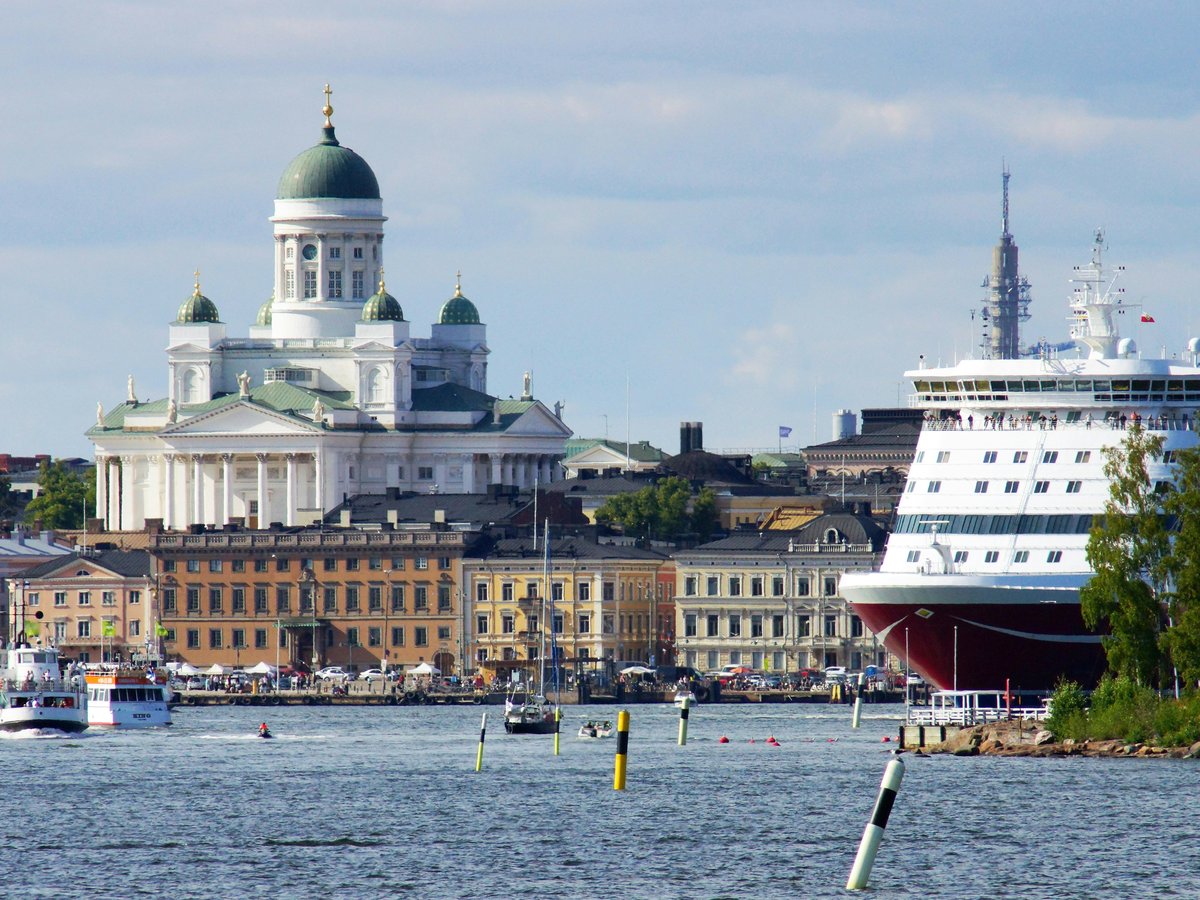
Helsinki has a reputation for high prices, and that reputation is largely earned. A coffee in Kallio runs 4 to 5 euros, and a casual dinner in Punavuori can clear 25 euros before you've ordered a second drink. But the city's public infrastructure, green spaces, and cultural institutions tilt heavily toward open access. The Helsinki City Museum charges nothing, ever. Oodi Central Library opened in December 2018 as a 98-million-euro civic living room with workshops, studios, and reading spaces, all free. The Lutheran and Orthodox cathedrals that anchor Senate Square and Katajanokka welcome visitors without a ticket. Suomenlinna, the 18th-century sea fortress spread across six islands in Helsinki's harbor, costs nothing to explore on foot. And between late May and early August, the city barely gets dark. That means 18-plus hours of usable daylight for walking, swimming, and sitting in parks. The long light is probably Helsinki's most generous free offering.
Free attractions
-
Helsingin kaupunginmuseo (Helsinki City Museum)
Permanently free museum at Aleksanterinkatu 16, in a cluster of five connected buildings near Senate Square. The permanent exhibition covers Helsinki's history from a small trading post founded in 1550 to the present day. Rotating exhibitions tend to focus on urban life, architecture, and local subcultures. The children's hands-on area on the top floor is a favorite for families. No tickets, no reservations, no free-day gimmicks. Open Tuesday through Sunday.
KruununhakaMuseum -
Oodi (Helsinki Central Library)
Opened in December 2018 on Töölönlahdenkatu, directly across from the Parliament House. The building cost roughly 98 million euros and was designed by ALA Architects. The ground floor runs a cinema and event space. The second floor has 3D printers, laser cutters, sewing machines, and music studios, all bookable for free with a library card. The top floor, called Book Heaven, has the library collection and reading terraces with views toward Töölönlahti bay. Free to enter and use. Open daily.
TöölönlahtiLibrary and cultural center -
Helsingin tuomiokirkko (Helsinki Cathedral)
The white neoclassical cathedral on Senate Square, completed in 1852 to a design by Carl Ludvig Engel. Free to enter. The interior is deliberately austere compared to most European cathedrals, with clean white walls and minimal ornamentation. The zinc statues of the Twelve Apostles lining the roofline are reportedly among the largest zinc sculptures of their era. Open daily, with reduced hours in winter. The crypt beneath hosts occasional exhibitions, sometimes with a small fee.
KruununhakaChurch -
Uspenskin katedraali (Uspenski Cathedral)
The largest Orthodox church in Western Europe, perched on a hillside in Katajanokka. Built from red brick between 1862 and 1868. Free entry. The interior is covered in icons and gold leaf, a sharp contrast to the Lutheran cathedral across the harbor. The surrounding hillside gives good views over the South Harbour and Market Square. Open Tuesday through Sunday in summer, with more limited hours from October through April.
KatajanokkaChurch -
Suomenlinna
An 18th-century sea fortress spread across six islands, roughly 15 minutes by ferry from Market Square. It has been a UNESCO World Heritage Site since 1991. The fortress grounds, tunnels, ramparts, and coastal paths are free to explore year-round. About 800 people still live on the islands. The main ferry runs as part of Helsinki's HSL transit system, so a day ticket or travel card covers the crossing. Some small museums on the island charge 2 to 8 euros separately. Worth noting that the islands are large enough for a half-day of walking. Bring a picnic from Hakaniemi market and eat on the ramparts facing the open Baltic.
Suomenlinna (island)Fortress and UNESCO site -
Sibelius-monumentti (Sibelius Monument)
Eila Hiltunen's 1967 sculpture in Sibelius Park, made from over 600 welded stainless steel pipes. It weighs 24 tonnes. The monument divides opinion locally. Some find it abstract and cold, others consider it the most striking public artwork in Finland. The surrounding park, Sibeliuksen puisto, runs along the Töölö waterfront and connects toward Hietaniemi beach. Free and always accessible.
TöölöMonument and park -
Kampin kappeli (Kamppi Chapel of Silence)
A curved wooden chapel in the middle of Narinkka Square, designed by K2S Architects and opened in 2012. The exterior is clad in alder planks bent into an oval shape. Inside, there are no religious symbols beyond a simple cross. The chapel was built for quiet reflection rather than services, and it seats about 60. Free to enter. Open weekdays, with shorter weekend hours. You'll find it between the Kamppi shopping center and the Tennispalatsi building.
KamppiChapel and architecture -
Suomen Pankin rahamuseo (Bank of Finland Museum)
A free museum at Snellmaninkatu 2, inside the Bank of Finland headquarters. The exhibitions cover Finnish monetary history from early trade goods through the markka era to euro adoption in 2002. Interactive displays let you try counterfeiting detection and explore inflation data. Small but well-designed, and rarely crowded. Open Tuesday through Friday, with some Saturday hours.
KruununhakaMuseum -
Esplanadi (Esplanade Park)
A narrow, linden-lined park stretching about 380 meters from the Swedish Theatre to Market Square. The park was laid out in 1812. Bench culture here is serious. Locals claim specific benches by habit, particularly along the southern Eteläesplanadi side. The bandstand at the eastern end hosts free concerts in summer, particularly during the Espa Stage series in June and July. Havis Amanda, the bronze fountain statue at the park's eastern end, is the focal point of Vappu celebrations every April 30. Free and always open.
KaartinkaupunkiPark -
Kaivopuisto
Helsinki's oldest park, dating from the 1830s. It spreads across a hillside that slopes down to the sea at the southern tip of the peninsula. The hilltop gives panoramic views over the harbor islands and, on clear days, toward Tallinn roughly 80 kilometers to the south. Vappu picnics on May 1 draw tens of thousands of people to the slopes. In summer the park hosts occasional free concerts and events. The shoreline path connects to the Eira neighborhood, which has some of the city's finest Art Nouveau residential architecture.
KaivopuistoPark -
Keskuspuisto (Central Park)
A 10-kilometer-long green corridor running from Töölönlahti bay north to the border with Vantaa. The park covers about 1,000 hectares and includes actual forest, not manicured lawns. Running, cycling, and cross-country skiing trails cross through the area. The southern end near Töölönlahti connects to Oodi and the Music Centre. In winter, the city maintains illuminated ski tracks through the park. You can walk from the center of a capital city into genuine boreal forest in about 20 minutes.
Töölö to PaloheinäPark and forest -
Hietaniemi ranta (Hietsu Beach)
Helsinki's most popular city beach, on the western shore about 2 kilometers from the center. Sandy, public, free. Summer weekends fill up by mid-afternoon, particularly when temperatures clear 25 degrees. The beach has changing cabins and a kiosk. To be fair, the water temperature in the Gulf of Finland rarely gets above 20 degrees even in July and August, so swimming requires a certain tolerance. Or Finnish stubbornness. The adjacent Hietaniemi cemetery, Finland's largest, contains the graves of several presidents and war heroes.
Töölö and HietaniemiBeach
Free activities
-
Browsing Vanha kauppahalli (Old Market Hall)
Helsinki's Old Market Hall sits on the South Harbour and has been operating since 1889. A narrow brick building houses about 20 vendors selling fish, reindeer meat, Karelian pies, cheeses, and specialty goods. Browsing costs nothing, though the smells of smoked salmon and fresh rye bread make it difficult to leave empty-handed. Open Monday through Saturday. The stallholders tend to be patient with questions if you're curious about Finnish food traditions.
KaartinkaupunkiMarket -
Walking the Design District
A self-guided loop through roughly 200 design shops, galleries, studios, and showrooms in Punavuori, Kaartinkaupunki, and Ullanlinna. Free maps are available at tourist information points and participating shops. The route covers about 3 kilometers of streets between Bulevardi and Erottaja. Many of the shops occupy converted ground-floor apartments from the early 1900s. Finnish glass, ceramics, and textile design are globally respected, and seeing them in their home context adds something that a department store can't replicate.
Punavuori and KaartinkaupunkiWalking route -
Kallio street art walk
The Kallio neighborhood, north of Hakaniemi, has accumulated a substantial collection of mural art over the past decade. The Kallio Block Party association has commissioned several large-scale works on building facades along Vaasankatu, Fleminginkatu, and surrounding streets. A 2-kilometer loop from Hakaniemi metro station up through the grid streets and back gives you a good cross-section. The neighborhood is also home to most of Helsinki's independent bars and cafes, so the walking environment has character beyond the murals.
KallioWalking route and street art -
Senate Square architectural walk
Senate Square and its immediate surroundings form one of the most complete neoclassical ensembles in Northern Europe. Carl Ludvig Engel designed the Cathedral, the University of Helsinki main building, and the Government Palace between the 1820s and 1850s. The square itself is open and free. From there, walk south to Market Square, east to Uspenski Cathedral in Katajanokka, or north along Aleksanterinkatu. The whole loop covers about 2 kilometers and passes through 200 years of Finnish architectural history.
Kruununhaka and KatajanokkaWalking route -
Seurasaari island walk
Seurasaari is a wooded island connected to the mainland by a footbridge, about 4 kilometers northwest of the center. The island path circuits about 2 kilometers through pine and birch forest. The squirrels here are famously tame and will eat from your hand. The open-air museum on the island charges admission in summer, currently around 10 euros, but walking the island paths, shoreline, and forest is free year-round. Locals swim from the beaches on the island's western side.
Meilahti and SeurasaariNature walk -
Browsing Hakaniemen kauppahalli (Hakaniemi Market Hall)
The renovated indoor market hall in Hakaniemi reopened after an extensive restoration. Two floors of food vendors, textile shops, and specialty stores. The ground floor focuses on fresh food, with fish counters and butchers. The upper floor has fabric shops, second-hand booksellers, and a couple of cafes. Free to browse. Open Monday through Saturday. Less touristy than the Old Market Hall, with more locals doing actual grocery shopping.
HakaniemiMarket -
Töölönlahti bay loop
A flat, paved walking and cycling path circles Töölönlahti bay in central Helsinki. The full loop is about 3 kilometers. The route passes the Finnish National Opera, Oodi, the Music Centre, Finlandia Hall, and the Winter Garden. Benches line the waterfront, and the bay attracts coots, swans, and the occasional cormorant. In winter, the bay sometimes freezes enough for walking across, though this has become less reliable in recent years.
TöölöWalking route
Free events
-
Espa Stage (Espan Lava)
Daily or near-daily, June through JulyFree outdoor concert series on the bandstand in Esplanade Park, running through June and July. Genres range from jazz and folk to pop and classical. Performances typically start around 18:00 on weekdays. The surrounding park benches fill up early, but standing room is always available. The series has run for decades and is a fixture of Helsinki summers.
Esplanadi bandstand -
Lux Helsinki
5 days in early to mid JanuaryA winter light art festival that fills central Helsinki buildings and public spaces with light installations, projections, and interactive works. The route typically covers about 3 kilometers through the city center, from Senate Square through Katajanokka and the South Harbour. Attendance has reached over 500,000 visitors across the event's run in recent years. Free to attend. The darkness of a Finnish January, with only about 6 hours of daylight, makes the installations particularly vivid.
Central Helsinki, route changes annually -
Helsinki Festival free program (Helsingin juhlaviikot)
2 to 3 weeks in August, Night of the Arts on one ThursdayFinland's largest arts festival, held annually in August since 1968. The ticketed program includes theater, opera, and dance, but the festival also runs a substantial free program. Night of the Arts (Taiteiden yö), typically on a Thursday in mid-August, fills the city with free performances, open galleries, pop-up events, and street art from about 18:00 to midnight. Over 70,000 people have attended in recent editions.
Various venues across Helsinki -
Vappu (May Day celebrations)
April 30 evening and May 1Finland's biggest street celebration. On the evening of April 30, crowds gather at the Havis Amanda statue on Market Square to watch the student cap being placed on the statue's head. On May 1, tens of thousands of people picnic in Kaivopuisto and on the surrounding hillsides. The atmosphere is loud and chaotic, with sima (a lightly fermented mead) and tippaleipä (funnel cake) as the traditional refreshments. Free to attend and participate.
Market Square (April 30), Kaivopuisto (May 1) -
Helsinki Design Week open events
10 days in SeptemberAn annual design festival in September that runs for about 10 days. The program mixes ticketed and free events. Open studios, pop-up exhibitions, design market browsing, and public installations are typically free. The festival has been running since 2005 and now includes over 200 events across the city. The Design District shops often extend their hours and host openings during the festival week.
Various venues, concentrated in Punavuori and Arabianranta -
Kallio Block Party (Kallio kukkii)
One weekend in late May or early JuneA free neighborhood festival in the Kallio district, held on a weekend in late May or early June. Streets close to traffic, and local businesses, musicians, and artists set up free stages, pop-up events, and activities. The festival started in 2012 and has grown into one of Helsinki's most atmospheric weekend events. Music stages along Vaasankatu and surrounding streets run from afternoon into the evening.
Kallio neighborhood, centered on Vaasankatu
Free swimming and sauna culture
Helsinki sits on a peninsula with coastline on three sides, and the city maintains several public beaches that are free to use from June through August. Hietaniemi (Hietsu) on the west side is the most popular, with a wide sandy shore and changing facilities. Pihlajasaari island has rocky beaches accessible by a small motorboat from Merisatama, though the boat crossing typically costs a few euros. Mustikkamaa, near the Kalasatama district, has a more local feel. Winter swimming has its own infrastructure. Sompasauna, a volunteer-built sauna on the Sompasaari waterfront, became a Helsinki institution over the past decade. It operated on a free, community-run basis for years. The city has been formalizing its status more recently, so conditions might have shifted. Check before visiting. Mind you, lowering yourself into the Baltic at minus 15 degrees through a hole cut in the ice is a particular kind of free activity. The experience tends to divide visitors sharply. Finnish public saunas in general have been experiencing a revival, though most now charge admission in the range of 10 to 20 euros.
Free indoor spaces for rainy and cold days
Helsinki gets roughly 680 millimeters of precipitation per year, spread across about 110 rainy days. Winter temperatures sit between minus 5 and minus 15 degrees Celsius from December through February. You'll want free indoor options. Oodi Central Library is the obvious first choice, with workspace, studios, and a top-floor reading room that stays comfortable for hours. The Academic Bookstore (Akateeminen Kirjakauppa) on Keskuskatu, designed by Alvar Aalto and completed in 1969, still has browsing areas, though it has changed ownership in recent years and the book selection has shifted. The Forum and Kamppi shopping centers are warm and free to walk through. The Helsinki Railway Station (Helsingin päärautatieasema), designed by Eliel Saarinen and completed in 1919, is worth visiting for its architecture alone. The four lamp-bearing granite statues flanking the main entrance are among Helsinki's most recognizable landmarks. The station hall itself has recently been renovated and is open to the public.
Getting around Helsinki for free or nearly free
Helsinki's compact center is walkable. The distance from the Railway Station to Market Square is about 800 meters. From Market Square to Kaivopuisto is another kilometer. The ferry to Suomenlinna costs the price of an HSL zone ticket, currently around 2.80 euros for a single trip or covered by a day ticket at about 8 euros. That's not free, but it's worth mentioning because the fortress itself costs nothing once you're there. City bikes (Helsinki City Bikes, operated seasonally) have been available since 2016, with day passes starting at around 5 euros. Most of the walking routes, parks, and central attractions sit within a 3-kilometer radius of Senate Square. In summer, the daylight stretches past 22:00, giving you long evenings to cover ground on foot. Tram lines 2 and 3 run a loop through much of the central city. A single ticket costs 2.80 euros and the full circuit takes about 50 minutes, passing Kauppatori, Katajanokka, Kallio, and Arabia.
FAQ
Which Helsinki museums are always free, not just on certain days?
The Helsinki City Museum (Helsingin kaupunginmuseo) at Aleksanterinkatu 16 is permanently free for all visitors, every opening day. The Bank of Finland Museum (Suomen Pankin rahamuseo) at Snellmaninkatu 2 is also permanently free. Oodi Central Library functions partly as a cultural space with exhibitions and is free to enter and use. Several other museums, like the Ateneum and Kiasma, occasionally participate in nationally organized free museum events, but their standard admission is paid. Always check current pricing before visiting, as policies shift from year to year.
Is Suomenlinna really free to visit?
The fortress island itself is free to explore, including all outdoor fortifications, tunnels, walking paths, and shoreline areas. You do need an HSL ferry ticket to get there, currently around 2.80 euros for a single trip from Market Square. Some small museums on the island, like the Suomenlinna Museum and the Ehrensvärd Museum, charge separate admission fees ranging from 2 to 8 euros. But you can spend a full half-day walking the ramparts, having a picnic, and exploring the tunnels without paying anything beyond the ferry crossing.
What is the best time of year to visit Helsinki on a budget?
Late June through early August gives you the most free outdoor value. Daylight lasts past 22:00, public beaches are open, the Espa Stage concert series runs daily in Esplanadi, and parks are in full use. Vappu on May 1 is the single biggest free street event of the year. September brings Helsinki Design Week with its free program. January has Lux Helsinki for five nights of light art. Winter does have the advantage of lower accommodation prices, but fewer free outdoor activities and temperatures that sit well below zero. For a balance of free activities, long days, and tolerably warm weather, aim for the last two weeks of June.
Can I swim in Helsinki for free?
Yes. Hietaniemi beach (Hietsu) is the most accessible, about 2 kilometers west of the center. The beach is public, sandy, and free, with changing facilities on site. Several other public beaches sit along the coastline and on nearby islands. Water temperature in the Gulf of Finland tends to peak around 18 to 20 degrees Celsius in July, so the swimming season is short. Helsinki monitors bathing water quality at public beaches throughout the summer, and the water is generally clean enough for swimming. Winter swimming is possible at organized spots around the city, with varying conditions.
Are Helsinki's churches free to enter?
Helsinki Cathedral (Helsingin tuomiokirkko) and Uspenski Cathedral (Uspenskin katedraali) are both free. Kamppi Chapel of Silence (Kampin kappeli) is free. Temppeliaukion kirkko, the Rock Church carved into granite in Töölö, currently charges an admission fee of around 8 euros for visitors, so it is not free. Other neighborhood churches across the city are generally open for services and sometimes accessible outside service times at no cost, but opening hours vary. Check before making a special trip to a specific church.
How much should I budget per day if I stick to free attractions?
If you have accommodation sorted and focus on free attractions, your daily costs come down to food and transit. Budget around 15 to 25 euros per day for meals if you shop at supermarkets like S-Market or K-Market and supplement with the occasional market hall purchase or street food from Kauppatori. A 1-day HSL transit ticket currently costs about 8 euros and covers buses, trams, metro, and the Suomenlinna ferry. You could feasibly spend 3 to 4 full days in Helsinki on under 30 euros per day, plus accommodation, without missing any of the major free attractions. A bag of Karelian pies from a grocery store and a bench in Esplanadi makes for a perfectly reasonable Helsinki lunch.
Last verified by automated review (v1.7.2) on June 6, 2026. What is automated review?