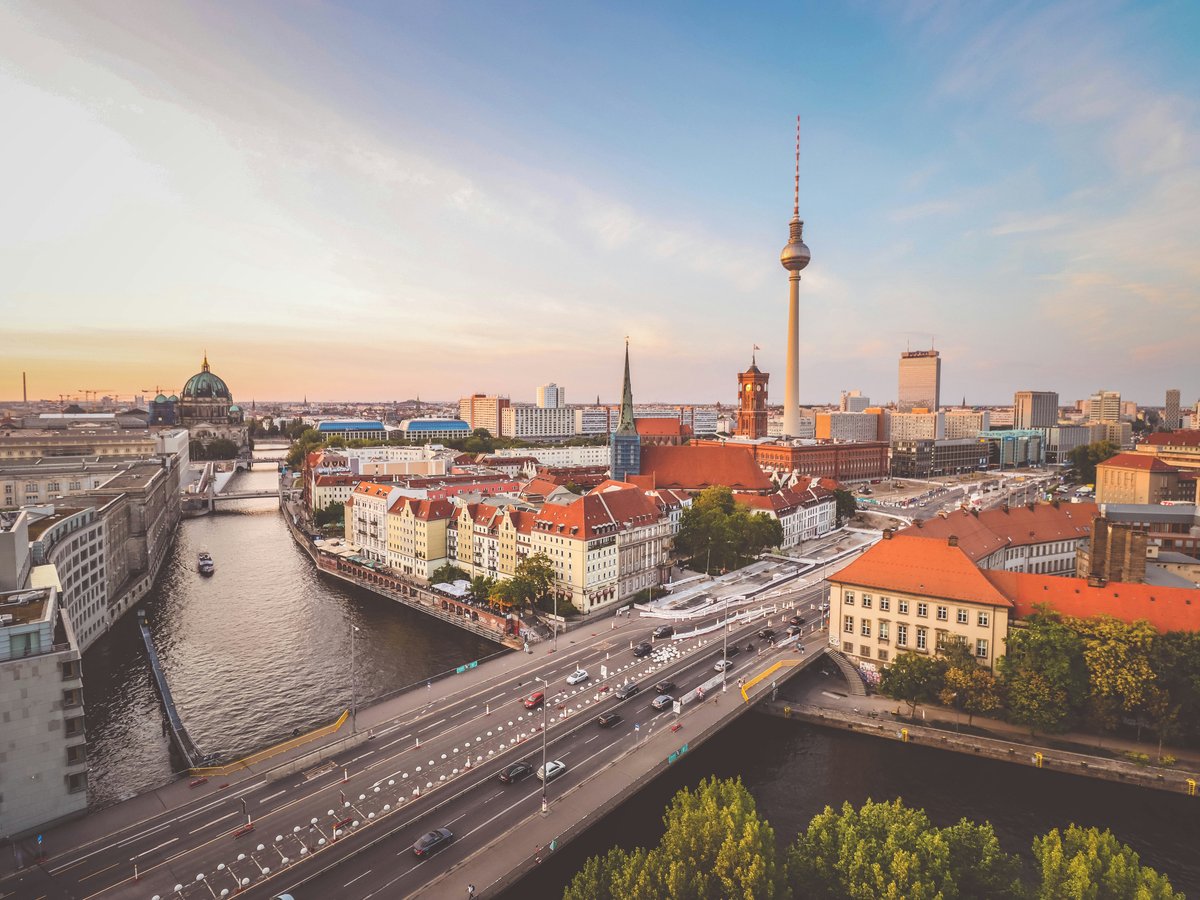
Berlin might be the most generous major capital in Europe when it comes to free access. The city still carries the scars and stories of the 20th century across its public spaces, and the Berlin Senate has made a deliberate policy of keeping much of that history open to everyone. The Topographie des Terrors, the Gedenkstätte Berliner Mauer, and the Tränenpalast all charge nothing. The 355-hectare Tempelhofer Feld, a former airport that closed in 2008, is now the largest inner-city open space in Germany, and you can walk, skate, or fly a kite on its old runways without paying a cent. Since 2022, the Museumssonntag program has opened select state museums on the first Sunday of each month at no cost. Add to that a street art scene that covers entire building facades in Kreuzberg, free Sunday karaoke sessions at Mauerpark, and hundreds of concerts during Fête de la Musique every June 21st, and you have a city where a zero budget still gets you a full itinerary. The sheer number of free memorial sites alone could fill 3 or 4 days. Berlin's parks, too, tend to be wilder and more sprawling than the manicured green spaces of Paris or London. Tiergarten covers 210 hectares in the center of the city, and on a warm afternoon the smell of linden trees and the sound of amateur musicians near the Goldelse column feel a world away from the traffic on Straße des 17. Juni.
Free attractions
-
Topographie des Terrors
Built on the site of the former Gestapo and SS headquarters along Niederkirchnerstraße, this documentation center covers around 800 square meters of indoor exhibition space and an extensive outdoor display along a preserved section of the Berlin Wall. The permanent exhibition traces the institutions of Nazi terror from 1933 to 1945 with original documents, photographs, and audio recordings. Always free, open daily. The outdoor area stays accessible even when the building closes, so you can walk the grounds after hours and read the panels in the fading light.
Kreuzbergmuseum -
Gedenkstätte Berliner Mauer
The Berlin Wall Memorial stretches along 1.4 kilometers of Bernauer Straße, preserving the last section of the border strip with its original death strip, watchtower foundations, and escape tunnel markers. The documentation center has a viewing platform on the top floor that gives you a perspective over the memorial grounds. Free admission to both indoor and outdoor areas. On a quiet weekday morning, the stillness along the memorial strip hits differently than any museum could. Thousands of photographs and personal accounts fill the exhibition rooms.
Mitte / Weddingmemorial -
Tränenpalast
The Palace of Tears sits at Friedrichstraße station, the former border crossing between East and West Berlin where families said goodbye without knowing when they would meet again. This glass-and-steel pavilion from 1962 now houses a permanent exhibition run by the Stiftung Haus der Geschichte. Original border control booths, personal items confiscated by guards, and recorded interviews with people who crossed here make the experience feel uncomfortably close. Always free.
Mittemuseum -
East Side Gallery
A 1.3-kilometer stretch of the Berlin Wall along Mühlenstraße, painted by 118 artists from 21 countries in 1990. Dmitri Vrubel's Bruderkuss, the mural of Brezhnev and Honecker in a fraternal kiss, is likely the most photographed image in Berlin. The gallery is outdoors and accessible 24 hours a day, though the paint has weathered since the last major restoration in 2009. Early morning visits, around 7 or 8 AM, let you photograph the murals without crowds blocking the compositions.
Friedrichshainpublic art -
Gedenkstätte Deutscher Widerstand
The German Resistance Memorial Center occupies the Bendlerblock at Stauffenbergstraße 13-14, where Claus von Stauffenberg and other conspirators of the July 20, 1944 assassination attempt on Hitler were executed in the courtyard. The permanent exhibition covers resistance across all social groups, from military officers to church leaders to student networks like the Weiße Rose. Free admission. The courtyard memorial, visible from the street, is a simple, heavy space.
Tiergartenmemorial -
Denkmal für die ermordeten Juden Europas
Peter Eisenman's Holocaust Memorial covers 19,000 square meters near the Brandenburg Gate with 2,711 concrete stelae of varying heights. The outdoor field is open at all hours and free to enter. Walking into the grid, the stelae rise above your head and the ground slopes beneath your feet. City noise fades. The underground Ort der Information, also free, documents individual fates with letters, diaries, and last postcards. It closes earlier than the field above, typically by 7 PM in summer.
Mittememorial -
Brandenburger Tor
The Brandenburg Gate was completed in 1791 by Carl Gotthard Langhans, modeled after the Propylaea in Athens. It stood in no-man's land during the Cold War and became the backdrop for both Kennedy's and Reagan's Berlin speeches. The gate itself and the Pariser Platz in front of it are open around the clock. At dusk the sandstone turns warm and the Quadriga on top catches the last light. No ticket, no barrier.
Mittelandmark -
Reichstagsgebäude Kuppel
Norman Foster's glass dome atop the Reichstag offers a 360-degree view over central Berlin. Free to visit, but you need to register online at the Bundestag website at least 2 to 3 days in advance. Slots fill fast in summer. The spiral ramp inside the dome lets you look down into the parliamentary chamber below. Evening slots, around sunset, are the ones to aim for. You will need a valid passport or ID for the security check at the entrance.
Mitteviewpoint -
Tempelhofer Feld
The former Tempelhof Airport closed in 2008, and the 355-hectare field opened to the public in May 2010 after a citizen referendum blocked development plans. The old runways are now used for cycling, skating, kite-flying, and urban gardening. It is one of the largest inner-city open spaces in the world, larger than Central Park in New York by about 10 hectares. The wind sweeps across the flat expanse with nothing to break it. On warm evenings the entire south side fills with barbecue smoke and the sound of portable speakers.
Neukölln / Tempelhofpark -
Großer Tiergarten
Berlin's oldest park covers 210 hectares in the center of the city and dates back to the 1527 hunting grounds of Elector Joachim I. The Siegessäule (Victory Column) stands at its center, and the tree-lined paths stretch from the Brandenburger Tor to the Zoologischer Garten station. The linden and oak canopy smells different in every season. In late spring, the Englischer Garten section near Schloss Bellevue fills with wildflowers. Free and open at all hours.
Tiergartenpark -
Viktoriapark
This park in Kreuzberg sits on the 66-meter-high Kreuzberg hill, the highest natural point in inner Berlin. The 24-meter waterfall, designed by Hermann Mächtig in 1894, cascades down the north slope from April through October. Karl Friedrich Schinkel's iron Kreuzberg Monument from 1821 sits at the summit, commemorating the Napoleonic Wars. The view from the top extends over the rooftops of Kreuzberg toward Mitte. On summer afternoons the grassy slopes fill with locals reading, napping, and sharing bottles of Berliner Pilsner.
Kreuzbergpark -
Sowjetisches Ehrenmal Treptower Park
The Soviet War Memorial in Treptower Park is one of the largest World War II memorials outside Russia. Built between 1946 and 1949, it holds the remains of around 7,000 Soviet soldiers. A 12-meter bronze statue of a Soviet soldier carrying a child and crushing a swastika dominates the complex. Sixteen stone sarcophagi line the approach, carved with scenes from the war. The scale is deliberately overwhelming. Free and open daily. The surrounding Treptower Park, 84 hectares along the Spree, is worth the visit on its own.
Treptowmemorial
Free activities
-
Berliner Mauerweg
The Berlin Wall Trail runs 160 kilometers along the former border, circling what was once West Berlin. You do not need to walk the whole thing. The 5-kilometer stretch from Bernauer Straße through the Nordbahnhof ghost station area to the Invalidenfriedhof is the most historically dense section, passing the Gedenkstätte Berliner Mauer, former watchtower sites, and the canal where some escapes succeeded. Information panels in German and English mark the route every few hundred meters. The path is flat and paved, suitable for bikes.
Variouswalking route -
Street art walking in Kreuzberg and Friedrichshain
The area around Oranienstraße, Schlesische Straße, and the RAW-Gelände (a former railway repair yard near Revaler Straße) holds some of Berlin's densest concentrations of large-scale murals and paste-ups. BLU's massive facade works on Cuvrystraße were painted over in 2014, but newer pieces rotate constantly. The Urban Spree gallery compound on Revaler Straße 99 has a free outdoor sculpture garden and rotating installations. Victor Ash's Astronaut/Cosmonaut mural on Mariannenstraße in Kreuzberg remains one of the most-photographed pieces. The smell of spray paint near RAW on warm nights tells you someone is still working.
Kreuzberg / Friedrichshainpublic art -
Mauerpark Flohmarkt browsing
Every Sunday from around 10 AM to 5 PM, the Mauerpark flea market fills the strip between Prenzlauer Berg and Wedding with 200 to 400 stalls selling vintage clothes, vinyl, GDR memorabilia, handmade jewelry, and furniture. Browsing is free, and the atmosphere alone is worth the trip. Food stalls sell Langos, currywurst, and Ethiopian injera. The market sits on the former death strip of the Berlin Wall, which adds a particular weight to the Sunday-morning casualness of it all.
Prenzlauer Bergmarket -
Spree River walk from Oberbaumbrücke to Molecule Man
The 2-kilometer path along the Spree from the Oberbaumbrücke (Berlin's most recognizable bridge, a double-deck Gothic brick structure from 1896) eastward past the East Side Gallery to the Molecule Man sculpture is flat, paved, and entirely free. Jonathan Borofsky's 30-meter aluminum Molecule Man sculpture stands in the river at the junction of Friedrichshain, Kreuzberg, and Treptow. Late afternoon light reflects off the water and through the sculpture's perforated figures. The walk takes about 25 minutes at a slow pace.
Friedrichshain / Kreuzbergwalking route -
Schlachtensee and Krumme Lanke swimming
These two connected lakes in the Grunewald forest, reachable by U3 to Krumme Lanke station, have free public access along most of their shoreline. Schlachtensee is about 780 meters long and reaches depths of 8 meters. The water is clean enough for swimming from roughly May through September, though it stays cold into June, typically 16 to 18 degrees. Sandy entry points dot the eastern shore. The forest canopy around Krumme Lanke keeps the banks shaded and the air 3 to 4 degrees cooler than the city center on hot days.
Zehlendorfoutdoor activity -
Bebelplatz Book Burning Memorial
Micha Ullman's 1995 memorial at Bebelplatz consists of a glass panel set into the cobblestones, through which you look down into an underground room with empty white bookshelves. The shelves hold space for roughly 20,000 volumes, the estimated number of books burned on this square by Nazi students on May 10, 1933. Heinrich Heine's 1820 prophecy is inscribed on a bronze plaque nearby. The memorial is visible day and night, lit from below after dark. It sits between the Staatsoper and the Alte Bibliothek on Unter den Linden.
Mittepublic art
Free events
-
Fête de la Musique Berlin
Annually on June 21stEvery June 21st, the summer solstice, hundreds of free concerts take place across Berlin's streets, parks, courtyards, and balconies. The event originated in Paris in 1982 and Berlin has participated since the early 1990s. Genres range from classical chamber music in Charlottenburg courtyards to techno at outdoor stages in Kreuzberg. Some stages run from noon until around 10 PM. Unter den Linden, Mauerpark, and the Kulturbrauerei courtyard in Prenzlauer Berg tend to host the largest stages. The whole city smells like bratwurst and spilled beer by late afternoon.
Citywide -
Bearpit Karaoke at Mauerpark
Sundays, approximately April through October, typically 3 PM startOn Sunday afternoons from roughly April through October, the stone amphitheater in Mauerpark fills with 2,000 to 3,000 spectators watching strangers sing karaoke. Joe Hatchiban has been running the event since around 2009 with a portable sound system, and it has become one of Berlin's most beloved free rituals. Performers sign up on the spot. The crowd is generous with applause regardless of talent. The amphitheater's curved wall amplifies the sound in ways that make even mediocre voices carry across the park.
Mauerpark amphitheater, Prenzlauer Berg -
Karneval der Kulturen street parade
Annually over Whitsun weekend (late May or early June)Berlin's Carnival of Cultures parade takes place over the Whitsun (Pentecost) weekend, usually in late May or early June. The Sunday street parade through Kreuzberg draws around 1 million spectators along a 3.5-kilometer route from Hermannplatz through Gneisenaustraße to Yorckstraße. The parade features around 70 to 80 groups with floats, costumes, and live music representing Berlin's international communities. The four-day street festival around Blücherplatz has free stages with world music, dance, and food from dozens of countries. Watching the parade costs nothing.
Kreuzberg, parade route from Hermannplatz -
Berliner Philharmoniker Lunchtime Concerts
Tuesdays at 1 PM during concert season (September through June)During the concert season (September through June), members of the Berliner Philharmoniker perform free chamber music concerts in the foyer of the Philharmonie on Herbert-von-Karajan-Straße 1. These lunchtime sessions typically run on Tuesdays at 1 PM and last about 40 to 50 minutes. No tickets needed. Arrive 15 to 20 minutes early to get a seat. The acoustics in the foyer are surprisingly warm for a lobbied space. Programs rotate and tend toward string quartets and wind ensembles.
Philharmonie foyer, Herbert-von-Karajan-Straße 1, Tiergarten -
Museumssonntag (Museum Sunday)
First Sunday of every monthSince July 2022, the Berlin Senate Department for Culture has funded free admission to participating state and city museums on the first Sunday of each month. Venues have included the Alte Nationalgalerie, Hamburger Bahnhof, Museum für Fotografie, Berlinische Galerie, and others, though the exact list can vary by month. Some museums require timed-entry tickets booked online in advance, even though admission is free. Check the official museumssonntag.berlin site a few days before the first Sunday to see which institutions are participating and whether reservations are needed.
Various participating museums across Berlin -
Christopher Street Day (CSD) Parade
Annually, typically a Saturday in late JulyBerlin's CSD parade, usually held on a Saturday in late July, is one of the largest Pride events in Europe, drawing between 500,000 and 1 million participants and spectators. The parade route runs from Kurfürstendamm through the Tiergarten to the Brandenburger Tor. Floats, music trucks, and marching groups fill about 3 to 4 kilometers of road. Free to watch and to march. The area around Nollendorfplatz in Schöneberg, historically Berlin's LGBTQ+ neighborhood since the 1920s, hosts free street parties and outdoor stages on the same weekend.
Parade route from Kurfürstendamm to Brandenburger Tor
Free museums and the Museumssonntag program
Berlin has a handful of museums that are permanently free, and understanding which ones they are saves you from planning around specific dates. The Topographie des Terrors on Niederkirchnerstraße is always free and covers the machinery of Nazi state terror in forensic detail. The Tränenpalast at Friedrichstraße station, with its original border crossing booths and confiscated personal items, charges nothing. The Gedenkstätte Berliner Mauer on Bernauer Straße is free for both its indoor documentation center and the 1.4-kilometer outdoor memorial. The Gedenkstätte Deutscher Widerstand in the Bendlerblock is free as well. These four institutions alone could fill 2 full days. Beyond the permanently free sites, the Museumssonntag initiative has been running since July 2022, funded by the Berlin Senate. On the first Sunday of each month, a rotating selection of state museums opens their doors at no charge. The Alte Nationalgalerie, with its Caspar David Friedrich and Max Liebermann paintings, and the Hamburger Bahnhof, Berlin's primary contemporary art museum, have both participated. Worth noting that some require advance reservations even on free Sundays, so check museumssonntag.berlin before you go.
Berlin's parks are not decorative, they are lived in
Something separates Berlin's green spaces from those of most European capitals. They tend to be scruffy, large, and used hard. The Großer Tiergarten covers 210 hectares and feels more like a forest than a park in its interior sections, where the paths narrow and the undergrowth thickens. Tempelhofer Feld has no trees at all on the old airfield proper. It is 355 hectares of flat runway, taxiway, and grassland. Wind hits you the moment you step onto the tarmac. Community gardens have sprung up along the edges since 2010, and on weekends you might see people kiteboarding on the old Runway 09L. Volkspark Friedrichshain, opened in 1848, is Berlin's oldest public park. It contains two artificial hills called Mont Klamott, built from roughly 2 million cubic meters of WWII rubble. The Märchenbrunnen fountain from 1913, with its 10 fairy-tale sculptures, sits at the western entrance and runs from April through October. Viktoriapark in Kreuzberg has its 24-meter waterfall operating on the same seasonal schedule. Treptower Park along the Spree covers 84 hectares and holds the Soviet War Memorial, but the riverbanks themselves are where Berliners sit on summer evenings, watching the Spree barges and the sunset behind the Molecule Man.
What used to be free but currently is not
A few Berlin sites that older guidebooks list as free have since introduced admission charges. The Berliner Dom (Berlin Cathedral) on the Museumsinsel charges around 10 euros for adults as of 2025. The Fernsehturm (TV Tower) at Alexanderplatz has always been paid, currently around 24.50 euros for the standard ticket, but it still appears on some outdated free-things lists, likely confused with the free view from the Reichstag dome. The Panoramapunkt at Potsdamer Platz, which had a fast elevator to a viewing platform, charged around 11 euros. The Pergamonmuseum on the Museumsinsel has been under partial renovation since 2023, and while some galleries have reopened, regular admission applies (currently around 14 euros for adults) except during Museumssonntag. Mind you, Berlin is still remarkably generous compared to London or Paris when it comes to free access. The number of permanently free memorial sites and documentation centers has no real parallel in other European capitals.
FAQ
Which Berlin museums are always free, not dependent on any special day?
Four major institutions are permanently free. The Topographie des Terrors on Niederkirchnerstraße covers the Nazi terror apparatus and is open daily. The Tränenpalast at Friedrichstraße station documents the Cold War border crossing experience. The Gedenkstätte Berliner Mauer on Bernauer Straße has both an indoor documentation center and a 1.4-kilometer outdoor memorial. The Gedenkstätte Deutscher Widerstand in the Bendlerblock on Stauffenbergstraße covers resistance movements against the Nazi regime. All four charge no admission at any time.
How does the Museumssonntag free museum program work?
Since July 2022, the Berlin Senate has funded free admission at participating state and city museums on the first Sunday of every month. The list of participating museums varies month to month, but has regularly included the Alte Nationalgalerie, Hamburger Bahnhof, Museum für Fotografie, and the Berlinische Galerie, among others. Some museums still require a timed-entry ticket even though admission is free, so check the official museumssonntag.berlin website a few days before the first Sunday to confirm which institutions are open and whether you need to book a slot.
Is the Reichstag dome really free to visit?
Yes, visiting the Reichstag dome costs nothing, but you need to register online in advance through the official Bundestag website. You will need to provide your name and passport or ID number. Slots typically fill up 2 to 3 days ahead during summer and school holidays, so book as early as possible. Evening slots around sunset offer the best light and views. Bring a valid photo ID to the security check at the entrance. The dome is open daily, and visits take about 45 minutes including the audio guide, which is also free.
Where can I swim for free in Berlin?
Berlin's lakes offer free public swimming access at multiple points. Schlachtensee and Krumme Lanke in Zehlendorf, both reachable via U3 to Krumme Lanke station, have free sandy entry points along their eastern shores. Schlachtensee is about 780 meters long and clean enough for swimming from May through September. Müggelsee in Köpenick, Berlin's largest lake at 7.4 square kilometers, has free shoreline access. Water temperatures usually reach 20 to 22 degrees by July. Designated Strandbäder (beach baths) like Strandbad Wannsee charge a small admission fee of around 6 euros, so these are not free.
Is Berlin safe for walking around at night to see free attractions?
Berlin is generally considered safe for nighttime walking, and several free sites are particularly worth visiting after dark. The Denkmal für die ermordeten Juden Europas (Holocaust Memorial) is lit from below at night, and the stelae create a different, heavier atmosphere than during the day. The Brandenburger Tor is illuminated every evening. The East Side Gallery murals along Mühlenstraße are lit by streetlights and the reflections off the Spree. Standard city awareness applies, particularly around major transit hubs like Alexanderplatz and certain sections of Görlitzer Park after midnight. The U-Bahn and S-Bahn run through the night on weekends (Friday and Saturday), so you can reach most areas without needing a taxi.
Are Berlin's flea markets free to enter?
The Mauerpark Flohmarkt every Sunday is free to enter and browse, with 200 to 400 stalls. The Nowkoelln Flowmarkt at Maybachufer in Neukölln, held on the second Sunday of each month along the Landwehr Canal, is also free to browse and tends to focus more on handmade goods, art, and vintage clothing. The Boxhagener Platz flea market in Friedrichshain runs every Sunday from around 10 AM and has no entry fee. The Straße des 17. Juni market near Tiergarten S-Bahn station runs on weekends with no admission charge. Buying things obviously costs money, but the browsing, people-watching, and general atmosphere are entirely free.
Last verified by automated review (v1.7.2) on June 7, 2026. What is automated review?