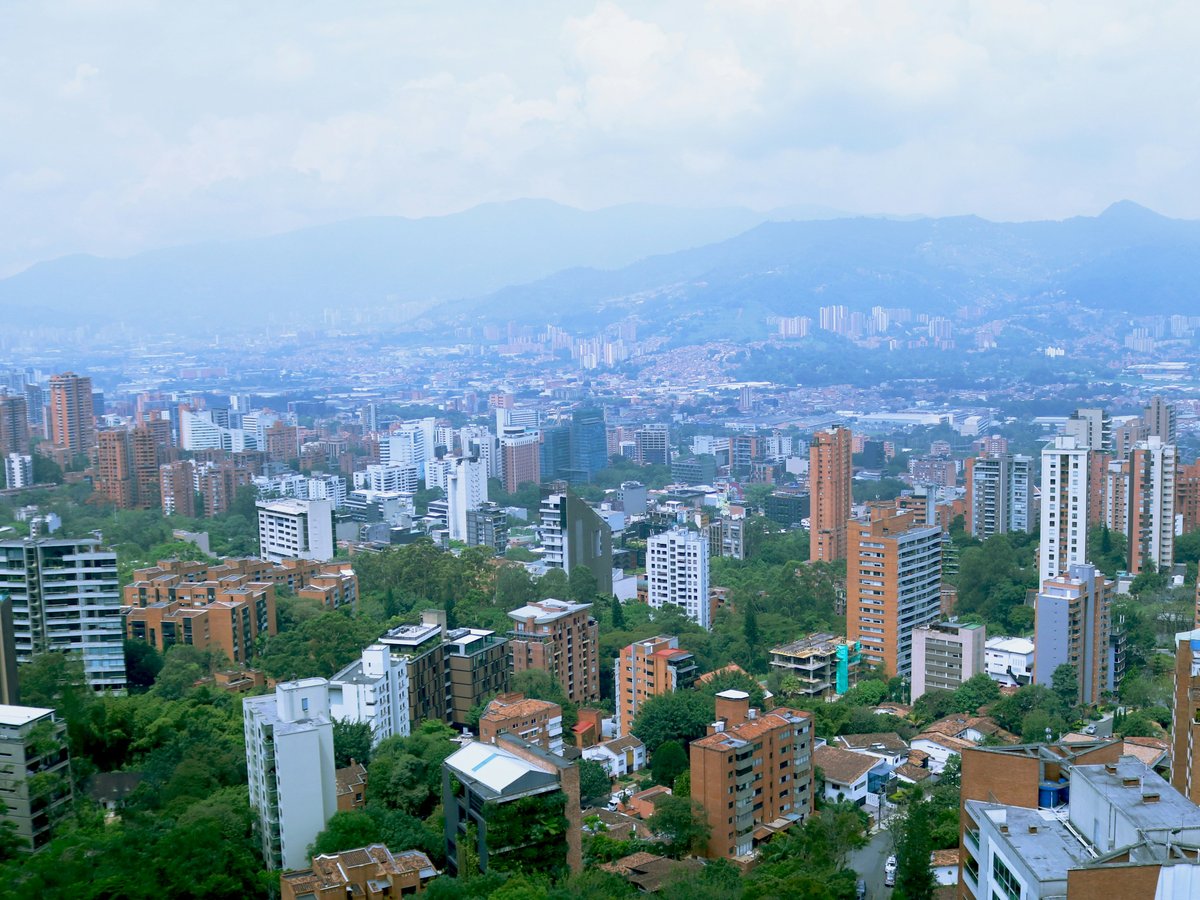
Medellin sits at roughly 1,500 meters in the Aburrá Valley, and that elevation keeps temperatures hovering around 22°C year-round. The city invested heavily in public infrastructure after the 1990s, and that legacy means a free botanical garden, open-air sculpture plazas, free-entry memorials, and a network of parque bibliotecas that double as community cultural centers. The Metro system, which opened in 1995, connects many of these spots for about 3,000 COP per ride, though the attractions themselves cost nothing. You can fill 4 or 5 days in Medellin without paying a single entry fee, and the experience feels less like budget travel and more like the city was designed to be walked and explored without a ticket counter in the way.
Free attractions
-
Plaza Botero
Fernando Botero donated 23 bronze sculptures to his hometown in 2000, and they sit in a public plaza outside the Museo de Antioquia in central Medellin. You walk among figures that weigh several tonnes each, their exaggerated proportions casting odd shadows across the stone pavement. The plaza is open 24 hours, though mornings before 10 AM tend to be quieter and the light hits the bronze at a warmer angle. Street vendors sell tinto for about 1,000 COP at the edges.
La CandelariaPublic art -
Jardín Botánico de Medellín
This 14-hectare botanical garden near the Universidad station charges no entry fee, which still surprises visitors. The Orquideorama, a wooden lattice structure completed in 2006 by Plan B Arquitectura, shelters orchid and butterfly collections underneath its canopy. The air inside smells faintly of damp bark and soil. Weekday mornings draw fewer crowds than weekends. You'll find iguanas sunning on the paths near the lake, seemingly unaware that 2.5 million people live around them.
Zona NortePark / Garden -
Museo Casa de la Memoria
A memorial museum in the Bicentenario neighborhood of Medellin dedicated to documenting Colombia's armed conflict. Entry is always free. The permanent exhibition uses audio recordings, photographs, and personal testimonies from conflict survivors, and the experience is affecting in a way that sits with you for days. The building itself, designed by Juan David Botero, opened in 2013. Plan for about 90 minutes inside. The rooftop terrace looks out toward the eastern hills.
Boston / BicentenarioMuseum (always free) -
Cerro Nutibara and Pueblito Paisa
An 80-meter hill in the southern part of Medellin, topped with a replica of a traditional Antioquian village. The walk up takes about 15 minutes from the base, and the path is paved. From the top you get a 360-degree panorama of the valley, with the skyscrapers of El Poblado to the east and the Cerro El Volador visible to the north. The replica village includes a small church, a barbershop, and a schoolhouse. No entry fee. The breeze up top feels noticeably cooler than street level.
Cerro NutibaraViewpoint / Landmark -
Parque de los Pies Descalzos
Built on the grounds of the old Empresas Públicas de Medellín headquarters, this park was designed by Felipe Uribe de Bedout and opened in 1999. The concept invites you to take off your shoes and walk through sand gardens, bamboo groves, and shallow water features. The sand is warm in the afternoon sun. A Zen garden section has raked gravel and large stones. It sits next to the Museo Interactivo EPM, and the whole area stays lively until about 8 PM most evenings.
Centro / AlpujarraPark -
Cerro El Volador
At 1,630 meters, this is the tallest hill inside Medellin's urban footprint. The trails start near the Universidades metro area and the climb to the summit takes 30 to 45 minutes depending on your pace. The top offers an unobstructed view across the Aburrá Valley, and on clear mornings you might see the Cerro Padre Amaya to the west. The hill is also an archaeological site. Pre-Hispanic tombs were discovered here, and information boards along the trail explain the findings. Locals jog the paths starting around 5:30 AM.
Robledo / Cerca de la Universidad NacionalViewpoint / Nature -
Parque de Bolívar
The oldest public park in Medellin, dating to the 1890s. It sits adjacent to the Catedral Metropolitana de Medellín, which is itself free to enter and notable for its brick construction. The park has tall ceiba trees that provide shade even at midday. On weekday afternoons, retirees play chess on stone benches near the fountain. The cathedral, completed in 1931, used an estimated 1.1 million bricks in its construction.
VillanuevaPark / Historic Square -
Parque Biblioteca España
Worth noting that this library-park in Santo Domingo Savio, designed by Giancarlo Mazzanti and opened in 2007, has been partially closed for structural repairs since around 2015. The exterior and surrounding public terraces are still accessible and the views of the valley from this elevation are striking. You reach it via the Metrocable Line K to the Santo Domingo station. Even without entering the building, the surrounding community gardens and terraces reward the trip.
Santo Domingo SavioViewpoint / Architecture -
Parque Explora (outdoor areas)
The indoor exhibitions at Parque Explora charge about 29,500 COP for adults. That said, the outdoor grounds, public plazas, and the large freshwater aquarium viewing area at the entrance are free to walk through. The complex sits next to the Jardín Botánico and the Parque de los Deseos, and you can spend an hour exploring the exterior installations, interactive outdoor exhibits, and the artificial lake without buying a ticket.
Zona NorteOutdoor public space (indoor exhibits are paid)
Free activities
-
Comuna 13 Street Art Walk
The outdoor escalators in Comuna 13, installed in 2011, are free to ride and they take you through a neighborhood that has become an open-air mural gallery. Over 200 murals cover building facades along the escalator route and surrounding streets in this part of Medellin. The art changes regularly as new works replace older ones. You can walk the route independently without a guide. The escalators operate from about 6 AM to 8 PM daily. On weekends, local hip-hop dancers often perform near the top of the escalators. The scent of arepas from corner vendors follows you along most of the route.
San Javier / Comuna 13Walking / Street Art -
Ciclovía on Sundays and Holidays
Every Sunday and public holiday, Medellin closes several major roads to cars from 7 AM to 1 PM. The route runs roughly 30 kilometers through the city, passing through Laureles, El Poblado, and along the Río Medellín. You don't need your own bike. Free bike lending stations have been part of the program, though availability varies. Runners, skaters, and dog walkers share the route. The energy on the Avenida El Poblado stretch picks up around 8:30 AM.
Multiple (city-wide route)Cycling / Walking -
Mercado del Río and Plaza Minorista (browsing)
Plaza Minorista José María Villa is Medellin's largest wholesale market, spread across 3 levels near the Cisneros metro station. You can spend an hour wandering the stalls of tropical fruit, dried herbs, and fresh flowers without buying anything, though the smell of ripe guanábana and lulo tends to change your mind. Mercado del Río in the Ciudad del Río neighborhood is a newer food hall with about 40 vendors under one roof. Browsing is free, and sampling happens naturally as vendors offer tastes of cheese, chorizo, and tropical juices.
Centro / Ciudad del RíoMarkets / Browsing -
Metrocable and Metro rides for the views
The Metrocable lines in Medellin were built as public transit, not tourist attractions, but the views from the cable cars over the hillside comunas are striking. Line K runs from Acevedo station up to Santo Domingo, and Line J goes from San Javier toward La Aurora. A single ride costs around 3,000 COP, though the views are the real draw. The cabins climb steeply enough that you feel the temperature drop as you gain elevation. Weekday mid-mornings tend to be less crowded than weekends.
MultipleSightseeing / Transit -
Walking the Río Medellín Parques del Río
The Parques del Río project, which opened its first phase in 2016, created a linear park along the Medellín River between Industriales and Aguacatala stations. The park has walking paths, open lawns, and public exercise equipment. The sound of the river underneath is a constant backdrop. On weekday evenings after 5 PM, joggers and families fill the paths. The elevated walkways give views of El Poblado's towers on one side and Belén's residential grid on the other.
El Poblado / BelénWalking / Parks
Free events
-
Feria de las Flores (Flower Festival)
Annually, late July to early August (approximately 10 days)Medellin's biggest annual festival typically runs for about 10 days in late July or early August. The Desfile de Silleteros parade through the streets of the city center is free to watch from the sidewalks. Silleteros carry elaborate flower arrangements on wooden frames weighing up to 70 kilograms. Free concerts and cultural events happen in public plazas across the city throughout the festival. Parque Norte and Parque de Bolívar host stages with no entry fee.
City-wide, main parade on Carrera 48 and other streets -
Free Sunday concerts at Parque de los Deseos
Sundays (check the Parque de los Deseos program for specific dates)Parque de los Deseos, next to the Planetario de Medellín in Zona Norte, hosts free outdoor concerts and film screenings on many Sunday evenings. The park's open-air amphitheater seats a few hundred on its concrete steps. The program leans toward local bands and Colombian folk music. Families spread blankets on the surrounding grass. The evening air at this elevation tends to cool down to about 18°C after sunset.
Parque de los Deseos, Zona Norte -
Museo de Antioquia free Sundays
First Sunday of each monthThe Museo de Antioquia on Plaza Botero in Medellin offers free admission on the first Sunday of each month. The permanent collection includes over 100 works by Fernando Botero and a pre-Columbian gold collection. The museum building dates to 1955 and was originally Medellin's city hall. On free Sundays, expect queues from about 10 AM, though they move steadily.
Plaza Botero, Carrera 52 No. 52-43 -
Alumbrados (Christmas lights)
Early December through mid-January, nightlyFrom early December through mid-January, Medellin lights up the Río Medellín corridor and several parks with millions of LED lights. The main display along the river between Industriales and Nutibara is free to walk through. The city has been running the Alumbrados since the 1960s, though the scale has grown considerably. In recent years the displays have drawn over 4 million visitors across the season. The best viewing is after 7 PM when full darkness sets in.
Río Medellín corridor and surrounding parks
Getting around Medellin for free (or nearly free)
Medellin's Metro system is the only rail transit in Colombia, and a single ride currently runs about 3,000 COP. That covers transfers between the Metro, Metrocable, and tram lines on one fare. For the truly zero-budget approach, the central areas between Parque Berrío and Parque de Bolívar are walkable in about 15 minutes. The Encicla bike-share system, integrated with the Metro, offers the first 60 minutes free with registration. Stations are scattered across the valley floor, with clusters near the university district and Laureles. Mind you, the hills in Medellin can be steep once you leave the valley floor, so save the Encicla bikes for flat routes along the river.
Free drinking water and staying hydrated
Medellin's tap water is treated by EPM and is safe to drink, which is not the case in every Colombian city. Filling a reusable bottle from the tap saves roughly 3,000 COP per bottled water. The botanical garden and Parque de los Deseos both have public water fountains. The 22°C average temperature means you won't sweat as heavily as at sea level, but the 1,500-meter altitude can be mildly dehydrating if you're arriving from lower elevations. Budget around 2 liters per day if you're walking between sites.
Safety tips for free exploring in Medellin
Medellin has improved its security situation considerably since the 1990s, but common-sense precautions still apply. The free attractions in this guide are in well-trafficked areas. The Centro district around Plaza Botero gets busy and pickpocketing happens, so keep valuables in front pockets. The Metrocable to Santo Domingo is fine during daylight hours. Locals tend to advise against walking the hill trails like Cerro El Volador alone before sunrise or after dark. The 112 emergency number works city-wide. The Policía de Turismo has a station near the Alpujarra administrative center.
FAQ
Are museums in Medellin free to visit?
Several museums in Medellin offer permanent free entry, including the Museo Casa de la Memoria. The Museo de Antioquia charges regular admission but opens for free on the first Sunday of each month. The Museo de Arte Moderno de Medellín (MAMM) also has periodic free days. Check each museum's schedule, as policies can shift.
Is it safe to walk around Medellin for free activities?
The areas where most free attractions are located, including Zona Norte, El Poblado, Laureles, and the Centro district around Parque Berrío, are generally well-trafficked and patrolled. Standard precautions apply. Avoid displaying expensive electronics in crowded areas, and stick to daylight hours for hill climbs like Cerro El Volador and Cerro Nutibara.
What is the best time of year to visit Medellin for free outdoor activities?
Medellin's temperature stays around 22°C year-round, so there is no bad season for outdoor activities. The drier months of December through February and June through August tend to have fewer afternoon rain showers. The Feria de las Flores in late July or early August adds free public events to the calendar. The Alumbrados light displays run from December into January.
Can you visit Comuna 13 in Medellin without paying for a tour?
The outdoor escalators and street art in Comuna 13 are in public space and free to access independently. You do not need a paid guide to walk the route, though some visitors prefer one for context. The escalators operate from about 6 AM to 8 PM daily. Weekend mornings tend to be busiest with tour groups, so weekday visits are quieter.
How much does the Medellin Metro cost, and does it connect to free attractions?
A single Metro ride in Medellin currently costs about 3,000 COP, which covers transfers to Metrocable and tram lines. The Universidad station serves the Jardín Botánico and Parque Explora. The Parque Berrío station is closest to Plaza Botero. The Acevedo station connects to Metrocable Line K for Santo Domingo Savio. Most free attractions in the city are within walking distance of a Metro station.
Last verified by automated review (v1.7.2) on June 7, 2026. What is automated review?