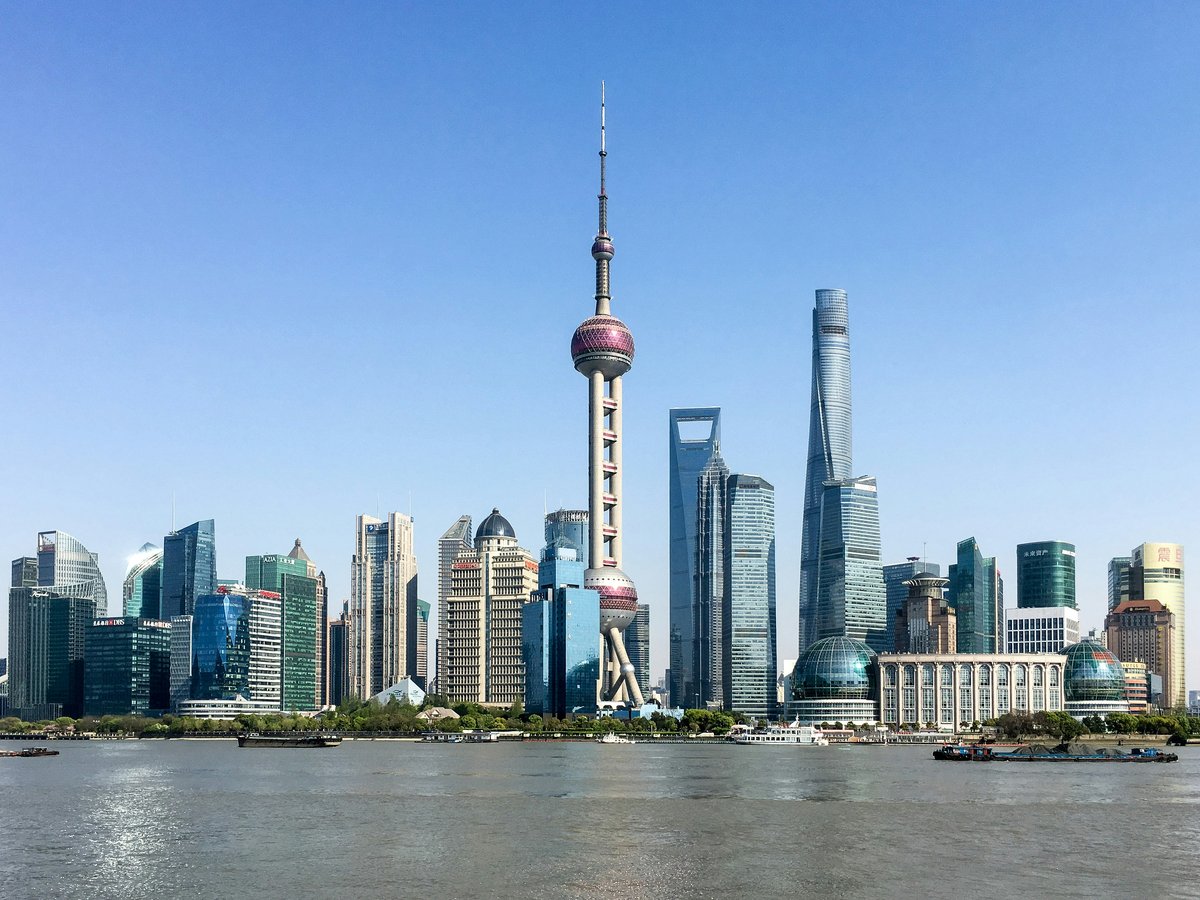
Shanghai's public spaces are built on a scale that seems designed to overwhelm, and most of them cost nothing to experience. The Bund runs 1.5 kilometers along the Huangpu River, lined with more than 20 heritage buildings from the 1920s and 1930s, open at any hour. Four major museums across the city operate on permanent free admission. The Former French Concession spreads a canopy of plane trees, first planted by the French municipal council in the early 1900s, over Shikumen lane houses and Art Deco apartments that you can walk past for hours. Fuxing Park fills with ballroom dancers and erhu players most mornings before 8 a.m., the sound drifting over hedgerows trimmed in French garden style. The galleries at M50 on Moganshan Road, housed in converted cotton mills, charge nothing to browse. You could spend a full week here on Metro fare and meals alone, and still encounter a 1933 slaughterhouse turned creative landmark, a power station converted into China's first contemporary art museum, and a riverfront where the mood shifts entirely between the white afternoon light and the warm orange glow of the Pudong towers after dark.
Free attractions
-
The Bund (外滩)
A 1.5-km stone promenade along the west bank of the Huangpu River, lined with buildings in Gothic Revival, Art Deco, and Beaux-Arts styles from the 1920s through the 1940s. The north end near Waibaidu Bridge tends to be less crowded. After sunset, the Pudong skyline illuminations run until about 10 p.m. on weeknights, 11 p.m. on weekends. The best photo angle is likely from the elevated walkway near the old HSBC Building at No. 12. Free and open 24 hours.
HuangpuWaterfront promenade -
Shanghai Museum (上海博物馆)
The original People's Square branch houses ancient Chinese bronzes, ceramics, jade, and calligraphy across 4 floors. The newer East Branch in Pudong opened in late 2022 with expanded galleries covering ancient Egyptian artifacts and Chinese painting. Both locations are free with advance reservation through the official WeChat mini-program or website. Weekend waits can run 15 to 20 minutes even with a booking. The People's Square building's round-top, square-base profile references the ancient Chinese idea that heaven is round and the earth is square.
Huangpu (People's Square) and Pudong (East Branch)Museum -
Power Station of Art (上海当代艺术博物馆)
China's first state-run contemporary art museum, occupying a converted power station on the Huangpu riverbank south of the Bund. The tall smokestack is visible from across the river. The museum hosts the Shanghai Biennale and rotating exhibitions across roughly 15,000 square meters of gallery space. Free entry. Weekday visits rarely require waiting. Worth noting, the rooftop terrace on the 7th floor offers an unobstructed river view that most visitors walk right past.
HuangpuMuseum -
China Art Museum (中华艺术宫)
The red inverted-pyramid structure served as the China Pavilion during Shanghai's 2010 World Expo. The permanent collection focuses on modern Chinese art from the mid-1800s through the present. Free entry with a valid ID for the permanent galleries. Some temporary exhibitions on upper floors carry a separate ticket, currently around 20 RMB when applicable, but the permanent floors alone can fill 2 to 3 hours comfortably.
PudongMuseum -
Shanghai History Museum (上海市历史博物馆)
Housed in the 1934 former Shanghai Race Club building at 325 Nanjing West Road. The ground floor covers prehistoric settlements through the Song dynasty. The upper floor traces the treaty-port era, foreign concessions, and the turbulent period through 1949. Free with reservation. The building's clock tower has been a Huangpu District landmark since the 1930s, and it's worth looking at from the garden courtyard before heading inside.
HuangpuMuseum -
Fuxing Park (复兴公园)
An 8.89-hectare French-designed park dating to 1909, right in the middle of the Former French Concession. The central lawn fills with ballroom dancers before 8 a.m. most mornings, their portable speakers audible a block away. The rose garden near the south gate blooms from April through late October, heavy with scent on warm mornings. Bronze statues of Marx and Engels stand near the north entrance. The surrounding Sinan Road mansions, many from the 1920s, add historical context to the walk.
HuangpuPark -
Lu Xun Park (鲁迅公园)
Originally built in 1896 for the Japanese community in Hongkou, this 22-hectare park is one of Shanghai's oldest. The lake area attracts amateur Peking opera singers and erhu players most afternoons, and the sound carries across the water in a way that the city's background noise doesn't quite drown out. Lu Xun's tomb and a small memorial hall sit in the northwest corner. Cherry trees along the lake bloom briefly in late March, drawing crowds for about 10 days.
HongkouPark -
Jing'an Sculpture Park (静安雕塑公园)
A 6.5-hectare park along Shimen Er Road with permanent outdoor sculptures scattered across its lawns. It tends to be noticeably less crowded than Fuxing Park or People's Park, partly because there's no lake or central gathering space to anchor around. The Shanghai Natural History Museum sits inside the park grounds, though that has a separate paid admission of 30 RMB. The park itself is always free.
Jing'anPark -
Huangpu Park (黄浦公园)
A compact green space at the northern tip of the Bund, where Suzhou Creek flows into the Huangpu River. This is the site of the former Public Garden, which notoriously restricted Chinese residents from entry until 1928. The Monument to the People's Heroes stands at the center. Early morning, before 7 a.m., offers the clearest river views and the fewest tour groups. It's a 3-minute walk from the Nanjing Road intersection.
HuangpuPark and historical site -
1933 Old Millfun (1933老场坊)
A 1933 Art Deco former slaughterhouse in Hongkou, designed by the British firm Balfours. The interior concrete bridges and spiraling cattle ramps remain structurally intact, creating an almost Escher-like geometry when viewed from the central atrium. The raw concrete smells faintly mineral on humid days. Ground-floor shops and cafes rotate frequently, but the building's structure is the real draw. Free to walk through daily, roughly 9 a.m. to 10 p.m.
HongkouArchitecture and landmark -
M50 Creative Park (莫干山路50号)
A cluster of converted cotton mill warehouses along Moganshan Road in Putuo, housing around 100 galleries and artist studios. ShanghART Gallery, one of China's earliest contemporary art galleries (founded 1996), maintains a permanent space here. Most galleries open Tuesday through Sunday from 10 a.m. to 6 p.m. Browsing is free. Saturday afternoons tend to bring new openings, sometimes with complimentary drinks. The graffiti-covered exterior walls along Moganshan Road are a destination of their own.
PutuoArt district -
Tianzifang (田子坊)
A maze of narrow Shikumen alleyways off Taikang Road, originally residential lanes from the 1930s. No admission fee. Walking the alleys and watching artisans at work costs nothing, though the boutiques and coffee shops lining every turn will test your resolve. Weekday mornings before 11 a.m. are noticeably less crowded than weekend afternoons. The main entrance sits on Lane 210, Taikang Road, but Lane 248 tends to be emptier and drops you into the quieter back alleys first.
HuangpuHistoric quarter
Free activities
-
Former French Concession Walking Loop
Start at Fuxing Park's south gate on Gaolan Road, head west along Huaihai Middle Road, then turn south onto Wukang Road past the Wukang Mansion, a 1924 Normandie-style apartment building designed by Hungarian architect László Hudec. Continue to Ferguson Lane for a cafe-lined pedestrian stretch, and loop back via Yongfu Road. The full route covers about 4 km. Plane trees planted in the early 1900s form a near-continuous canopy overhead. The bark peels in mottled patches during September and October, scattering papery fragments along the sidewalk. Allow 2 to 3 hours if you stop to look at the architecture.
Xuhui and HuangpuWalking route -
Pudong Riverside Promenade (滨江大道)
A 2.5-km paved waterfront walkway on the east bank of the Huangpu, running from the Oriental Pearl Tower area south past the Shanghai Tower and on toward the old Minsheng Wharf. The Bund's stone facades photograph better from this side in the morning, when direct light hits them. Benches appear roughly every 200 meters. That said, most visitors stick to the Lujiazui section near the skyscrapers. The stretch south of the Shanghai World Financial Center is quieter and the breeze off the river picks up in the afternoon.
PudongWalking route and viewpoint -
Qibao Ancient Town (七宝古镇) Walking
A water town with a history stretching back roughly 1,000 years, about 40 minutes from central Shanghai on Metro Line 9. The main canal, stone bridges, and narrow lanes are free to walk. Food stalls sell tang yuan (glutinous rice balls) for around 5 to 10 RMB and chou doufu (stinky tofu) for about 8 RMB, the smell hitting you well before you see the stall. The paid attractions inside, including the temple and the cotton textile museum, run about 30 RMB for a combined ticket, but the town's narrow alleys and canal bridges don't require them.
MinhangHistoric town walk -
Nanjing Road Pedestrian Street (南京路步行街)
The pedestrian-only section of Nanjing Road covers about 1.2 km, running east from People's Park toward the Bund. The Art Deco facades of the old department stores, including the former Sun Sun Company and Wing On buildings from the 1920s and 1930s, still stand along the first few blocks. People-watching peaks between 7 and 9 p.m. when the neon signage lights the pavement. The eastern end drops you within a 5-minute walk of the Bund's Huangpu River promenade.
HuangpuSightseeing walk -
Suzhou Creek Waterfront Walk (苏州河步道)
The north bank of Suzhou Creek between Changhua Road and Waibaidu Bridge has been developed into a continuous walkway over recent years, covering roughly 6 km. Several converted warehouse spaces along the route are free to enter, including the Sihang Warehouse Battle Memorial, which documents a 1937 defense during the Battle of Shanghai. The path passes under more than 10 architecturally distinct bridges. November mornings bring a low mist off the creek that gives the stretch a quiet atmosphere, typically fading by noon as the sun breaks through.
Jing'an and HuangpuWalking route
Free events
-
Morning Tai Chi and Ballroom Dancing in City Parks
Daily, roughly 5:30 to 8:00 a.m.Shanghai's parks fill with group exercise before the workday begins. Fuxing Park's central lawn hosts ballroom dancers with portable speakers, while the paths around Lu Xun Park attract tai chi and sword-practice groups. People's Park draws its own crowd of morning exercisers. Visitors are generally welcome to watch or join in, though the regulars have established spots and routines. The music drifts between traditional Chinese folk songs and, somewhat unexpectedly, Viennese waltzes.
Fuxing Park, Lu Xun Park, People's Park, and others -
M50 Gallery Openings
Most Saturdays, typically 2 to 6 p.m.New exhibitions at M50's galleries frequently launch with free openings, sometimes with complimentary wine or beer. ShanghART and the other established galleries post schedules on their WeChat accounts a few days ahead. The smaller studios are less predictable but tend to cluster openings on the same afternoons to draw foot traffic through the complex.
M50 Creative Park, 50 Moganshan Road, Putuo -
Shanghai Biennale
Every 2 years, typically November through MarchHeld at the Power Station of Art every two years, the Shanghai Biennale is one of Asia's longest-running contemporary art biennials, first staged in 1996. Each edition runs roughly 4 to 5 months. Admission to the main exhibition is free. Past editions have drawn over 300,000 visitors. The curatorial approach tends toward politically engaged and experimental work, and the converted industrial space itself becomes part of the installations.
Power Station of Art, Huangpu -
Shanghai International Arts Festival Public Performances
Annually, October through NovemberThe annual Shanghai International Arts Festival, running since 1999, includes a strand of free outdoor performances in parks and public plazas during October and November. Past programs have featured traditional opera excerpts, folk dance from various Chinese provinces, and chamber music in Jing'an Park. The main ticketed events are separate, but the public program has typically run 20 to 30 free performances over the festival's duration.
Various parks and plazas across Shanghai -
People's Park Marriage Market (人民公园相亲角)
Saturdays and Sundays, roughly noon to 5 p.m.On weekend afternoons, a corner of People's Park becomes an open-air matchmaking market. Parents display handwritten profiles of their unmarried children on umbrellas and sheets of paper spread along the pathways. Each profile typically lists education, salary, housing status, and desired partner criteria. The atmosphere is earnest, competitive, and startlingly specific. It's a window into generational expectations around marriage and social mobility that no museum exhibit could replicate.
People's Park (人民公园), northwest corner near Nanjing West Road
Timing Free Museum Visits
All four of the permanently free museums, the Shanghai Museum, Power Station of Art, China Art Museum, and Shanghai History Museum, require some form of reservation or ID check. The Shanghai Museum's WeChat mini-program releases slots about 7 days in advance, and weekend slots for the East Branch in Pudong tend to fill within 24 hours of opening. Weekday mornings remain consistently available. The Power Station of Art is the most relaxed of the four. Walk-ins without a reservation are usually fine on weekdays. China Art Museum processes ID checks at the door and rarely has significant waits. The Shanghai History Museum on Nanjing West Road can draw school groups on weekday mornings during term time, so early afternoon tends to be emptier. One scheduling detail that catches people off guard. Most Shanghai museums close on Mondays. The Power Station of Art, China Art Museum, and Shanghai History Museum all follow this pattern. The Shanghai Museum currently opens on Mondays at the People's Square branch, but it's worth confirming before building a day around it.
What Changed and Now Charges Admission
A few formerly free spots in Shanghai have introduced paid admission in recent years. Yu Garden (豫园), the 16th-century classical garden in the Old City, currently charges 40 RMB during peak season (April through June and September through November) and 30 RMB in the off-season. To be fair, the surrounding Yu Garden Bazaar area is still free to walk through and worth visiting for the architecture alone. Century Park (世纪公园) in Pudong, once Shanghai's largest free green space at 140 hectares, has introduced a 10 RMB admission fee. The Shanghai Natural History Museum, despite sitting inside the free Jing'an Sculpture Park, charges 30 RMB. Longhua Temple (龙华寺), one of Shanghai's oldest Buddhist temples, charges 10 RMB. The temple grounds and pagoda exterior are visible from the street, but interior access requires a ticket.
Free Shanghai After Dark
The Bund promenade after sunset is a different experience from the daytime walk. Pudong's towers light up on a consistent schedule, typically around 6:30 p.m. in winter and 7 p.m. in summer, and the illuminations run until about 10 p.m. on weeknights, extending to 11 p.m. on Fridays and Saturdays. The Pudong Riverside Promenade offers the reverse view, the Bund's stone facades lit against the sky, and tends to be significantly less packed. Nanjing Road's neon signage is at its most visually dense in the first few blocks east of People's Square, the colored light reflecting off the polished stone pavement. The 1933 Old Millfun in Hongkou stays open until about 10 p.m., and the interior lighting plays well off the raw concrete walls and ramps. Tianzifang's lanes are atmospheric in the evening, though shops begin closing around 9 p.m. and the alleys empty out quickly after that. For something quieter, the Suzhou Creek walkway near Waibaidu Bridge offers reflections of both the Bund and Pudong skylines on the water, with notably fewer people than either promenade.
FAQ
Are Shanghai's major museums permanently free, or only on certain days?
The Shanghai Museum, Power Station of Art, China Art Museum, and Shanghai History Museum are all permanently free, not limited to specific days. You do need a reservation for most of them, particularly the Shanghai Museum, which releases slots about a week ahead via its WeChat mini-program. Bring a valid ID or passport. Temporary exhibitions, especially at China Art Museum, sometimes carry a separate charge of around 20 RMB, but the permanent collections are always free.
What is the best time of year to visit Shanghai for free outdoor activities?
Late October through mid-November tends to offer the best balance. Temperatures hover around 15 to 22 degrees Celsius, the plane trees in the Former French Concession turn golden, and the Shanghai International Arts Festival puts free performances in parks across the city. Spring, from late March through April, is a close second, with cherry blossoms at Lu Xun Park and the rose garden blooming at Fuxing Park, though spring rain is frequent enough to disrupt plans. July and August bring temperatures above 35 degrees with heavy humidity, which makes long walking routes uncomfortable. Mid-December through February is cold, around 2 to 8 degrees, and damp. Museums and indoor landmarks work fine year-round.
Is the Bund really free, or are there sections that charge?
The entire 1.5-km Bund promenade along the Huangpu River is free and open 24 hours. No ticket, no reservation, no time restriction. The elevated walkway sections, the waterfront railing, and the pedestrian underpasses are all open access. The buildings along the Bund house hotels, restaurants, and banks, and some of their lobbies are accessible during business hours. The promenade itself has never been ticketed.
How do I get around Shanghai cheaply between free attractions?
The Metro is the most cost-effective option. A single ride currently runs from 3 to 9 RMB depending on distance, and a day pass costs 18 RMB for unlimited rides. Most free attractions in this guide sit within a short walk of a Metro station. The Bund, People's Square, Nanjing Road, and Fuxing Park are all served directly by Metro Lines 1, 2, or 10. For Qibao Ancient Town, take Line 9 from Xujiahui, roughly 40 minutes. Bus fare is a flat 2 RMB per ride, though navigating routes without reading Chinese can be difficult. Shared bikes from Meituan or Hello currently run about 1.5 RMB per 15 minutes.
Can I join the morning tai chi groups in the parks?
Most groups are informal and open. Standing at the edge and following along is generally welcome, especially at the larger gatherings in Fuxing Park and Lu Xun Park. You might get a nod or a brief correction on your form from a regular. The ballroom dancing groups are slightly more structured, with established partners and practiced routines. Mind you, no one will ask you to leave. Watching for a few minutes before joining tends to go over well. The tai chi groups are usually more receptive to newcomers than the dance circles.
Is it safe to walk around Shanghai at night for free sightseeing?
Shanghai is widely regarded as one of the safer large cities for nighttime walking. The Bund, Nanjing Road, and the Pudong Riverside Promenade are well-lit and busy with pedestrians until 10 to 11 p.m. most nights. The Former French Concession's residential streets are quieter after 9 p.m. but still feel secure. Common-sense precautions with personal belongings apply, particularly in crowded areas like Nanjing Road and Tianzifang during peak hours. The Bund area has visible police patrols throughout the evening.
Last verified by automated review (v1.7.2) on June 8, 2026. What is automated review?